The Client Acquisition Tier List
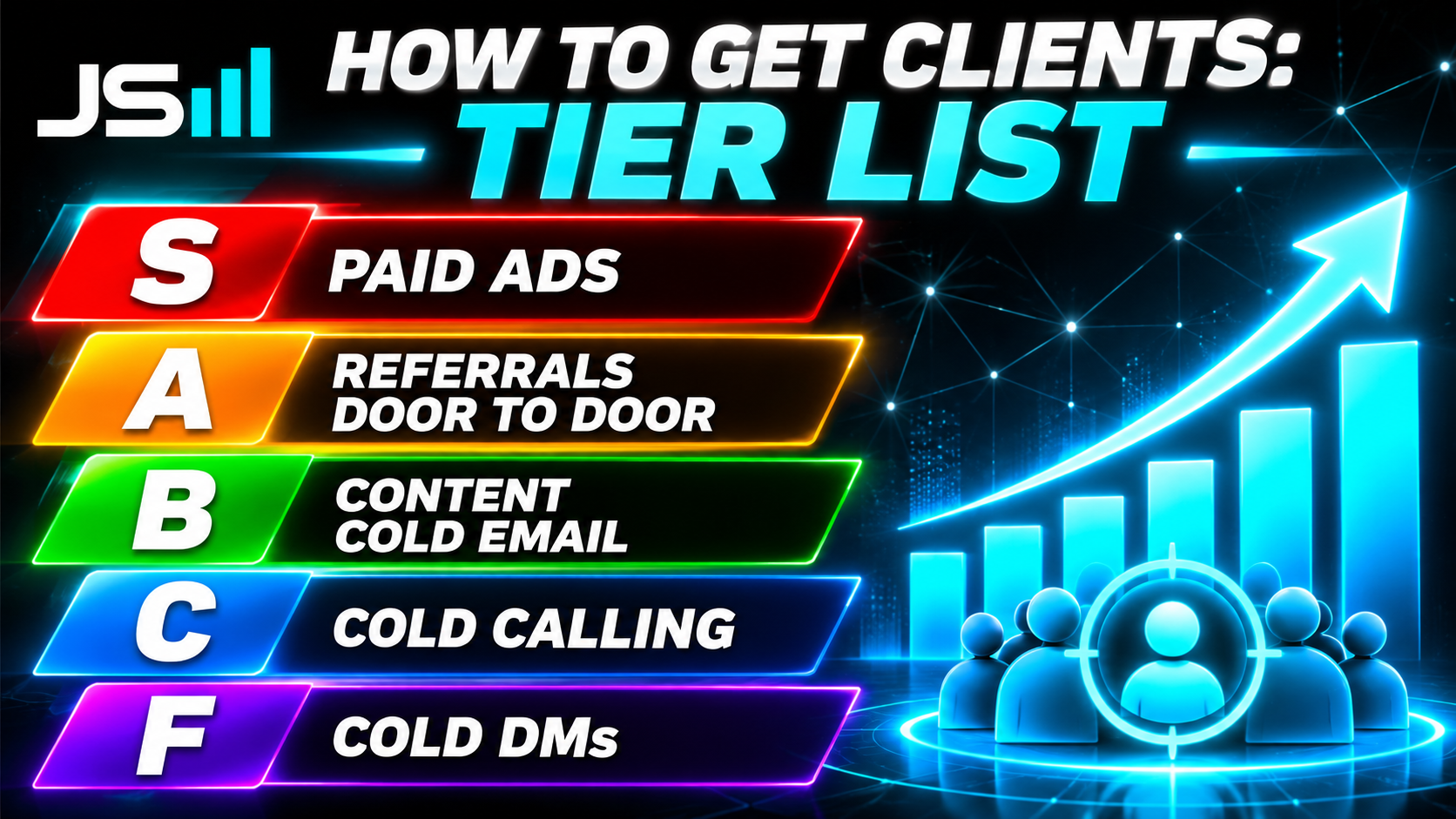
Every way I've gotten customers across four companies, ranked worst to best, with the pros and cons of each. Cold DMs are F tier. Paid ads are S tier. Door-to-door is where you should start.
Four companies, a lot of doors, a lot of phone calls, a lot of money set on fire, and one working ad funnel later, here's my honest ranking of every way I've tried to get customers. Worst to best. No "it depends." If you want it to depend, hire a consultant.
Quick read on the tiers: F is don't bother. C is it works if you grind. B is solid with a catch. A is excellent but capped. S is the best thing I've found, with a price of admission.
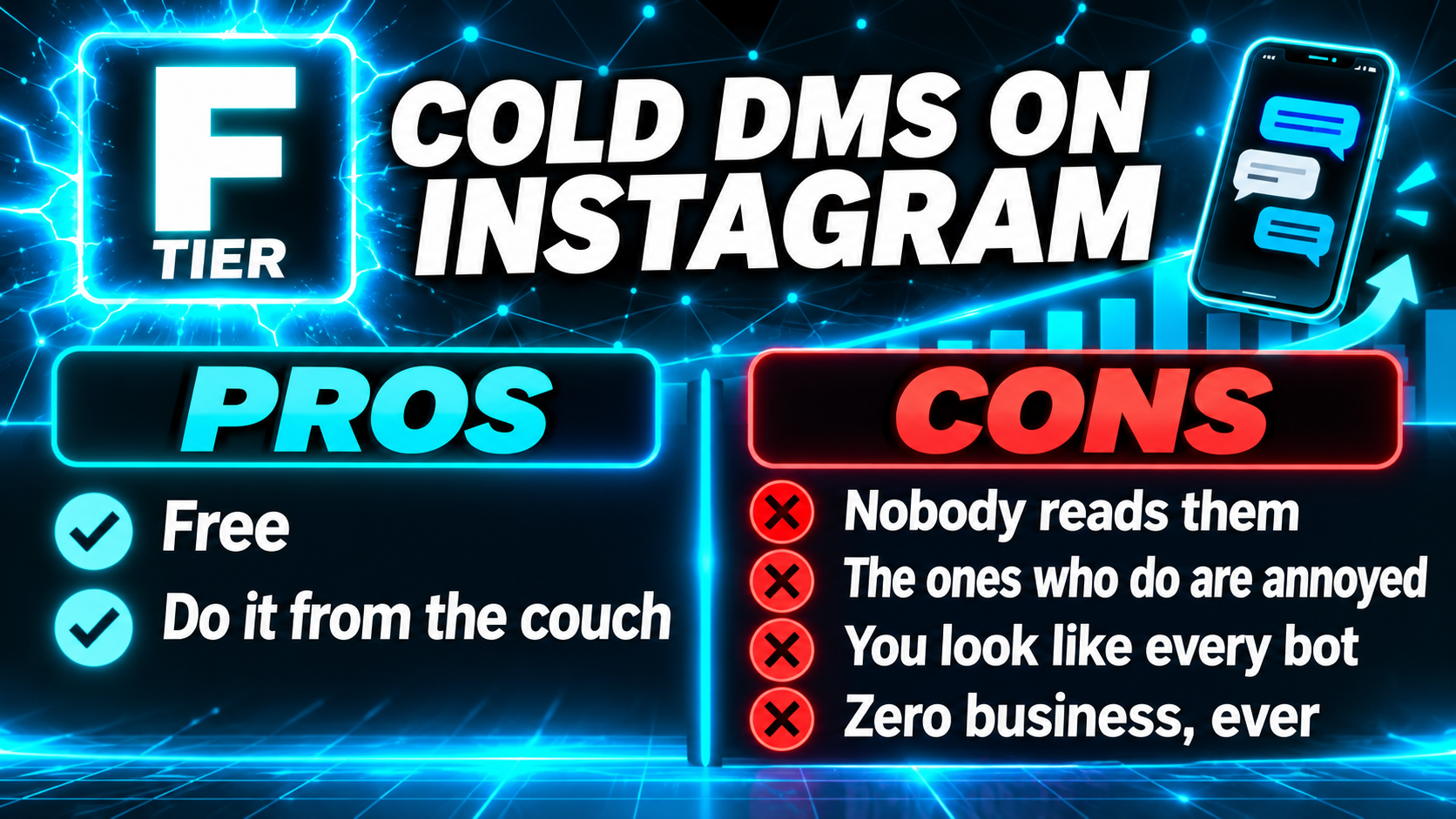
F tier: cold DMs on Instagram
Garbage. Zero business. I'm not exaggerating for effect, I mean I have never once seen a dollar come out of a cold Instagram DM, mine or anyone's I've worked with. The people who sell courses on this are the only ones making money from it, and they're making it from you.
C tier: cold calling
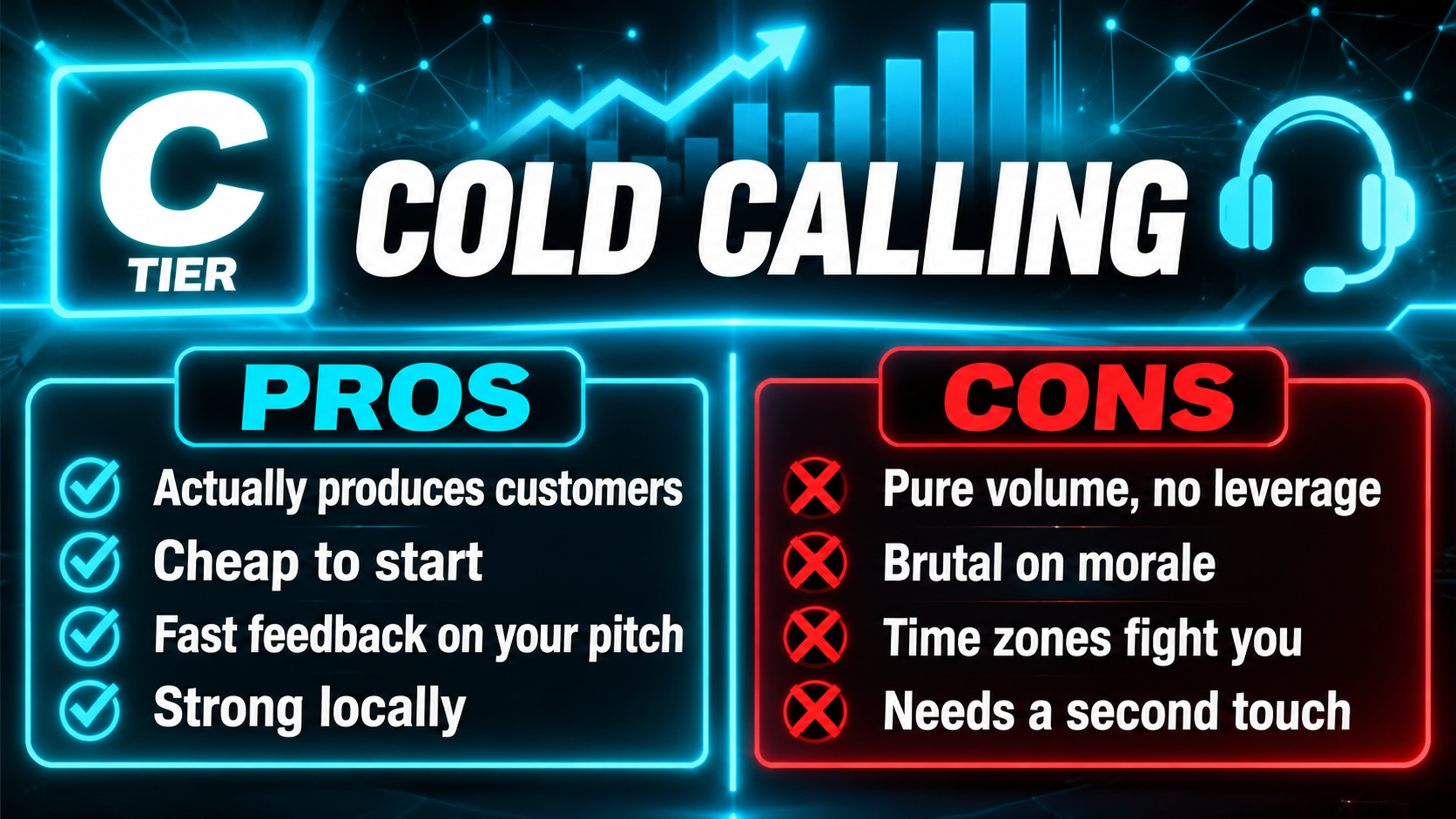
This works, and that's the only nice thing I'll say. It's a volume game. You will dial a hundred numbers to have ten real conversations to get one maybe, and the maybe needs a follow-up. It works better locally, because a local number and a local reference point get you past the first three seconds. It gets worse across time zones, where you're either calling too early or calling into somebody's dinner. And it's brutal on the person doing it, which is usually you.
B tier: organic content
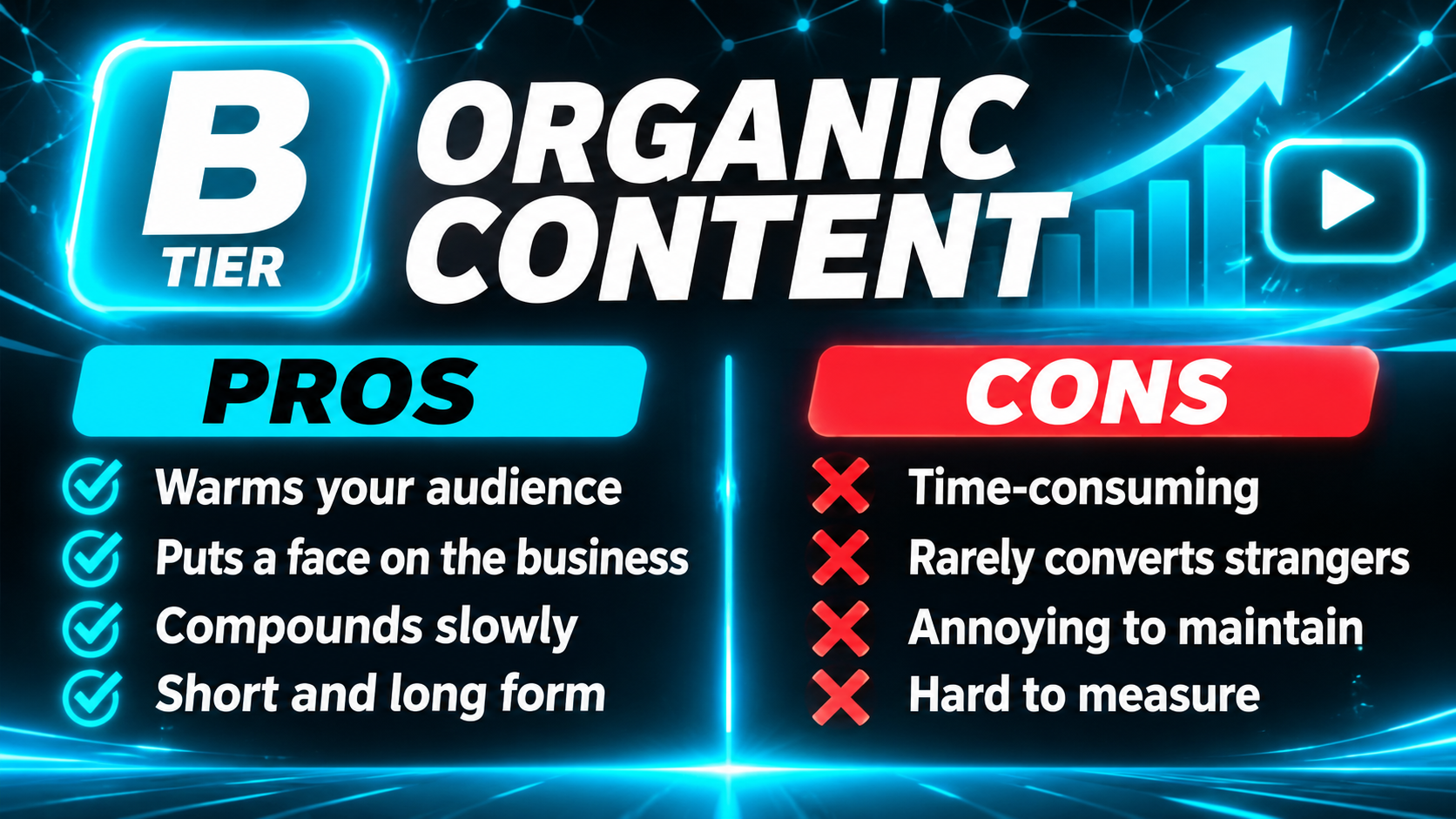
Posting. Short-form, long-form, this blog, the LinkedIn version of this blog. It works, but not the way people think. Organic content almost never makes a stranger buy. What it does is warm up people who already know you exist, and it puts a face on the name, so when they're finally ready, you're the one they think of. That's real value. It's also a treadmill. You have to keep feeding it, and the day you stop it stops. I still think anyone who wants clients should start blogging. Just know what it's for.
B tier: cold email
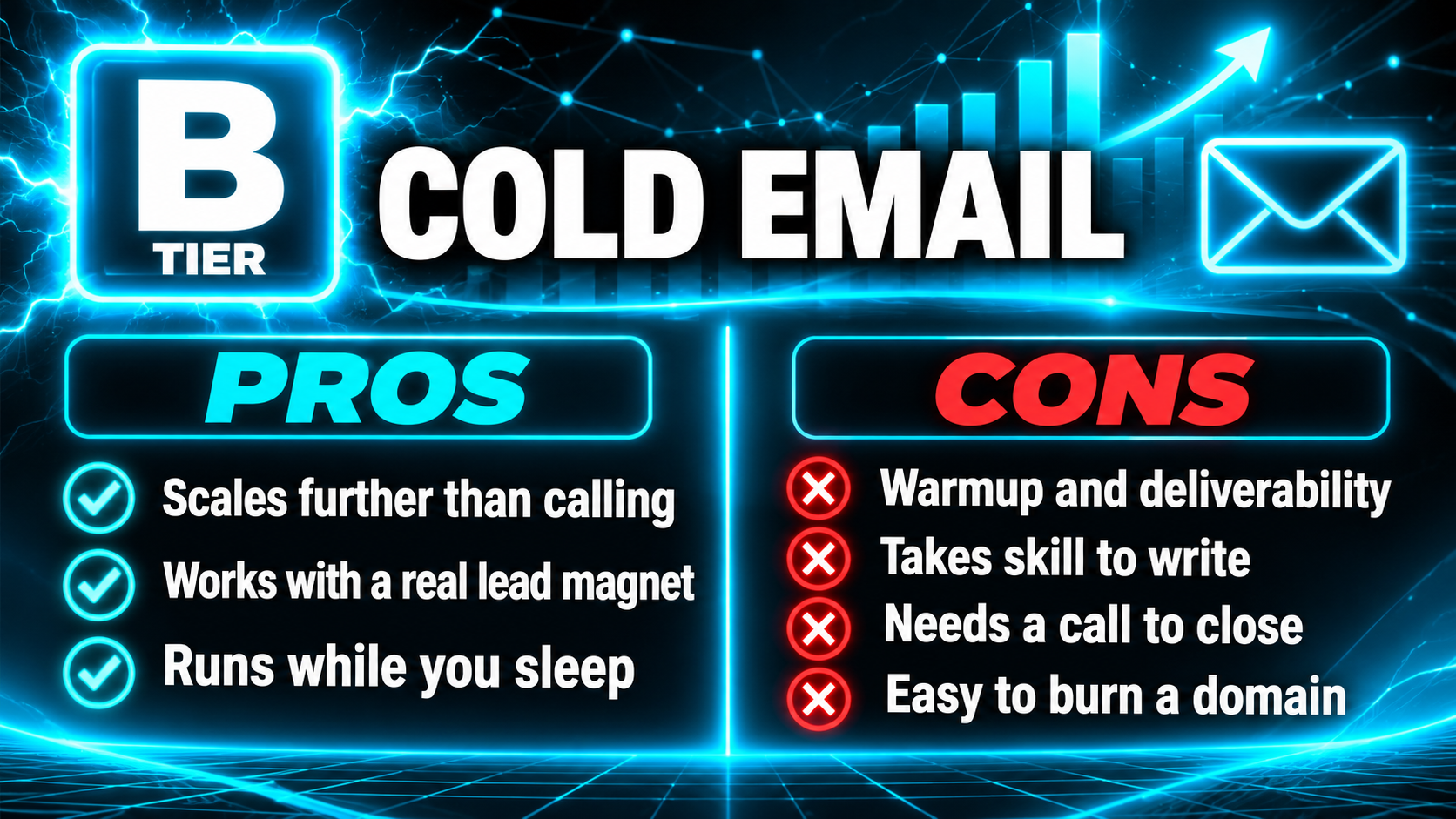
Better than cold calling, worse than people hope. Cold email works when you send something worth opening, which in my experience means a lead magnet or a real case study, not "I'd love to hop on a quick call." It's also more technical than it looks. You need warmed-up domains, deliverability set up right, and a sequence, not a blast. And it almost never closes by itself. A good cold email gets you a reply. The reply gets you a call. The call gets you the client. I wrote more about where it's headed in Cold Email Is Not Dead, But It's on Life Support.
A tier: referrals
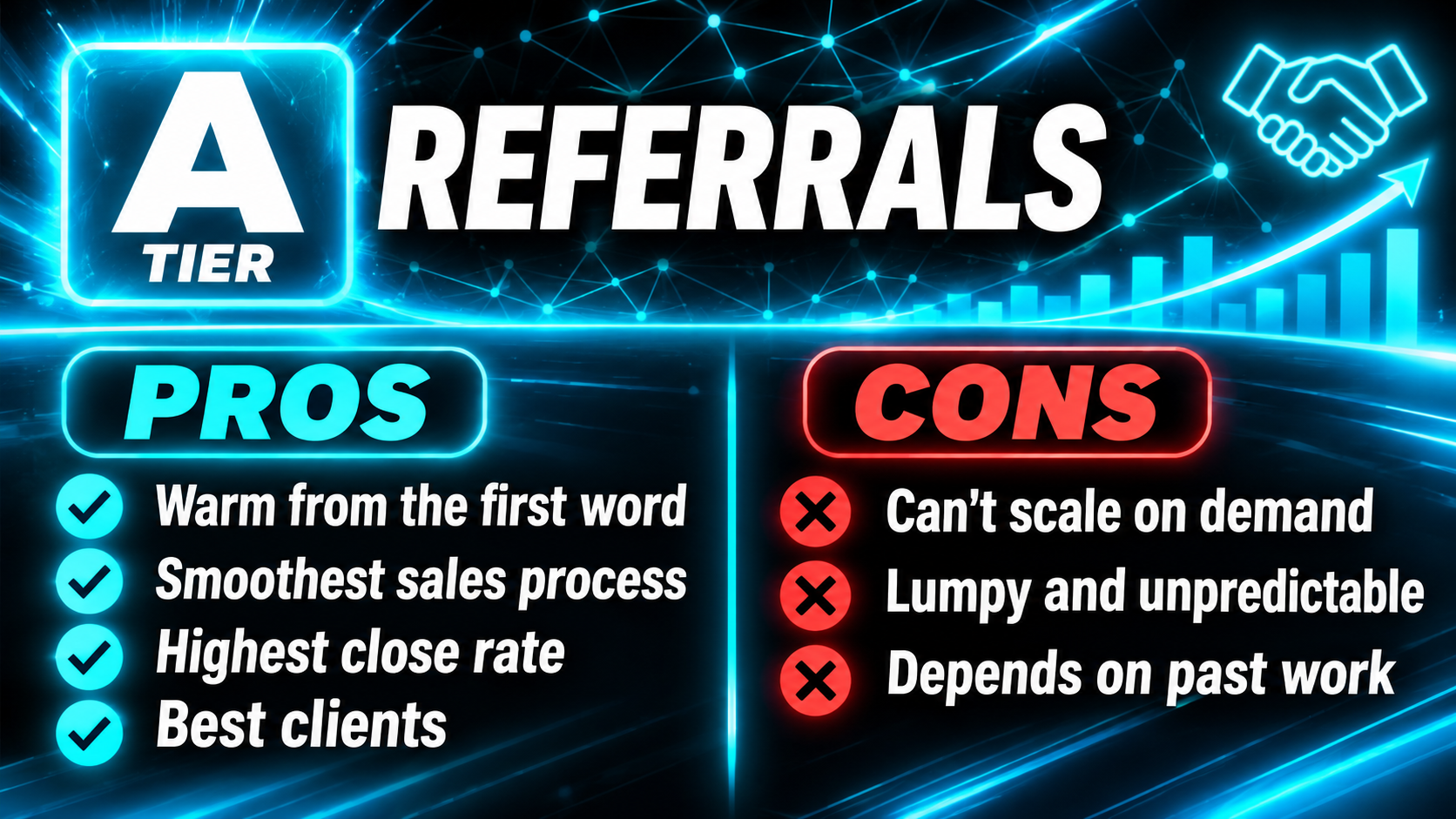
The best customers I have came from somebody else's mouth. A warm intro skips every objection. There's no trust to build because it got borrowed. The sales process is smooth, the close is fast, and the client treats you like a known quantity from day one. If referrals were scalable this would be S tier. They aren't. You can ask for them, you can earn them, you cannot turn a dial and get more this month.
A tier: door-to-door
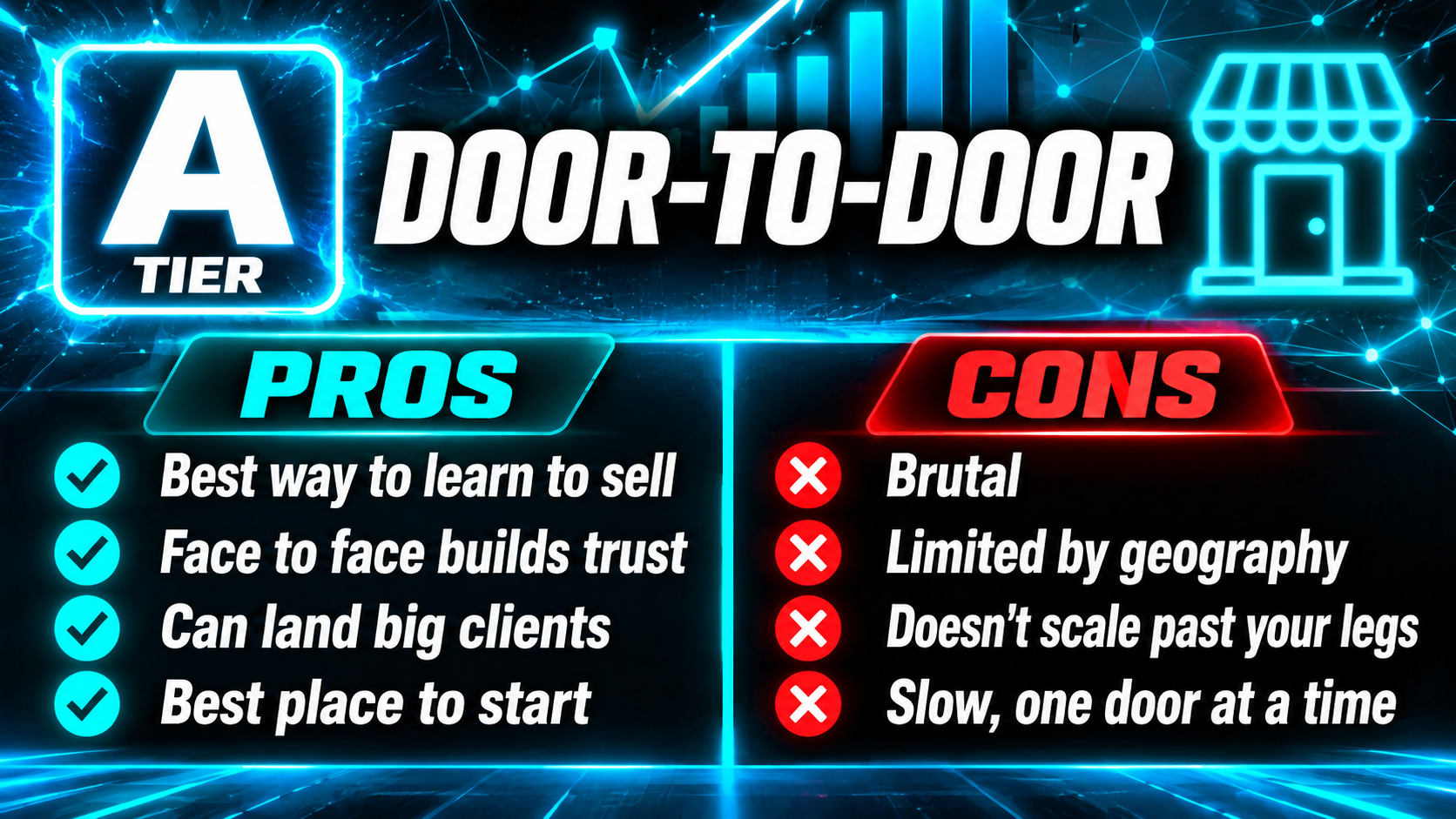
This is how I started and I'd tell anyone starting from zero to do the same. Walking into a business and talking to the owner is brutal, limited by where your feet can take you, and the single best education in sales you will ever get. You learn what people actually say, what their faces do when you say a price, what objections sound like in person. And you can land big clients this way, because the owner who talks to you face to face is the one who signs. It's an A because it doesn't scale and your knees give out. It's not a B because it works.
Those doors are where my whole sales process came from. I broke down how in Sales Is a System.
S tier: paid ads
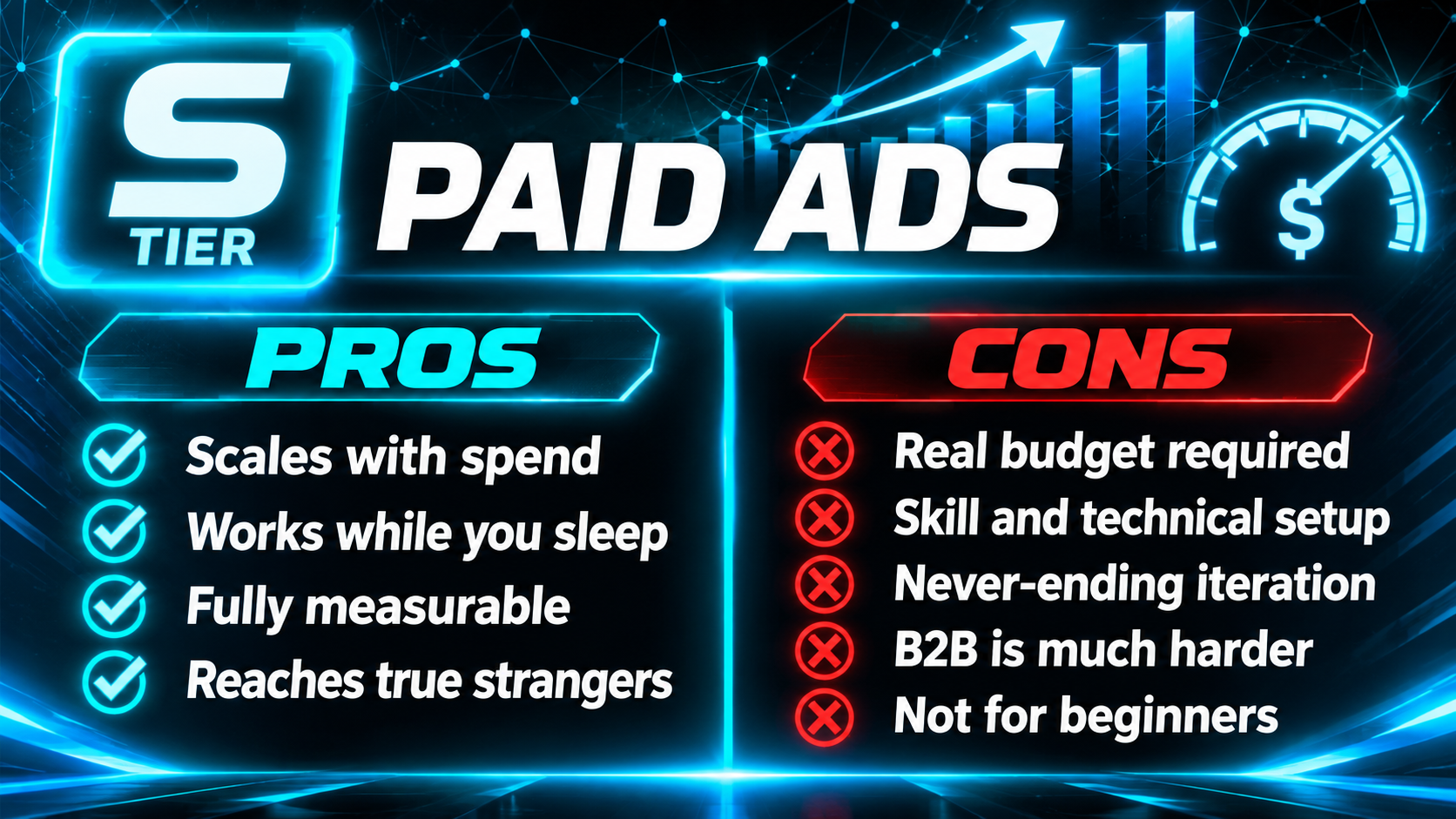
The best acquisition method there is, and the only one on this list where the growth lever is a number you control. Want more customers? Turn up the spend. Nothing else here does that. We've done it for a camera store that doubled sales in two weeks and for cabinet shops that went from stuck to booked, and we finally did it for ourselves.
Now the price of admission, because this is where people get hurt. Ads require skill, budget, technical setup, and iteration that never stops. You will lose money before you make it, that's the tuition, and if you don't have the budget to lose some, you don't have the budget to run ads. B2B is harder than B2C, by a lot. A homeowner sees an ad for cabinets and calls. A business owner sees an ad for software and thinks about it for a month. Rough numbers from what I've seen: don't bother under about $1,500 a month for local B2C, and for B2B plan on closer to $5,000 a month before you'll have enough data to know what's working. If you're a beginner, this is not where you start. Start at the doors, earn referrals, then come here.
How to read this
The tier list isn't a menu where you pick the top item. It's a ladder. Door-to-door and cold calling teach you how to sell. Referrals come from the work you do for the people you sold. Content keeps the people who already know you warm. Cold email extends your reach once you have a case study to send. And paid ads are what you do once you have the budget, the proof, and the stomach for it. Skip the bottom rungs and you'll be running ads with a pitch you've never tested on a human face. I've watched that happen. It's an expensive way to learn what a door would have taught you for free.
Want to talk about what you're building?
Get in touch