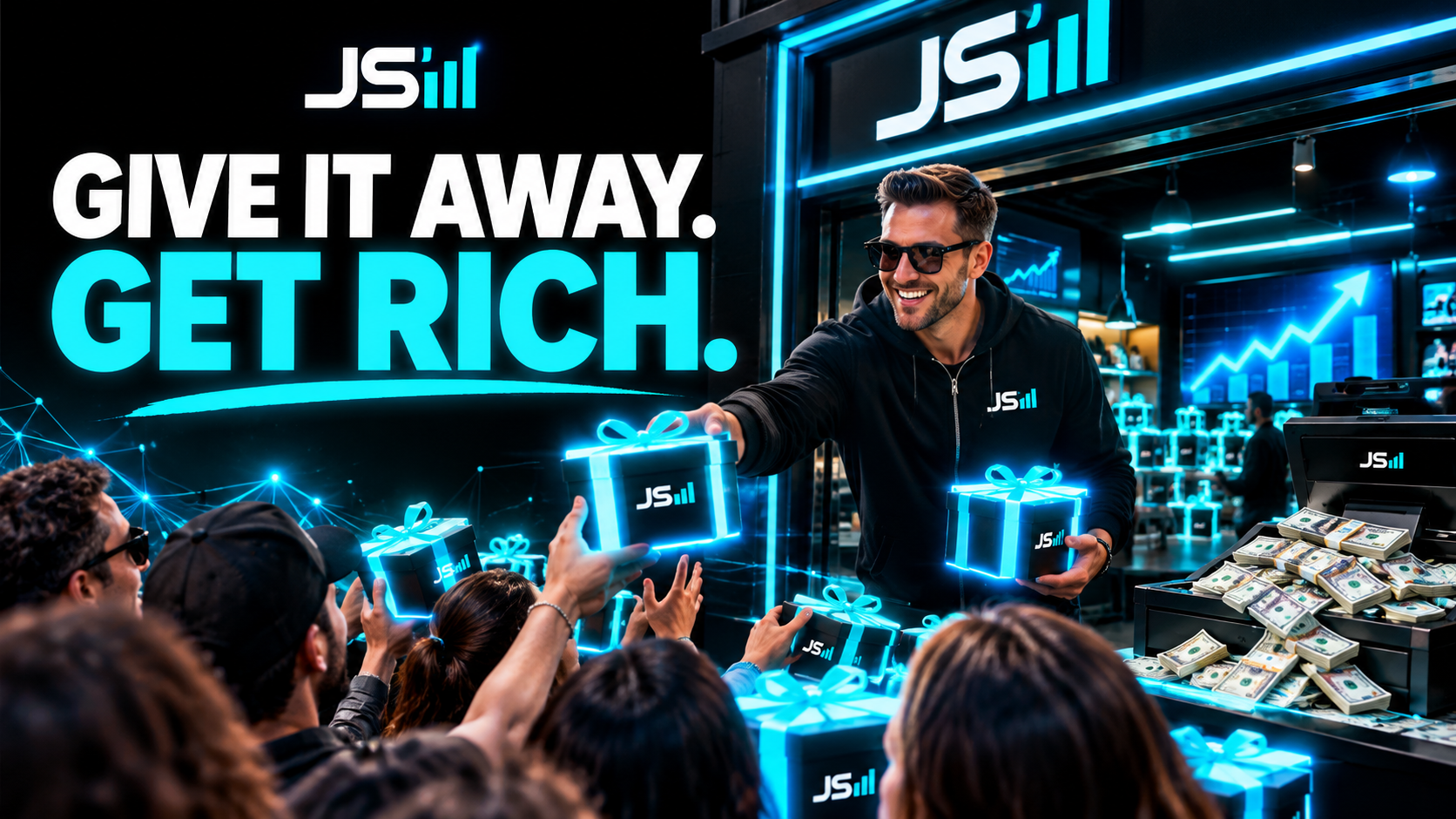
Give Away Free Stuff. Get Rich.
Why is HyppoCRM free when the competition charges $497 a month? Why do I write this blog for nothing? Because "book a call" is the most expensive door you can send a stranger through, and a free thing they actually want is the cheapest. Here's the logic, the numbers, and the part nobody admits: the free stuff is how you pick exactly who walks in.
Here's a question I get a lot: why is HyppoCRM free?
HighLevel charges $497 a month for theirs. Plenty of others charge $97, $197, $297. And I built a CRM, from scratch, and I hand the base version out for nothing at hyppocrm.com. People assume there's a catch. There is. It's just not the one they think.
The catch is that giving things away for free is the single best way I've found to make money. Let me explain, because this is not a motivational-poster take. It's arithmetic.
"Book a call" is the most expensive door in the building
Picture the standard funnel. You run ads. The ads send strangers to a landing page. The landing page says "book your totally-not-high-pressure sales call." Then you wait.
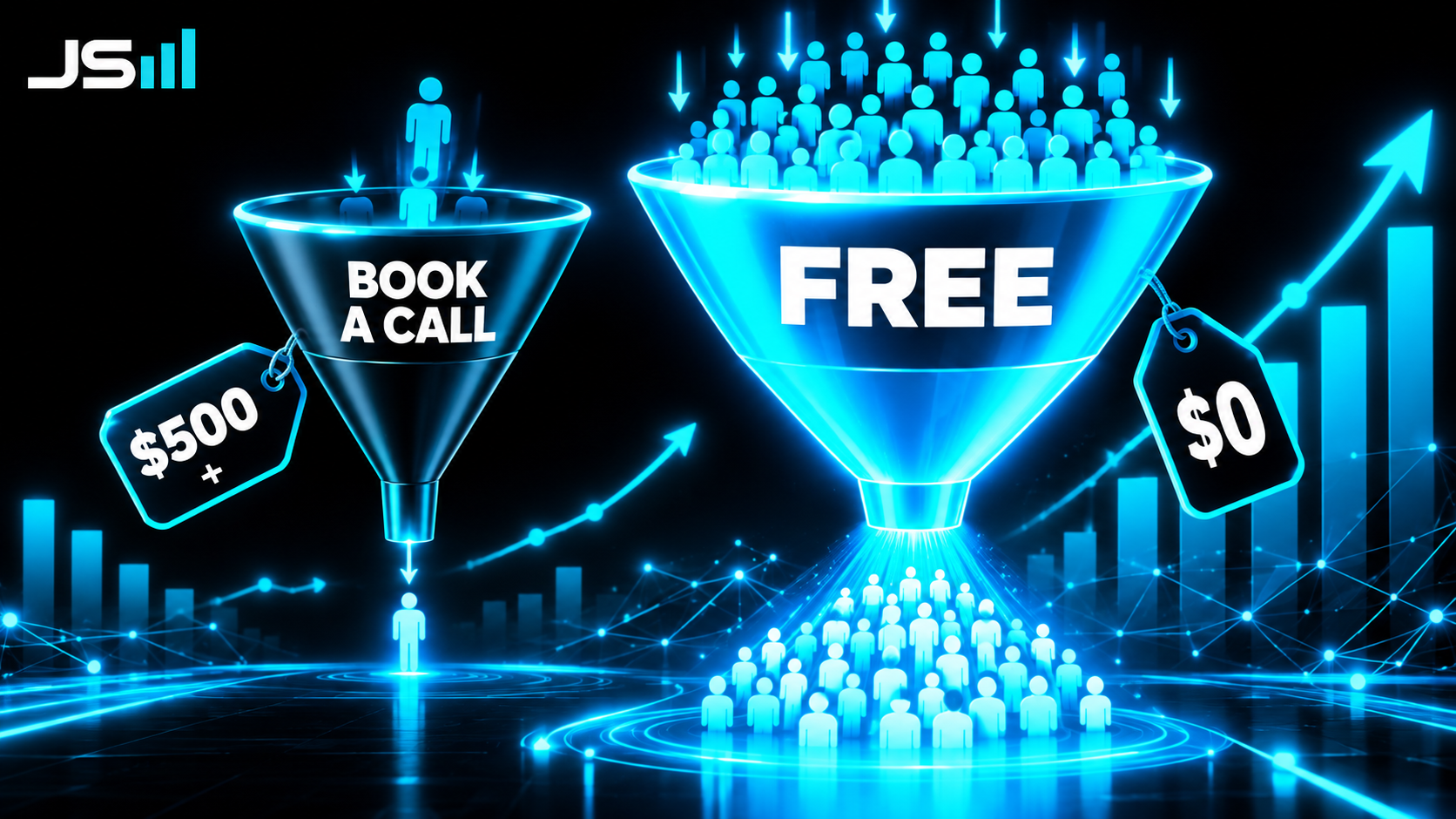
Here's the problem with that. You're asking a stranger to give you thirty minutes of their life and sit through a pitch from somebody they've never heard of. Almost nobody does that. So your cost per booked call goes through the roof, and the few who do book are often the wrong people, because the only ones willing to sit through a pitch from a stranger are either desperate or just bored.
I wrote in Sales Is a System that people buy from people they know, like, and trust. A cold stranger has none of the three. "Book a call" asks them to skip all three steps and go straight to the pitch. That's why it's expensive. You're paying ad dollars to fight human nature.
So how do you get someone to know, like, and trust you?
You give them something. Something real, something they actually want, before you've asked for anything back.
That's it. That's the whole trick. And it works for a reason that has nothing to do with marketing and everything to do with how people are built.
People are reciprocal. Somebody scratches your back, you want to scratch theirs. It varies by culture, and I'm not going to pretend it's a law of physics, but it's close enough to one that you can build a business on it. Give someone something genuinely useful for free and two things happen. They now know who you are. And they feel, a little, like they owe you one.
Now you're not a stranger pitching. You're the guy who already helped them. Completely different conversation.
Why the CRM is free, specifically
Two reasons, and I'll be blunt about both.
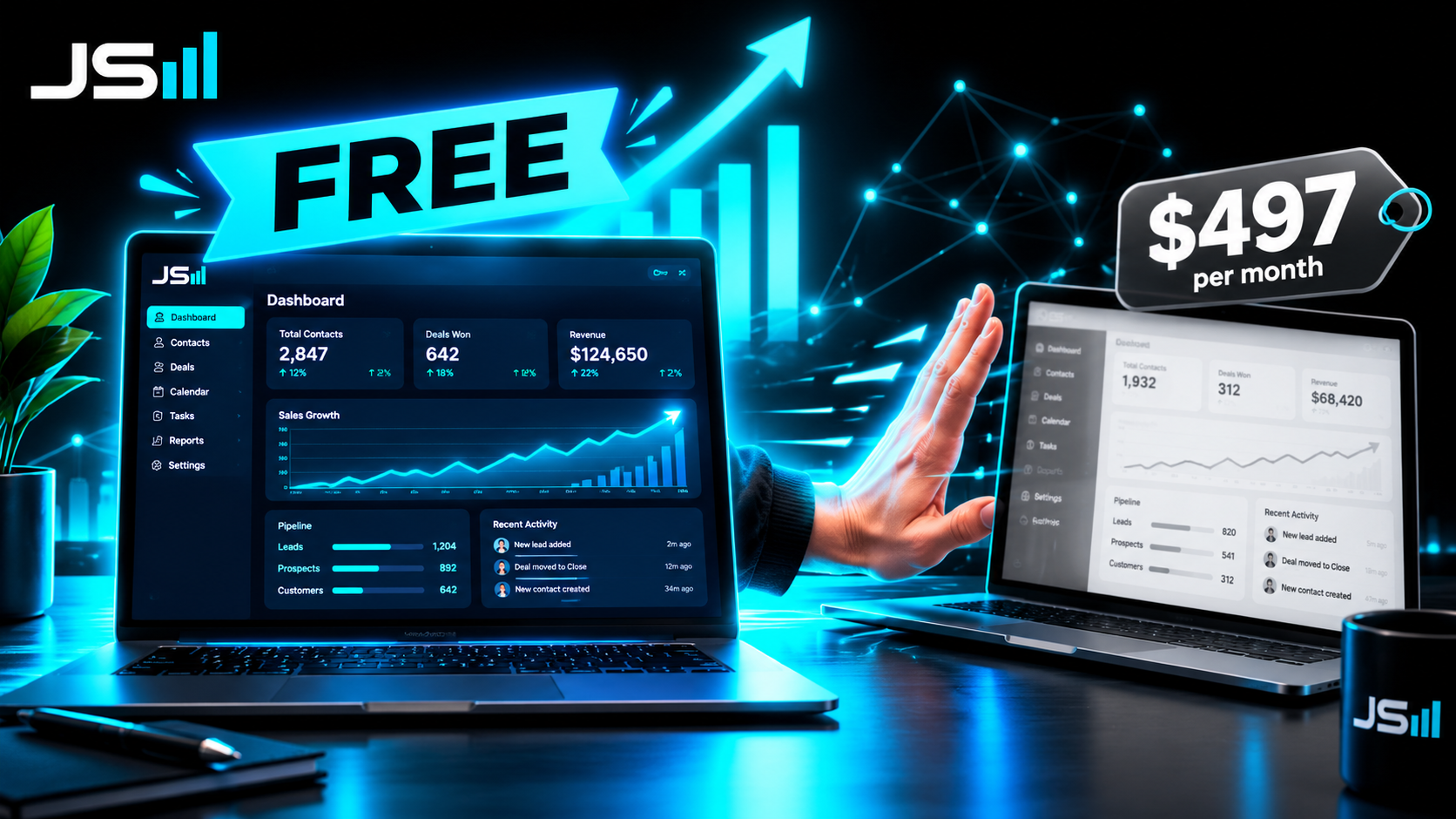
One, dirty little software secret: it doesn't cost that much to run. Software has near-zero marginal cost. One more user on the CRM costs me a rounding error in hosting. Yes, I price on value everywhere else, and I'm not knocking anyone who charges for their CRM. But the $497 isn't covering servers. It's covering margin. Which means I can give the base version away and it barely dents me.
Two, it puts people in my ecosystem. A business owner who runs their shop on my CRM is someone I can talk to, learn from, and help. I see what they're struggling with. I can offer the right thing at the right time instead of guessing. And long term, one of the places we want to be is acquiring companies. What better acquisition target than one that already runs on your systems? I already know what's going on inside the business, and there's no painful migration off HighLevel or some other clunky, overpriced thing. They're already home.
Free CRM in, goodwill out, and a pipeline of businesses I actually understand. That's not charity. That's just a longer game than most people are willing to play.
The wrinkle that makes it really powerful: free things are filters
Here's the part I think most people miss, and it's the part I'd put on a billboard.
A free thing doesn't just attract people. It attracts a very specific kind of person, depending on what the thing is. Which means you get to decide who walks in the door by deciding what you give away.

Real example. We recently started running paid ads to our Booked Out offer, where we work with cabinetry shops and install the whole stack: paid ads, the AI receptionist, the website, social media on autopilot, the text campaigns, all of it. The offer is simple: we get you $25K in new booked work on your calendar in 90 days or we work for free until you do.
Now, I could send those ads to a "book a call" page. Expensive, for all the reasons above. Instead, the ad says: download the free case study. The one where a cabinet shop in Brevard County went from $700K a year to a $1.3 million pace. He'd never broken a million before. All you do is put in your name, email, and phone.
Think about who downloads that. Not everyone. A cabinet shop owner. Specifically one who's doing enough revenue that "$700K to $1.3M" is a number that makes them lean in, which means they can probably afford what we do. Specifically one who's ambitious enough to click. The free thing did my qualifying for me. I didn't filter the list. The list filtered itself.
That's the move. Give away something that only your ideal customer would want, and your ideal customer is the only one who shows up.
Yes, this is also why the blog is free
Full disclosure, since I'm being blunt: there's self-interest in this blog too.
Part of it is genuine. I like giving this stuff away. I learned most of what I know by knocking on doors and failing in public, and if you're a first-time founder or somebody trying to get a thing off the ground, I'd rather you learn it from an article than from the same expensive mistakes. This is a resource. Use it. Reach out if you want.
And part of it is that it works. People know I exist because of this blog. I get messages on LinkedIn from people who read a post and want us to build something. It's positioned me as somebody who knows a thing or two, which, I'm not trying to be cocky, but I think I do. All because I hand the knowledge out for free. It's also, if I'm honest, the sawdust principle at work: I ramble into my phone while I'm driving somewhere, and that becomes an article. Time I was already spending, turned into something that brings people in.
Now, am I giving away my architecture? My codebase? No. Those are mine. But here's the thing people get wrong about that: nobody wants them anyway. Even if I handed over the proprietary stuff, most people couldn't implement it, and the ones who could don't need it. You don't care about the technology underneath. You care about the result. So I give away the thing that's actually valuable to you, which is what I've learned, and I keep the thing that's only valuable to me.
If you're skeptical, good. Here's the logic without the vibes.
I'm not a law-of-attraction guy. I'm a spreadsheet guy. So if "people are reciprocal" sounds too soft for you, here's the version with no feelings in it.
1. Cost per lead on a "book a call" page is high because the ask is big. Cost per lead on a free download is low because the ask is small. Same ad spend, more people in the door.
2. A free thing that only your target customer would want pre-qualifies the list. Fewer bad fits, less time wasted on calls that were never going to close.
3. Someone who's already gotten value from you converts at a higher rate than a stranger, because they're no longer a stranger. Higher conversion, lower cost, same spend.
4. Software costs almost nothing to give away, and knowledge costs nothing at all. Your cost of goods on the free thing rounds to zero.
Put those four together and "give it away" stops sounding generous and starts sounding like the only sane way to run acquisition.
The takeaway
Stop sending strangers to a page that asks them for thirty minutes and their trust. Give them something real first. Make it something only your ideal customer would want, so they do your filtering for you. Let reciprocity and basic math do the rest.
And in what is absolutely not a piece of marketing language: if you want the free CRM, it's at hyppocrm.com. No card, no trial clock. Go run your business on it. If you ever need more, you know where I am.
That's the whole play. Give away free stuff. Get rich. It's slower than the guru version, and it actually works.
Want to talk about what you're building?
Get in touch