I Suck at Ads. So I Built a Machine That Doesn't.
Paid ads have kicked my teeth in for most of this company's life. I built my first funnel in ClickFunnels, ran ugly AI avatar ads at it, and set money on fire. This time I stopped trying to be good at ads and built a machine instead: our own funnel, pixel, heat maps, VSL, and calendar, tracking every lead from the ad they tapped all the way to lifetime value. $300 in, and the machine found three bottlenecks in two days, a broken play button, a slow video, and a calendar that took 60 taps and produced one booking. None of them were the ads. Test, fail, fix, repeat. It works on software, it works on ads, and it even worked on my social life.
Let me be blunt about something founders usually dress up: paid ads have kicked my teeth in for most of this company's life.
Not "we had a rough quarter." I mean I lit real money on fire, more than once, watching a number go up on a dashboard while nothing happened on the phone. I'm 25, this is business number four, I build software for a living, and for a long time the ads part of my own company was the one thing my brain flatly refused to understand.
This is the story of how I finally stopped trying to be good at ads, and built something that is.
Round one: the funnel of shame
When I first launched Hyppo I did what every hungry founder with a YouTube education does. I built a funnel in ClickFunnels. Yes, that one. I've since reviewed it, and the review is not kind, and past me deserved every word.
Then I pointed ads at it. Ugly ones. AI avatar ads, the uncanny-valley talking-head kind that make you trust a brand slightly less than before you saw it. I made those in HeyGen, which is getting its own review soon, and I promise it'll be fair. The ads were not the tool's fault. They were mine.
Here's the real reason it flopped, and it took me a while to see it. Back then I wasn't a systems guy yet. I was a guy with a laptop who could sell a website and wire up an automation. I hadn't developed the skill I now think matters more than any other, which is seeing the whole machine at once, every piece and how they connect. So I treated ads like a slot machine. Put money in, pull the lever, hope. Slot machines are not a business model, and for whatever reason ads specifically stayed a black box to me long after the code side of my brain caught up.
Why I kept coming back to it
Because the math is brutal and it doesn't care about my feelings.
Word of mouth and organic got us to roughly six figures a year, around $20K a month. That's a real business. It's also a ceiling. Referrals are slow, they don't scale on command, and they only reach people who already know someone who knows us. If you want to pour gasoline on a fire instead of blowing on it, you have to crack paid acquisition. There's no version of a big company that skipped that step.
So I had to come back. Just not the same way.
Fixing the offer first
Ads amplify whatever you point them at. Point them at a bad offer and you get expensive proof that the offer is bad. I know this because my first "grand slam" offer struck out, free Meta glasses and all, and no amount of traffic would have saved it.
This time I let the data pick the offer. I went through our own customer base and asked a boring question: who sticks? The answer was clear. Our stickiest, happiest, longest-tenured clients were the ones who came in for a website first, not for a widget or a bot or a clever little automation. A website is the thing every business already knows it needs, it's where every other tool plugs in, and it's worth real money to them from day one.
So the offer is a website that gets you more phone calls. Full stop. Then we stack two things on it.
- The bonus: Rank, our AI blogging agent, running on the site. Across our own portfolio, sites with a real blog pull 78% more views than sites without. Not decoration. Traffic.
- The guarantee: we get you more calls than your current website is producing, or you don't pay.
That's a Hormozi-style irresistible offer, and I'll admit the man's framework works. I'm no Russell Brunson or Alex Hormozi, but I've taken enough swings now to know a good offer when I've finally got one, and I've learned how much sales actually matters. I can close. I'm honestly a pretty good closer. But my highest-leverage move has never been talking. It's building. So once the offer was right, I did what I do.
The agency that taught me by accident
A while back we hired an ad agency. It flopped, and I won't name them, but they did leave one thing behind: they showed us the standard playbook. Set up the tracking pixel. Build a VSL. Drive traffic to a booking page. The usual.
And while they were walking me through it I had the thought that changed the whole thing. These guys are doing over a million dollars a month with this funnel. This funnel. If these jokers can do a million a month with a pixel, a video, and a calendar, then I, a person who builds software systems for a living, can absolutely build a better version of that machine.
(I also want to build a trillion dollar company, so, you know. Start with the calendar button.)
So I systematized it
Instead of buying ads, I built the machine that runs ads. Here's what's in it, in plain English.
A funnel builder, so we can spin up and rearrange landing pages fast instead of waiting on a designer. A tracking pixel, which is a tiny piece of code on the page that reports back what visitors do, with heat maps layered on top, which are literally pictures of where people clicked and where they gave up. Our own VSL, which is just a video sales letter, the video that does the pitch so I don't have to be on every call. And our own calendar, because yes, we built the booking system inside HyppoCRM ourselves.
The architecture: every piece of data, click to close
Here's the part I actually want to show you, not just describe. This is the honest-to-god architecture of what we track, start to finish.
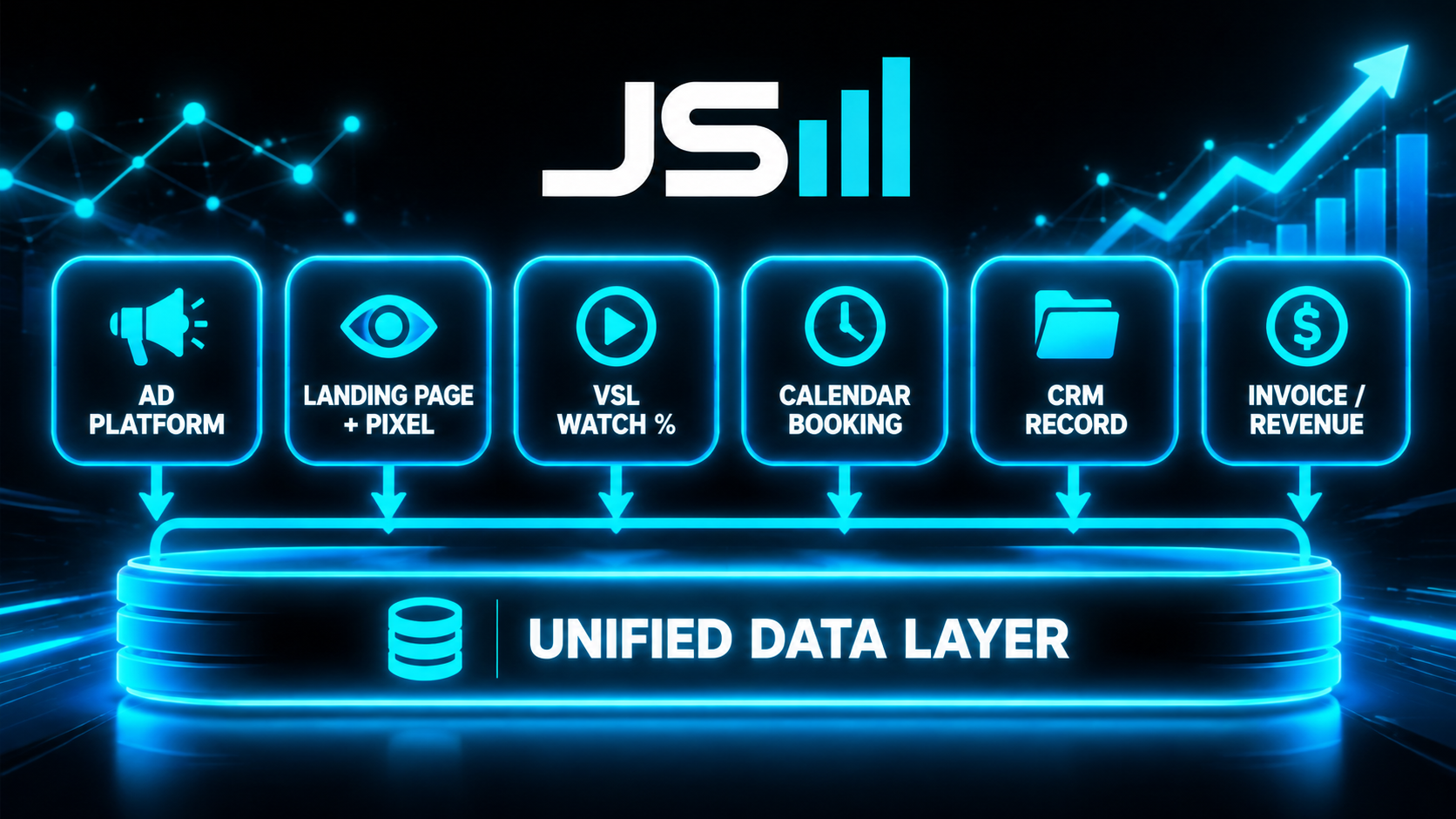
Walk it left to right. The ad platform tells us which ad, which audience, which creative. The landing page and pixel tell us who showed up and what they did on the page. The VSL reports back watch percentage, not just "did they click play," but how far into the video they got before they left. The calendar tells us whether they booked, and if not, exactly which step they dropped at. The CRM record ties all of that to one actual human being. And the invoice closes the loop with real revenue.
None of that sits in six different tools that don't talk to each other. It's one data layer, because we built the whole thing ourselves instead of duct-taping six SaaS products together. That's the entire reason the three bottlenecks below were visible at all.
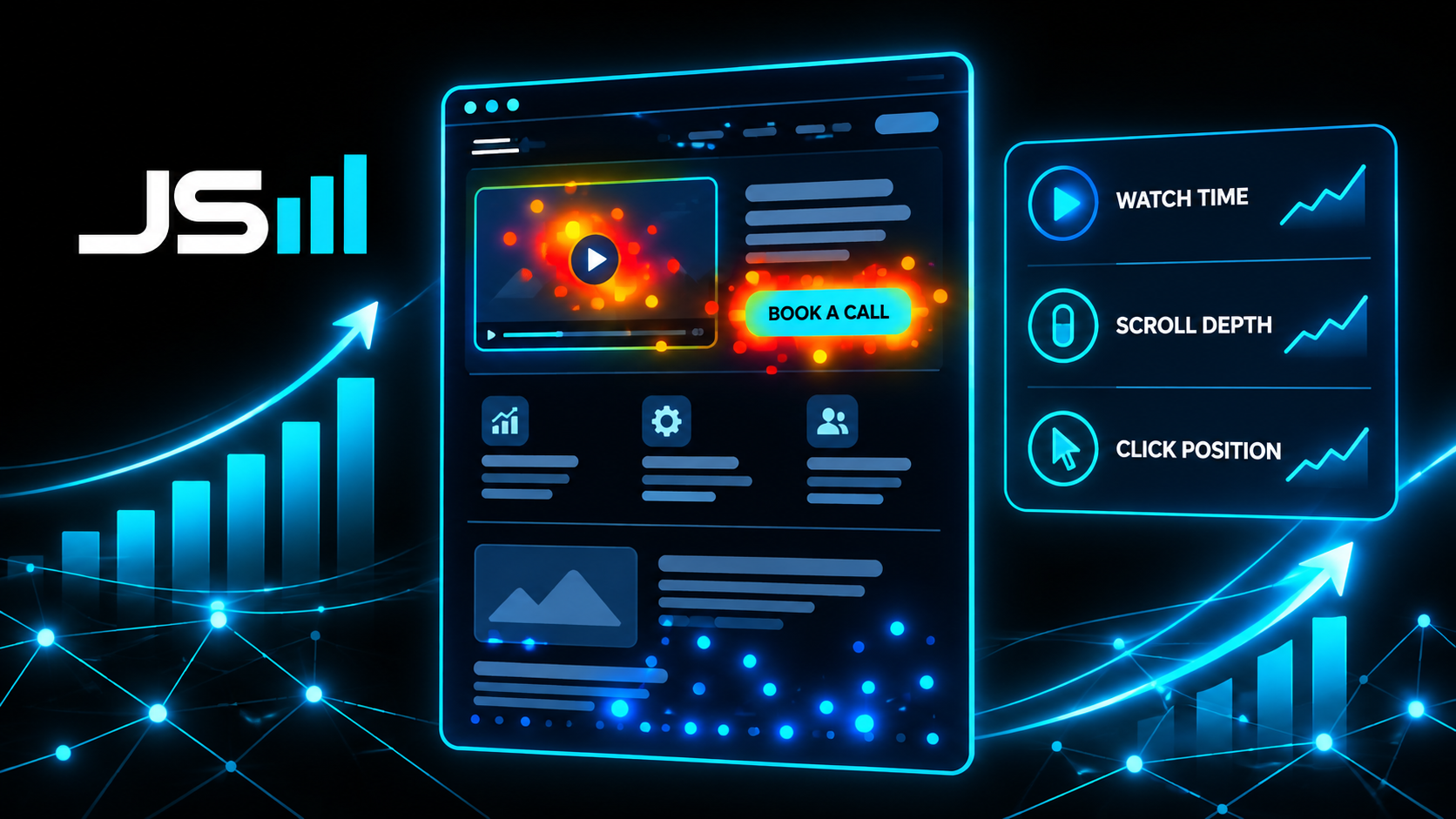
The heat map layer is worth its own picture, because it's the part that actually told us where people were dying on the page.
And because we track all the way to the invoice, we don't stop at "did they buy." We can watch a customer's entire value build over time, not just the first check.
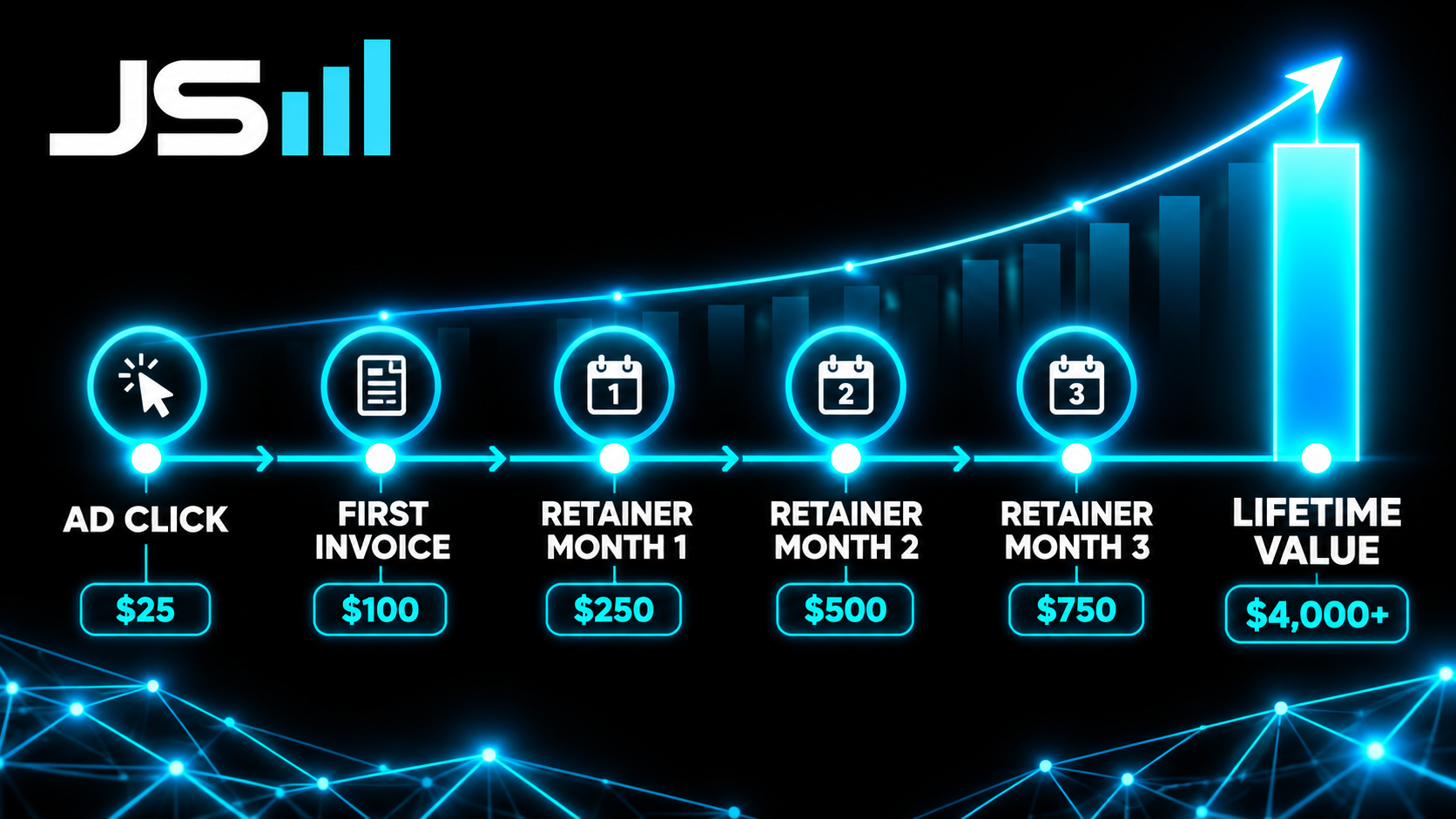
That last one is the piece most people running ads never see. A single sale can look great or terrible depending on where you stop measuring. If you only look at cost per lead, a $40 lead looks expensive. If that lead turns into a client who stays on retainer for a year, that same $40 was absurdly cheap. Without lifetime value tracking, you're making decisions on half the picture. This is what I mean when I say it's borderline unfair. Most businesses running ads are flying blind past the first invoice. We're not.
$300 and three bottlenecks in two days
We turned the ads on with about $300 to start. Here's what that $300 bought me. Not customers. Something better.
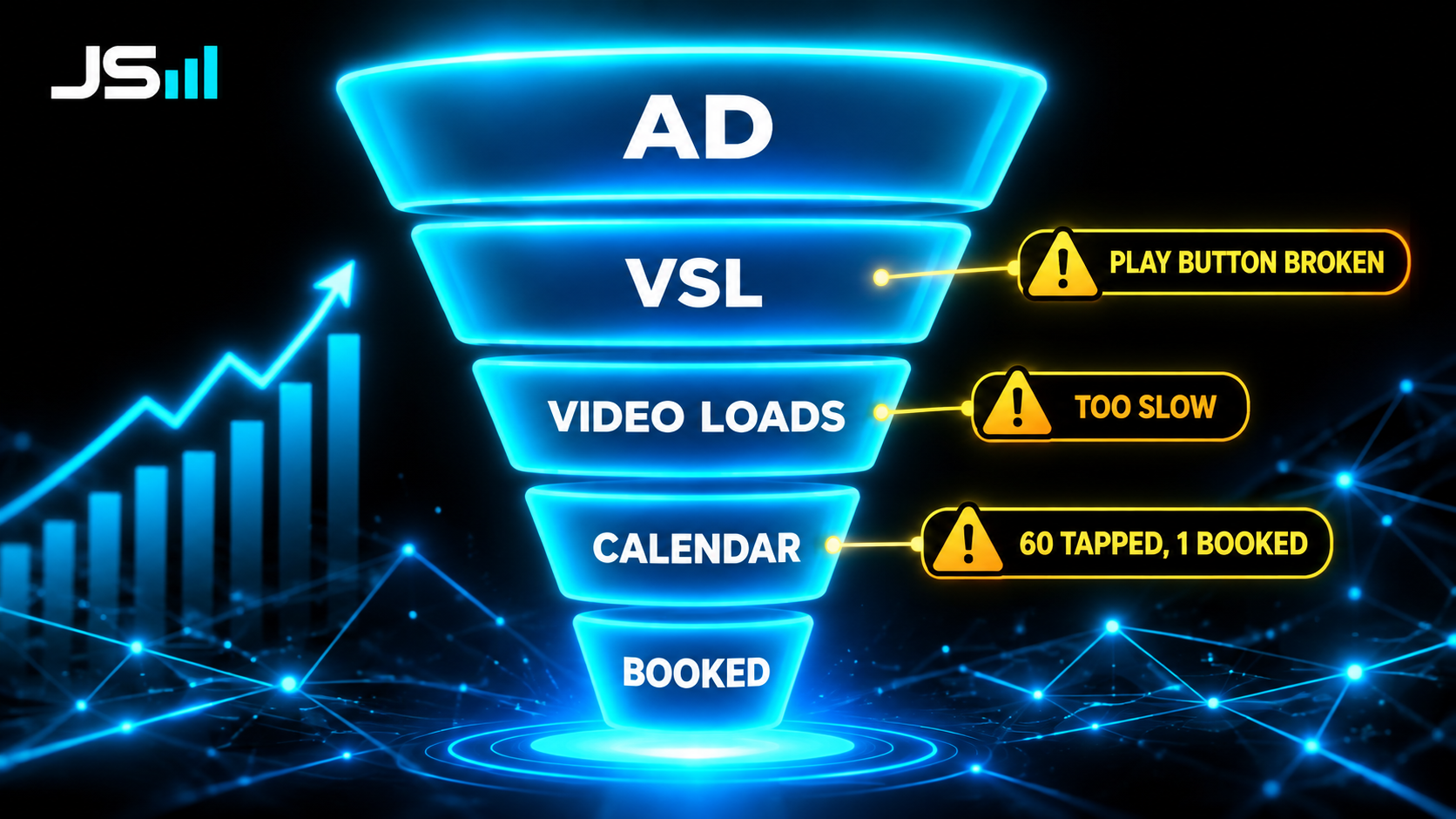
Bottleneck one. People were landing on the page and not watching the video. Turns out the play button on the VSL didn't work. Not "was unclear." Did not function. I had been paying for traffic to a video nobody could press play on. Fixed it.
Bottleneck two. Now the button worked and people still weren't watching. The heat maps showed them clicking, waiting, and leaving. The video took too long to load. Nobody waits for a stranger's pitch to buffer. Fixed that too.
Bottleneck three, the big one. From that $300 of spend, about 60 people tapped the button to book a call. One made it all the way through. Sixty in, one out. That's not a traffic problem or an offer problem. That's a calendar problem. Our own booking flow was bleeding almost everyone who tried to use it. We've since rebuilt that step, and I'm still waiting on the numbers, which is why this article exists now instead of in a month. I wanted to write it while the paint is wet.
Notice what none of those three were. None of them were "the ads are bad." I'd have bet money on that being the problem, because ads are the thing I'm bad at. The actual problems were a broken button, a slow file, and a leaky form. Boring, fixable, invisible without data. $300 to find three leaks I'd never have seen from the outside is the best money this company has spent on advertising, ever.
This works, by the way
I don't want this to read like I'm still figuring out ads from scratch. We run them for clients, and the machine already works on their side. One of our cabinet shop clients had never broken a million dollars in his life. Since we rebuilt his site and turned on ads, he's on pace for $1.3 million this year, with click-to-calls coming in around a quarter of the industry rate. I broke that whole story down here. The difference now is I'm finally running the same machine on myself, with about $5K a month going in, and eating my own cooking.
The cheat code
Here's the part that's bigger than ads.
Everything I just described is one loop. Test, fail, fix, repeat. It's the entire SaaS playbook. It's why Sam Altman and Elon Musk and every serious builder alive keep saying some version of "ship it, break it, fix it, ship it again." I found three bottlenecks in two days not because I'm smart about ads. I'm not. I found them because I built the loop, ran it, and the loop told me where to look.
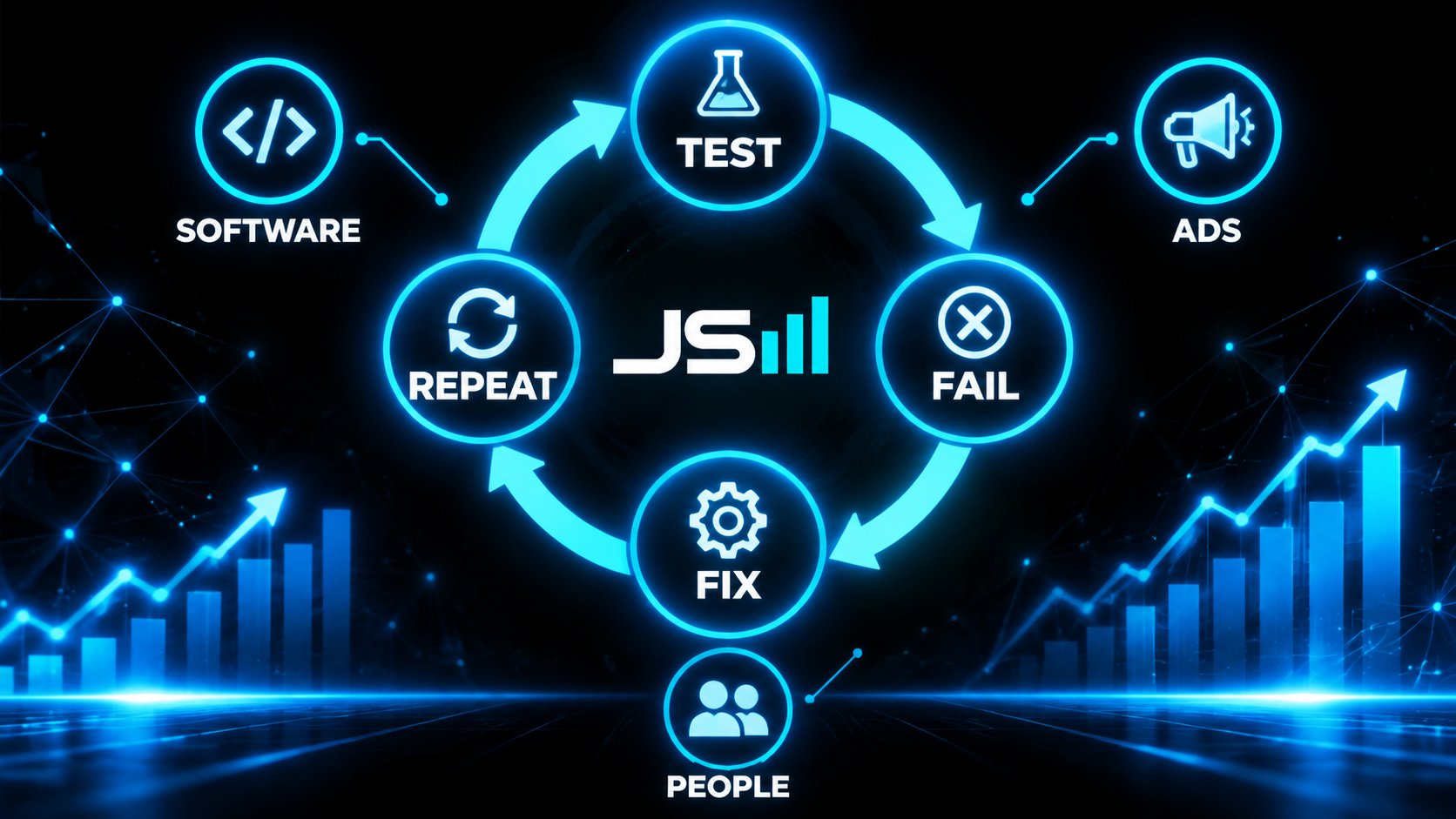
And I've started to notice it's the same loop everywhere. I'm a technical introvert. Given the choice, I will lock myself in a room with a hard problem for four hours over a networking event every single time. For years that meant I was, let's say, not smooth in a room. My business partner is the one who fixed it, and he did it with the exact same method. He kept putting me in rooms where I was uncomfortable. I failed a lot. I said the wrong thing, I stood in the wrong place, I'm sure a few people have stories. I still have my awkward gaps, we all do, mine are just bigger. But I kept running the loop, and now I can walk into a chamber meeting and leave with a client instead of a headache.
Software. Ads. People. Three things that have nothing in common, and the same loop cracked all three. If you're a pattern person like me, that's a pretty loud pattern. Fail fast, fail forward, fix the thing the failure pointed at, and go again. That's business number four talking. Get ready to fail, because you're going to, a lot. The only question is whether you built a way to learn from it.
The takeaway
I didn't get good at ads. I got good at building a machine that finds out why the ads aren't working, and then fixing that. The play button, the load time, the calendar. None of it was glamorous. All of it was measurable, because we own the data from click to close, all the way through lifetime value. If you're burning money on ads and can't say exactly where people are dropping off, you don't have an ad problem yet. You have a data problem, and it's hiding the ad problem from you.
Build the loop. Then run it on everything.
Want a website that actually makes the phone ring?
That's the offer. A site built to convert, our blogging agent driving traffic, and a guarantee: more calls than your current website is getting, or you don't pay. That's what we do at HyppoAI.
Want to talk about what you're building?
Get in touch