Peace for Our Time: Never Trade Leverage for Calm

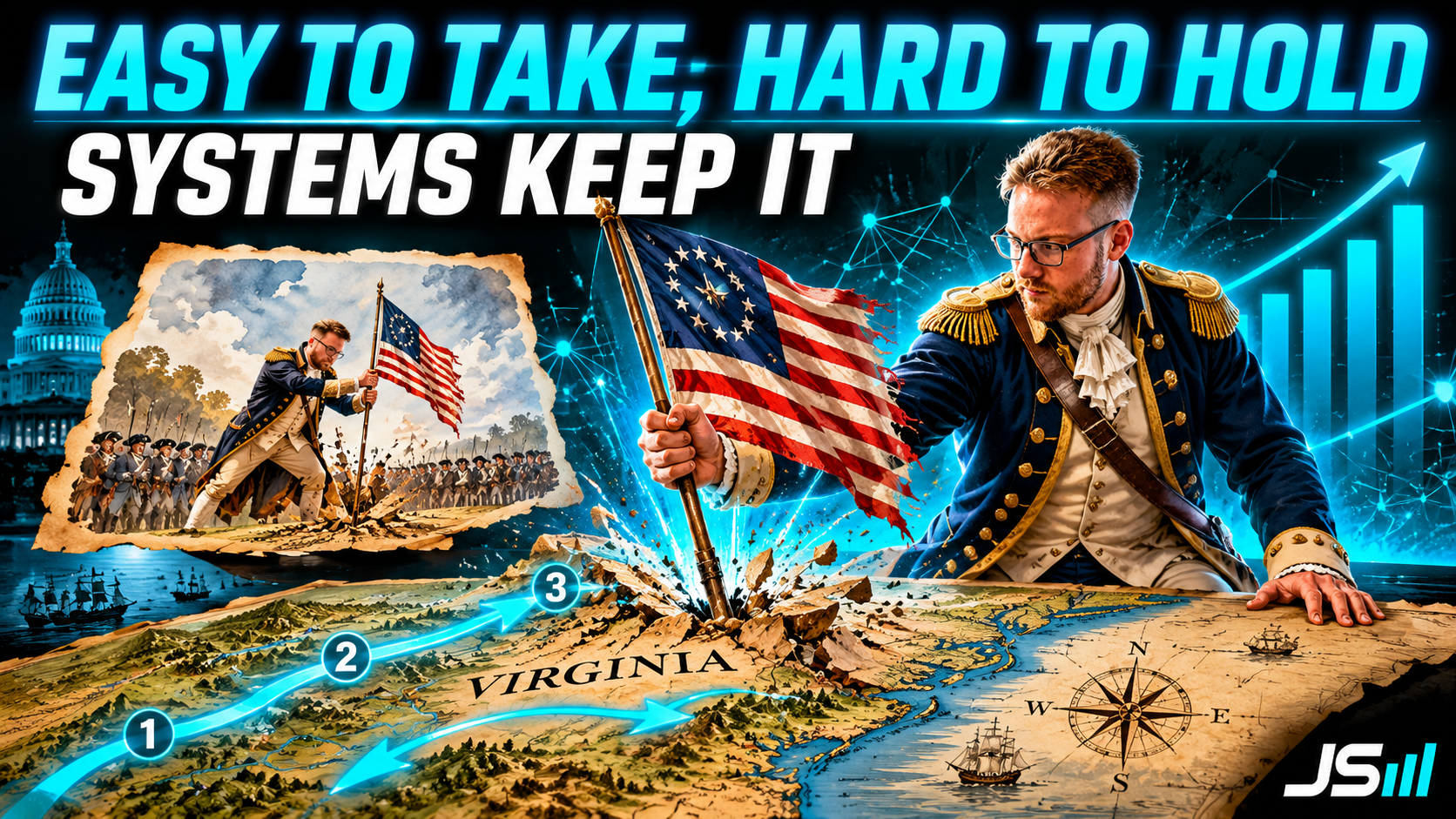
Chamberlain walked into Munich holding the Czech army, a mountain fortress line and a Soviet treaty, and traded all of it for a signature from a man who'd broken every prior one. Franklin walked into Paris with a losing rebellion and a fur hat, and walked out with a continent. Here's the difference, and how to use it in a deal.
Two negotiators walked into rooms where they held the weaker hand. One of them had the stronger hand and didn't know it, gave it away for a signature, and started the worst war in history. The other had almost nothing, knew it, and walked out with a continent. The difference between them is the whole craft of negotiation, and it fits on an index card.

Leverage is the only thing that matters in a room. Not fairness, not goodwill, not how reasonable your position sounds. What you can do to the other side if they say no, and what they can do to you. Everything else is table manners. The first man traded his leverage for calm. The second man built leverage out of nothing and then refused to spend it until the price was right.

What not to do: Munich, September 1938
In 1938 Czechoslovakia was one of the best positioned small countries in Europe. It had a modern army of around thirty-five divisions, the Škoda works, which was one of the biggest arms manufacturers on the continent, and treaties with both France and the Soviet Union that obligated them to defend it. Hitler wanted the Sudetenland, the German-speaking border region. Britain and France wanted to avoid a war.

Here's what the Sudetenland actually was. It was mountains. Along those mountains Czechoslovakia had spent years building a line of concrete fortifications modeled on the French Maginot Line, thousands of bunkers covering every pass. German generals who inspected them after the handover said privately they would have cost an enormous amount of blood to take, and might not have been taken at all. The Sudetenland wasn't a border province. It was the country's armor.

On September 29 Chamberlain, Daladier, Mussolini and Hitler met in Munich. Czechoslovakia was not invited to the meeting about carving up Czechoslovakia. The Soviet Union, which had a treaty to defend the Czechs and had been signaling it would honor it, was also not invited. Four men decided the fate of a fifth country while its representatives sat in a hotel down the street waiting to be told what had happened to them.

Think about that from a negotiation standpoint. Britain and France held real leverage: the Czech army, the fortifications, the Soviet treaty, and the fact that Germany in 1938 was not yet ready for a general war and its own generals knew it. We know now that a group of senior German officers were preparing to remove Hitler if the Western powers stood firm, and they called it off the moment Munich was signed. Every one of those cards was in the Allies' hand. They didn't play a single one. They walked in already having decided the only acceptable outcome was no war this week.

Chamberlain flew home and stood on the airfield waving a sheet of paper Hitler had signed that morning, a vague statement about Anglo-German friendship, and called it peace for our time. The crowd cheered. He'd mistaken a quiet week for a deal. He'd confused a signature from a man who had already broken every prior agreement for an outcome.

Here's the part that should bother you most. The German officers who'd been ready to move against Hitler read the news from Munich and put their plans back in the drawer. Not because they'd been beaten. Because the West had just demonstrated it would fold, and you don't stage a coup against a man who keeps winning without firing a shot. Chamberlain's concession didn't just fail to buy safety. It removed the one internal check that might have stopped the whole thing.
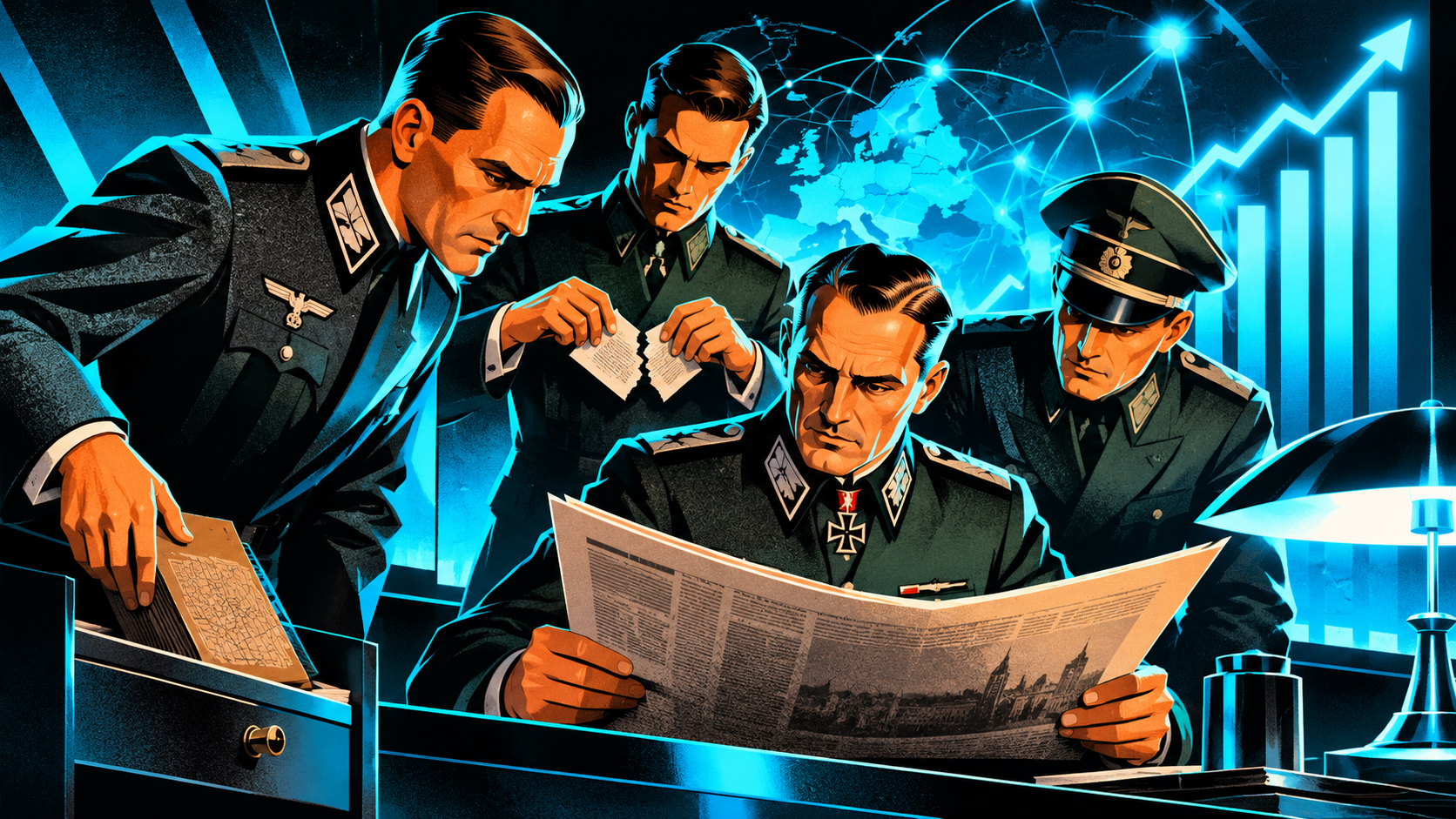
In March 1939, six months after the paper, German forces drove through the empty fortifications and took the rest of Czechoslovakia without a fight. The Škoda works started building tanks for the Wehrmacht. The thirty-five divisions were gone. Everything the Allies could have used to deter the next move was now on the other side of the table.

And the snub of Stalin had its own bill. He'd watched the Western powers exclude him from a decision about an ally he'd pledged to defend, and he drew the obvious conclusion: they would never fight, and if he wanted security he'd have to make his own arrangement. Eleven months after Munich he signed a pact with Hitler instead. The person you leave out of the room doesn't stop existing. They go find another room.

Churchill summed up Munich in one line: they were given the choice between war and dishonor, they chose dishonor, and they would have war. That's the whole lesson. Giving leverage to an aggressive counterpart to buy calm does not buy calm. It buys a short pause and a worse position when the pause ends.
What to do: Franklin in Paris, 1776 to 1783
Now the other guy. In December 1776 Benjamin Franklin landed in France, seventy years old, representing a rebellion that was losing. Washington had just been chased out of New York. The Continental Congress had no money, no navy, no credit, and a declaration of independence that most of Europe considered a joke. Franklin's job was to get the most powerful monarchy in Europe to go to war with Britain on behalf of a bunch of farmers who were, at that moment, in retreat.

The first thing he did was make Paris love him. He showed up at Versailles in a plain brown coat and a fur cap, no wig, no sword, the simple backwoods philosopher, and the most sophisticated court in Europe lost its mind. His face went on medallions, snuffboxes, rings. Women wore their hair in a style named after his hat. He was invited everywhere, and he went everywhere, and he charmed everyone. None of that was vanity. A country does not go to war for a cause. It goes to war for people it likes, and Franklin made sure the French liked him before he ever asked them for anything.

Then he waited for leverage, because he knew he didn't have any yet. The French foreign minister, Vergennes, was sympathetic but wasn't going to bet France on a losing army. Franklin didn't push. He didn't beg. He built relationships, fed the press, kept the Americans in the conversation, and waited for something he could actually use.

It arrived in December 1777. News reached Paris that an entire British army under Burgoyne had surrendered at Saratoga. For the first time, the rebellion looked like it might win. Now Franklin had a card, and watch what he did with it. He didn't run to Vergennes and ask for an alliance. He let it be known that British agents were in Paris quietly offering him peace terms, which was true, because they were. The threat landed exactly as intended: if France didn't move, the Americans might make a deal with Britain, and France would have spent a year and a fortune supporting a rebellion only to watch it reconcile with its enemy.

Within two months, in February 1778, France signed a treaty of alliance and a treaty of commerce with the United States, and was at war with Britain by summer. A losing rebellion had just acquired the French navy. Franklin got it not by asking harder but by making the cost of saying no visible.

Then the second negotiation, which is the better one. By 1782 the war was won and it was time to make peace with Britain. Congress had instructed its commissioners to do nothing without French approval, and France's interests were not America's. Spain, France's partner, wanted the new country boxed in east of the Appalachians. Franklin, with John Jay and John Adams, decided to talk to the British directly. And he opened by suggesting, pleasantly, that Britain might want to hand over Canada as a gesture of goodwill.

Canada was never going to happen and he knew it. That's what an anchor is. He put the opening number so far out that when the real demands came, the Mississippi as the western border, fishing rights off Newfoundland, full recognition, they sounded like a discount. The British were so relieved not to be arguing about Canada that they gave up half a continent.

And underneath all of it he had a floor he never moved. He wrote out the points that were not negotiable: independence recognized outright, the borders, the fisheries. Everything else could flex. Those three couldn't. When you know your floor before you sit down, you can be generous about everything above it and immovable about everything on it, and the other side can feel the difference.

The Treaty of Paris was signed in September 1783. Independence, borders to the Mississippi, the fishing grounds. A country that had been a losing rebellion six years earlier had negotiated terms better than its own ally wanted for it. Then Franklin went back to Vergennes, who was furious at being bypassed, smoothed it over in a single letter, and asked for another loan. France gave it to him.

Charm first, so they wanted to deal with him. Leverage built and timed, so they had to. An anchor so far out that the real ask felt like a bargain. A floor he wrote down and never crossed. And a demonstrated willingness to walk to another table, twice, which is the only thing that makes the rest of it credible.

Now your business
Most founders negotiate like Chamberlain. They walk into the room having already decided the only acceptable outcome is that the deal closes today, and the other side can smell it. So they give up the thing that was actually protecting them, the price, the scope, the terms, the exclusivity, for a signature and a quiet week. And the counterpart who took that concession is already planning the next one, because you just taught them it works.

Here's the Franklin version, in order.

Build leverage before you walk in, not during. Saratoga happened before the alliance, not in the meeting. Your Saratoga is a second buyer, a competing offer, enough runway that you don't need this deal to make payroll, a product that's already working somewhere. If you don't have one, the negotiation is already over and you're just finding out the terms.

Be likeable before you're demanding. Franklin spent a year in the salons before he asked for a navy. People give better terms to people they want to keep dealing with. Rapport isn't a soft skill, it's the thing that makes the other side look for a way to say yes instead of a way to say no.

Anchor hard. If you're selling, open high enough that it makes you slightly uncomfortable. If you're buying, open low enough that it does the same. Ask for Canada. The first number sets the range for everything that follows, and the only mistake you can make with an anchor is making it reasonable.

Write down your floor before the meeting. Three lines on a card, like Franklin. The things that if they're not in the deal, there is no deal. Everything above the floor you can trade generously, which makes you look flexible. Everything on it you don't move, which makes you look serious. Both of those are only possible if you decided the floor in a quiet room beforehand, not in a loud room under pressure.

And be genuinely willing to walk. Not as a bluff. Franklin actually went to the British. Chamberlain actually couldn't leave without a paper, and that single fact decided the whole conference before it started. If the other side knows you can't walk, nothing else you do matters. If they know you can, most of the rest takes care of itself.

One more thing from Munich. Don't mistake a quiet week for a deal. If you gave something up and the other side went calm, that's not peace. That's them deciding what to ask for next. A deal is durable when both sides would be worse off breaking it. A deal is a pause when one side can break it for free, and you'll find out which one you signed about eleven months later.

Chamberlain walked in with an army, a fortress line, a treaty and a coup waiting to happen, and traded all of it for a sheet of paper. Franklin walked in with nothing, built leverage, charmed the room, anchored on a continent, held his floor, and walked out with a country. Never trade leverage for calm. Bring a fur hat.

Want to talk about what you're building?
Get in touch