
In Medio Stat Virtus: Compete Outward, Never Inward

Rome had unlimited ambition and no fair rules, and its best people spent sixty years destroying each other. The shoguns had perfect rules and no ambition, and four ships ended them. Genghis Khan pointed every ounce of ambition outward, made the rules inside fair, and conquered more land than anyone in history. Aristotle's golden mean, with a horse.
Aristotle said virtue sits between two vices. Courage is the mean between cowardice and recklessness. Generosity sits between stinginess and waste. Competition works the same way, and almost nobody treats it that way. Too much and the organization eats itself. Too little and it goes soft and gets eaten. The right amount points every ambitious person at the same outside target and keeps the rules inside fair enough that nobody has to knife a colleague to get ahead.

Rome shows you what too much looks like. Tokugawa Japan shows you what too little looks like. And a poor kid from the Mongolian steppe built the biggest land empire in history by landing dead center on the mean.

Too much: the Roman Republic competed itself to death
Early Rome ran on competition and it worked beautifully. The republic was built on the cursus honorum, a ladder of offices every ambitious man had to climb in order, each one elected, each one earned. The ideal Roman was Cincinnatus, the farmer the senators pulled from his plow to lead the army, who won the war and went back to his plow. Virtus meant serving Rome better than the next man. New men with no famous ancestors could climb all the way to consul. The Punic Wars were won by a society that channeled every bit of its ambition outward, at Carthage.

Then the wars were won and the money came home. Conquered provinces made a few families spectacularly rich. Small farmers who'd been away fighting came back to find their land swallowed into giant estates worked by slaves. The ladder got narrower at the top and the bottom rungs disappeared. By the second century BC, real upward mobility was mostly gone, and when the Gracchus brothers tried to reform land ownership, the Senate had them beaten to death in the street. Twice. Ten years apart.

Once you can't rise by serving Rome, you rise by beating other Romans. Marius changed the army so soldiers were paid and given land by their general, not the state, so the legions became private armies loyal to the man who paid them. Sulla marched his own troops into the city, took it, and posted lists of names: anyone on the list could be killed by anyone for a reward, and the killer got a cut of the estate. Competition had stopped being about who could do the most for Rome and become about who could survive the other senators.

The First Triumvirate was the final form of it. Caesar, Pompey and Crassus didn't share power because they liked each other. They shared it because each one was too dangerous to leave out. Crassus went to Parthia for glory and died in the desert. Caesar and Pompey fought a civil war across three continents. Caesar won, took everything, and was stabbed to death by the men he'd beaten. Then his heirs fought another civil war. Sixty years of the most talented people in the Mediterranean spending their entire ambition on each other. The republic didn't lose to an outside enemy. It never had a real one. It was cannibalized by its own best competitors.

Too little: the shogun who closed the gates
Now the opposite failure, and it's just as fatal. In 1603 the Tokugawa shoguns won Japan's civil wars and decided the way to never have another one was to freeze everything in place. They did it brilliantly. Four fixed classes, samurai on top, then farmers, then artisans, then merchants, and nobody moved between them. The daimyo lords had to leave their families as hostages in the capital. Christianity was banned, foreign trade was cut to one Dutch post on one artificial island, and leaving the country was punishable by death. Firearms, which had decided the civil wars, were quietly regulated out of use because they let a peasant kill a samurai.

It bought them two hundred and fifty years of peace, and I don't want to pretend that's nothing. But nobody inside the system had any reason to build a better ship, a better gun, or a better anything, because there was no one to beat and no way up. The Ottomans did the same thing with the printing press, banning it for Muslims for almost three centuries while Europe was running off pamphlets. Stability became the only goal, and stability with no competition is just slow decay with good manners.
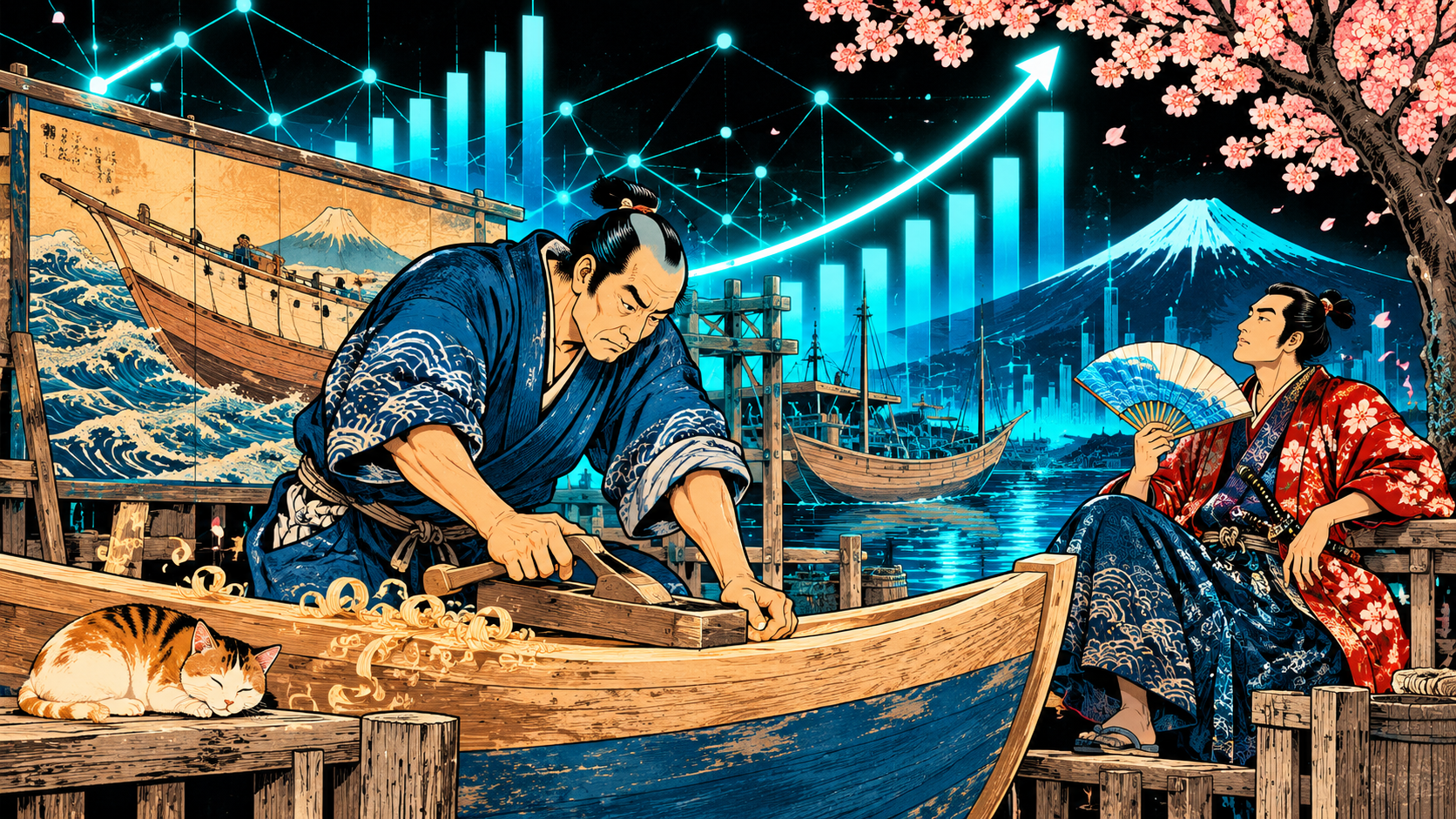
In 1853 Commodore Perry sailed four American warships into Edo Bay, two of them steam-powered, something no Japanese shipwright had ever seen. He didn't have to fire a shot. The most ordered society on earth took one look at technology it had opted out of for two centuries and understood it couldn't say no. Within fifteen years the shogunate was gone. Too little competition didn't kill them slowly. It kept them perfectly preserved right up until the day it killed them all at once.

The mean: Genghis Khan
Temüjin was born around 1162 into a world that was late Rome on horseback. The Mongolian steppe was dozens of clans and tribes in permanent war with each other, raiding, feuding, stealing each other's wives and herds, and the only way up was being born to the right lineage. His father was poisoned when he was a boy, his clan abandoned his family to starve, and he spent his teens hunting rodents to eat and at one point as a captive wearing a wooden collar. He had every reason to hate the system, and he did something better than hating it. He replaced it.
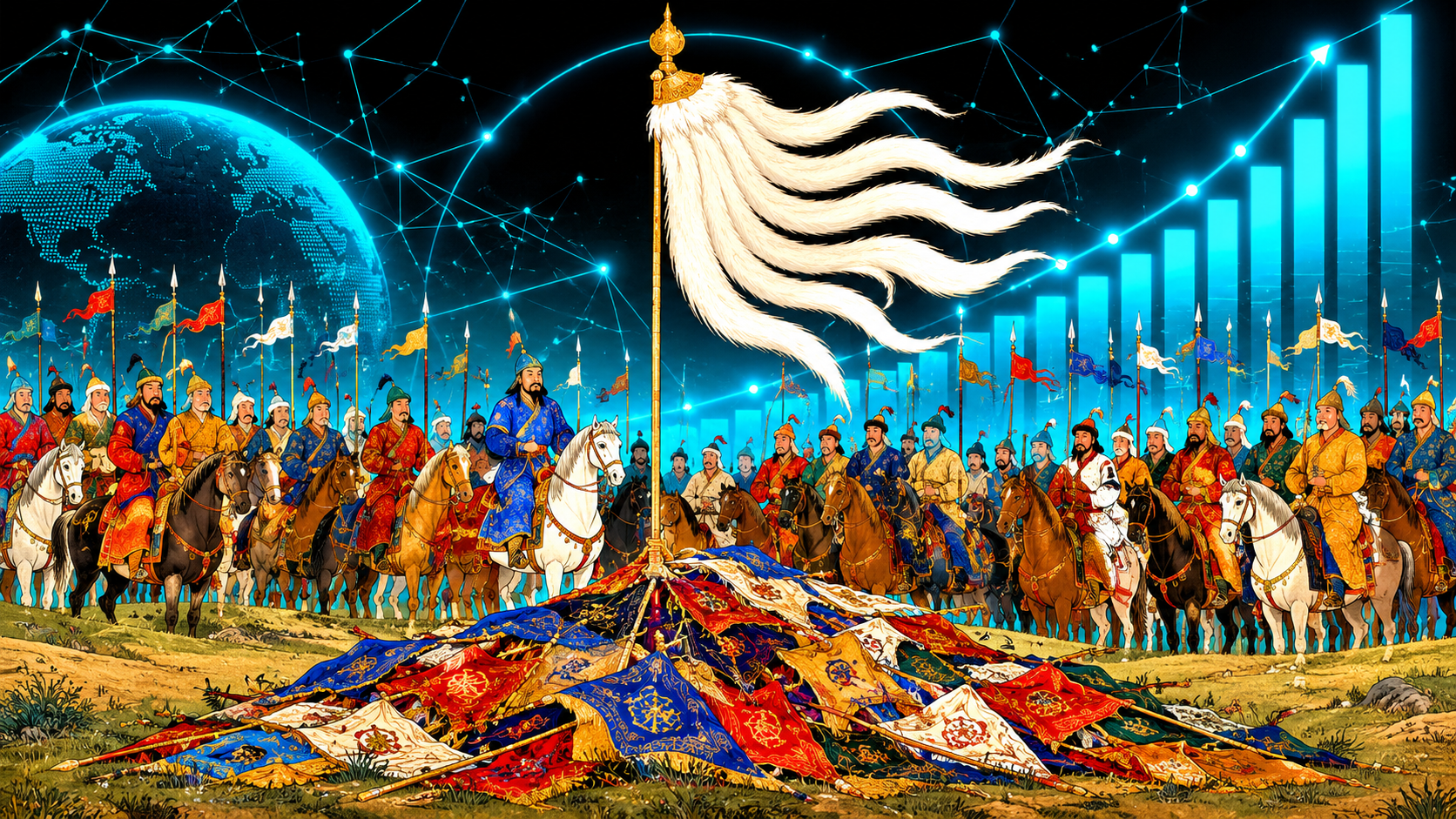
When he united the tribes, the first thing he did was gut the aristocracy. Clan rank meant nothing. He organized the entire nation into units of ten, a hundred, a thousand and ten thousand, and he deliberately mixed men from different tribes into the same unit of ten, so your loyalty went to the men beside you and the Khan above you instead of some hereditary chief. Promotion was by what you did. His greatest general, Subutai, was a blacksmith's son. His most trusted companion was a shepherd. That was the meritocracy, enforced from the top, in a society that had never had one.

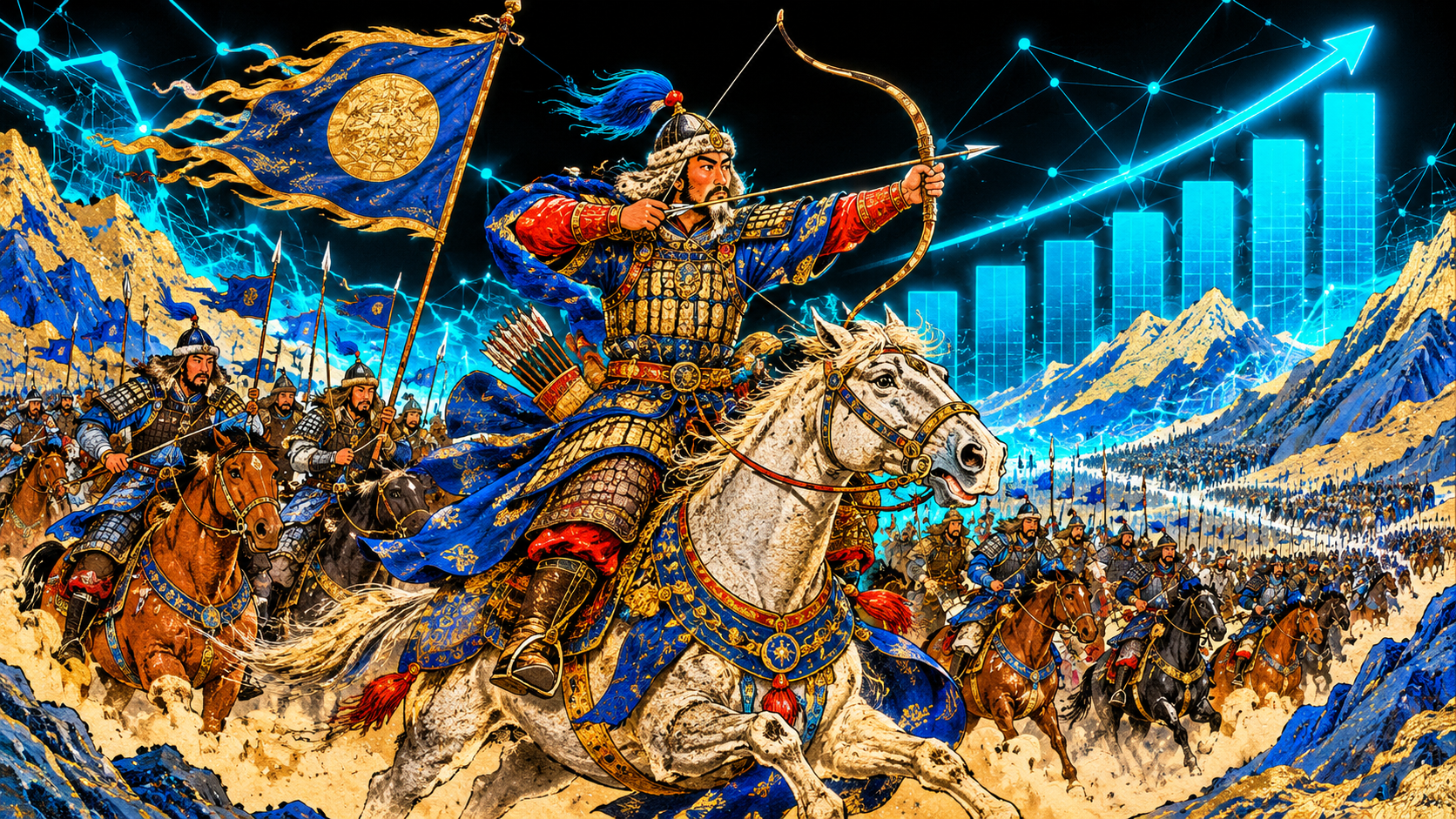
The rules were written down and they were the same for everyone. Plunder was pooled and distributed by law, not grabbed, and a share went to the widows and orphans of men who'd died in the campaign, which meant a soldier could charge knowing his family was covered either way. Leaving a wounded comrade behind was punishable by death. Looting before the battle was finished was punishable by death. The energy that had gone into tribe-on-tribe raiding for a thousand years was pointed outward with a set of fair internal rules, and it took the Mongols from a feuding backwater to the gates of Vienna in two generations.

My favorite story is Jebe. In a battle against an enemy tribe, an arrow hit Temüjin in the neck. After the battle, the prisoners were lined up and he asked who had fired it. A young archer stepped forward and said it was him, and that the Khan could kill him or he could serve. Temüjin made him an officer on the spot, because a man who'd tell the truth with his life on the line was worth more than a hundred flatterers. Jebe became one of the great cavalry commanders in history. Talent and honesty got rewarded no matter where they came from. That's the whole system in one decision.
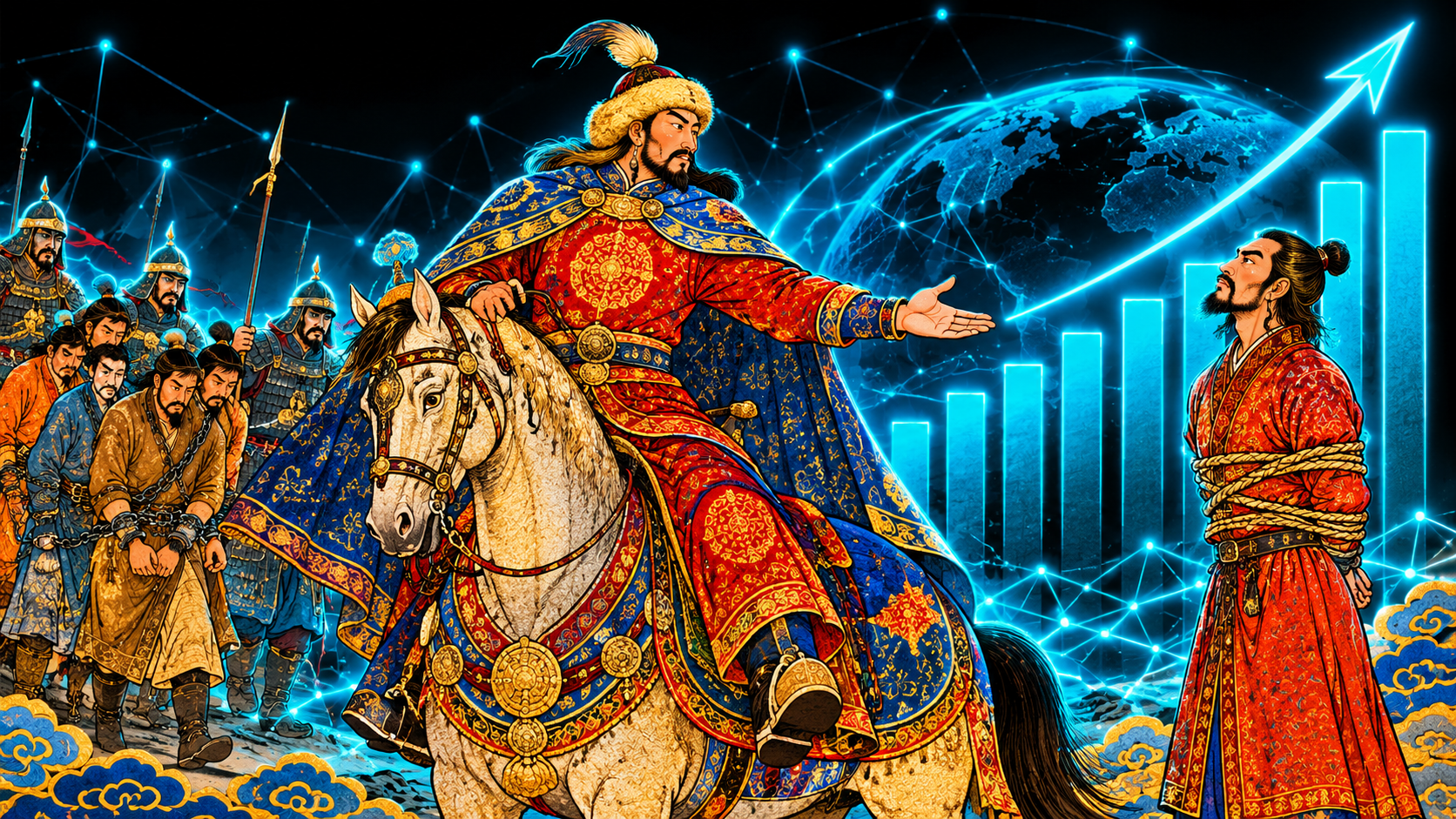
And then the other half. Jamukha had been his blood brother as a boy and his greatest rival as a man. In the end Jamukha's own companions betrayed him and dragged him to Temüjin in chains, expecting a reward. Temüjin had the betrayers executed in front of Jamukha. His reasoning was simple: a man who sells out his lord today will sell out me tomorrow. Then he offered his old rival his friendship back. Jamukha refused, asked to die honorably, and got it. The lesson every Mongol took away was that loyalty got rewarded even in defeat, and disloyalty got you killed even when it helped the Khan.
Compete as hard as you can against the outside. Inside, the rules are fixed, promotion is earned, nobody gets ahead by selling out the person next to them, and the man who tells you the truth gets promoted over the man who tells you what you want to hear. That is Aristotle's mean with a bow and a horse.

Running it in a company
Here's how I'd translate it, because the same three failure modes show up in every business I've seen inside.

- Point the competition outward. The scoreboard that matters is against the market, not the desk next to you. Measure revenue won from competitors, customers kept, problems solved. Never rank people against each other on a metric they can game by sabotaging each other.
- Reward the actual result, not the curated number. A perfect close rate on cherry-picked deals is a Roman senator's resume. Count the hard deals attempted. Count how the juniors grow. Count what the team shipped, not what one person claimed.
- Make the ladder real and the same for everyone. Subutai was a blacksmith's son. If the people getting promoted all look like the people doing the promoting, you've built the late Republic and the ambitious ones will start taking matters into their own hands.
- Promote the Jebe. The person who tells you the uncomfortable truth, especially about their own mistake, is worth ten who manage up. Make a show of rewarding it, so everyone sees what gets you ahead.
- Execute the betrayers. Not literally, but close. Fraud, sabotage, undermining a colleague to climb, taking credit for someone else's work: fire for it, publicly enough that the lesson lands. A tolerated knife in the back is an invitation to everyone else.
- Don't close the gates. Comfortable and stable is how you end up watching the black ships come in. Keep real competitors in view, keep hiring people who are better than you at something, and keep the pressure on yourself hardest of all.
Rome had unlimited ambition and no fair rules, and its best people spent sixty years destroying each other. The shoguns had perfect rules and no ambition, and a handful of ships ended them. Genghis had both, aimed outward, and a poor kid who'd been left to starve on the steppe conquered more land than anyone before or since.

Compete outward. Never inward. Keep the rules fair enough that nobody has to.

Want to talk about what you're building?
Get in touch