The Crassus Trap: Why It Pays to Stay in Your Lane

Crassus owned half the Senate, bankrolled Caesar, and beat Spartacus with engineering and patience — then watched Pompey take the credit. Eighteen years later he went looking for his own glory in Parthia and lost twenty thousand men. Competent person, wrong desert.
Marcus Licinius Crassus was the wealthiest man in Rome and arguably the most powerful one, and he died face down in a Mesopotamian desert chasing a kind of glory he was never built for. There's a business lesson in that, and it's not a subtle one.

He started with nothing
He wasn't a self-made outsider, but he may as well have been by the time he got going. His father had reached the consulship, which is about as high as Rome went. Then the civil wars between Marius and Sulla came through, and in 87 BC his father and one of his brothers died in the purge and the family estate was confiscated. At roughly twenty-five he went from heir to a political dynasty to a wanted man with nothing.
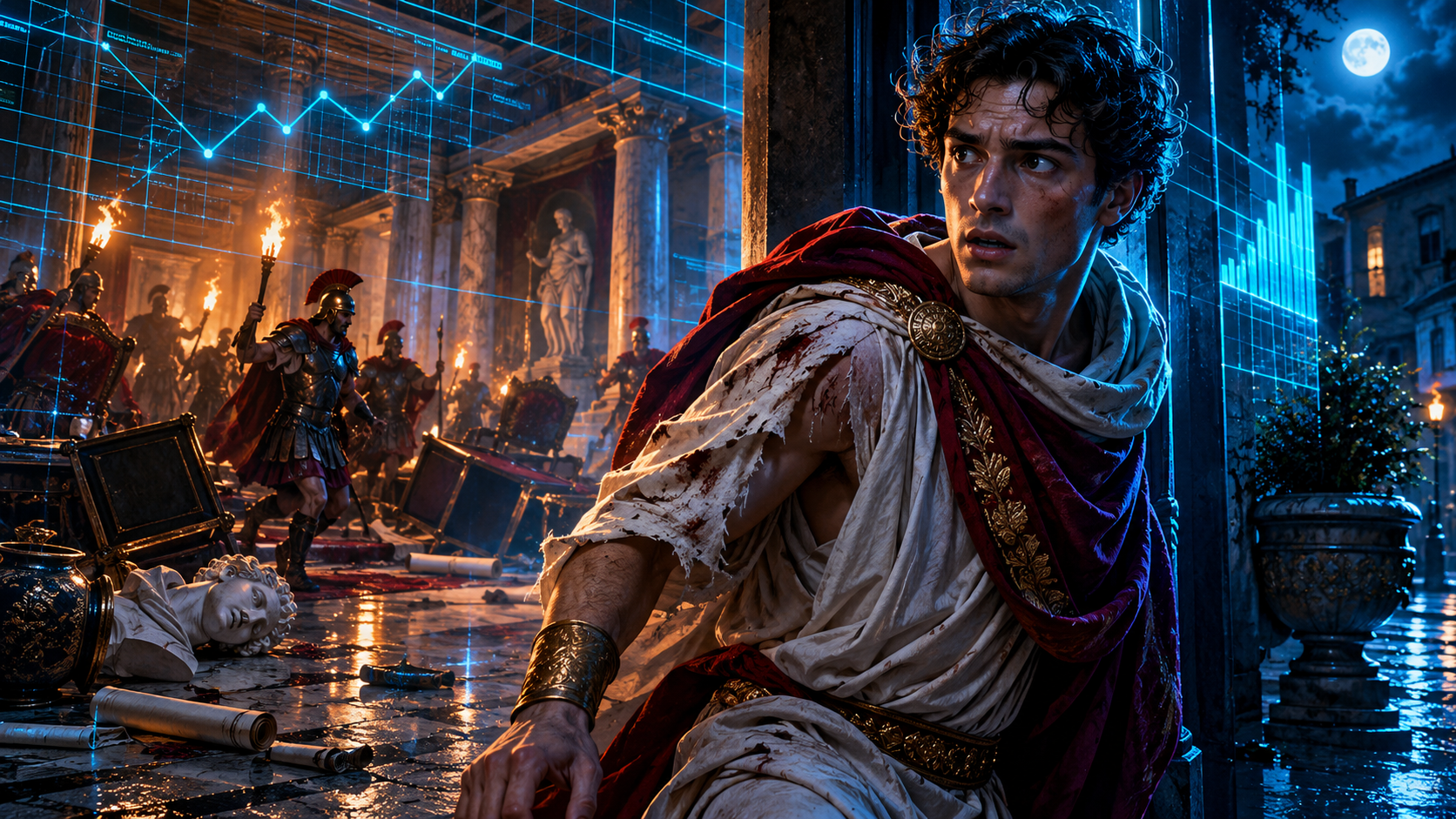
He fled to Spain and spent roughly eight months hiding in a coastal cave while a friend quietly sent food. That's the detail I keep coming back to. The richest man in the ancient world spent most of a year in a hole in a cliff, waiting. Whatever else he was, he was patient in a way almost nobody is.

When Sulla moved on Italy, Crassus raised troops and joined him. At the Colline Gate in 82 BC, the battle that decided the war at the walls of Rome itself, he commanded the right wing. Sulla's left was being driven back. Crassus broke the enemy in front of him and then turned, and that is what won the night. Keep that in mind, because it matters later: the man could command.
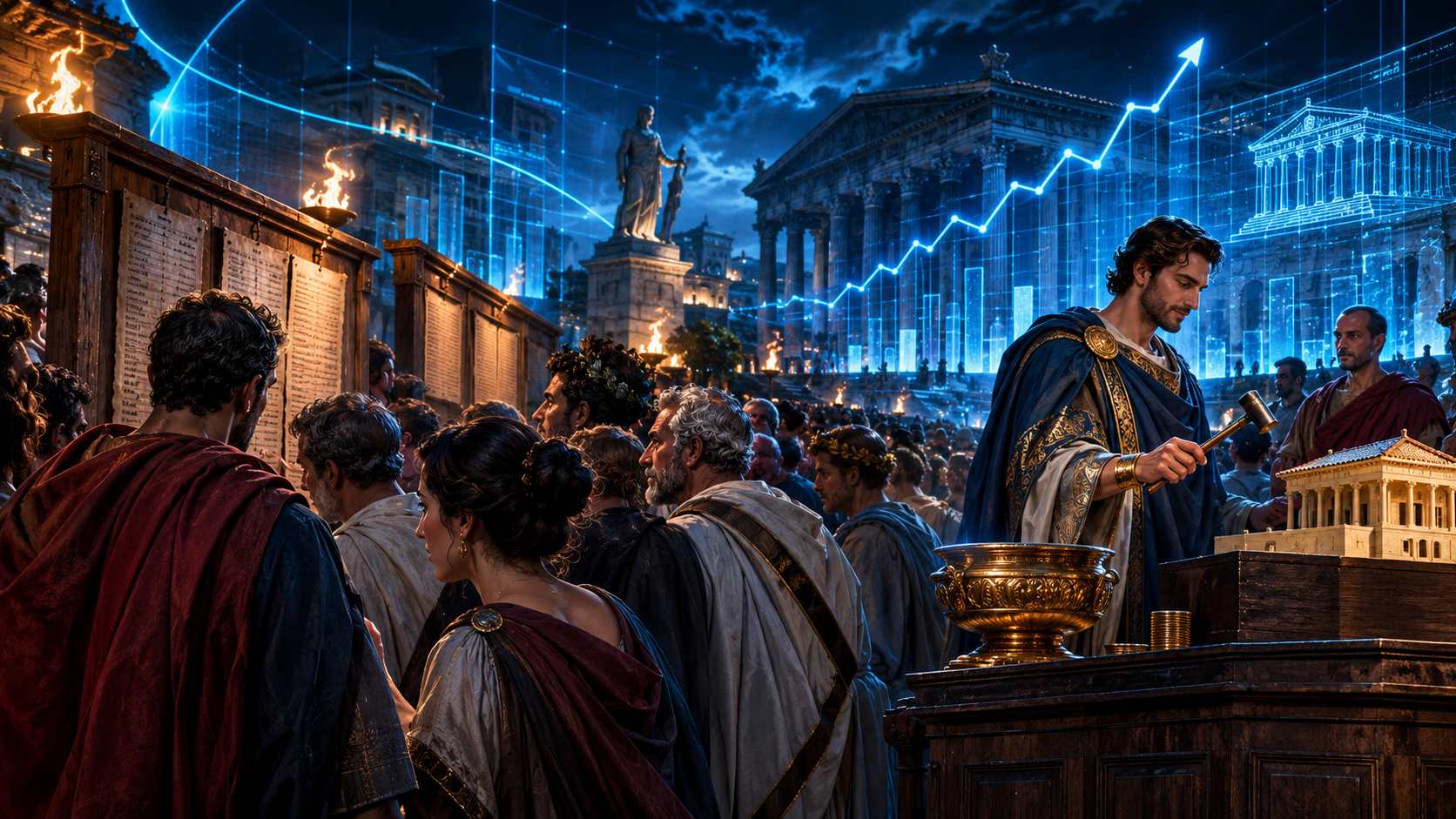
Then came the proscriptions. Sulla posted lists of enemies of the state, and being on the list meant death and the forced auction of everything you owned. Those auctions were thin, rigged and terrified, and Crassus bought. Plutarch puts his fortune at around three hundred talents before and seven thousand one hundred after. He didn't invent the opportunity. He just understood, faster and more coldly than anyone else, what a distressed asset was actually worth.
Then he turned it into leverage
He ran a private fire brigade of some five hundred trained slaves — builders, architects, masons. They'd show up at a burning building and negotiate the purchase price while it burned, then buy the terrified neighbours out too, then rebuild the block and own the street. Ruthless. Also brilliant.
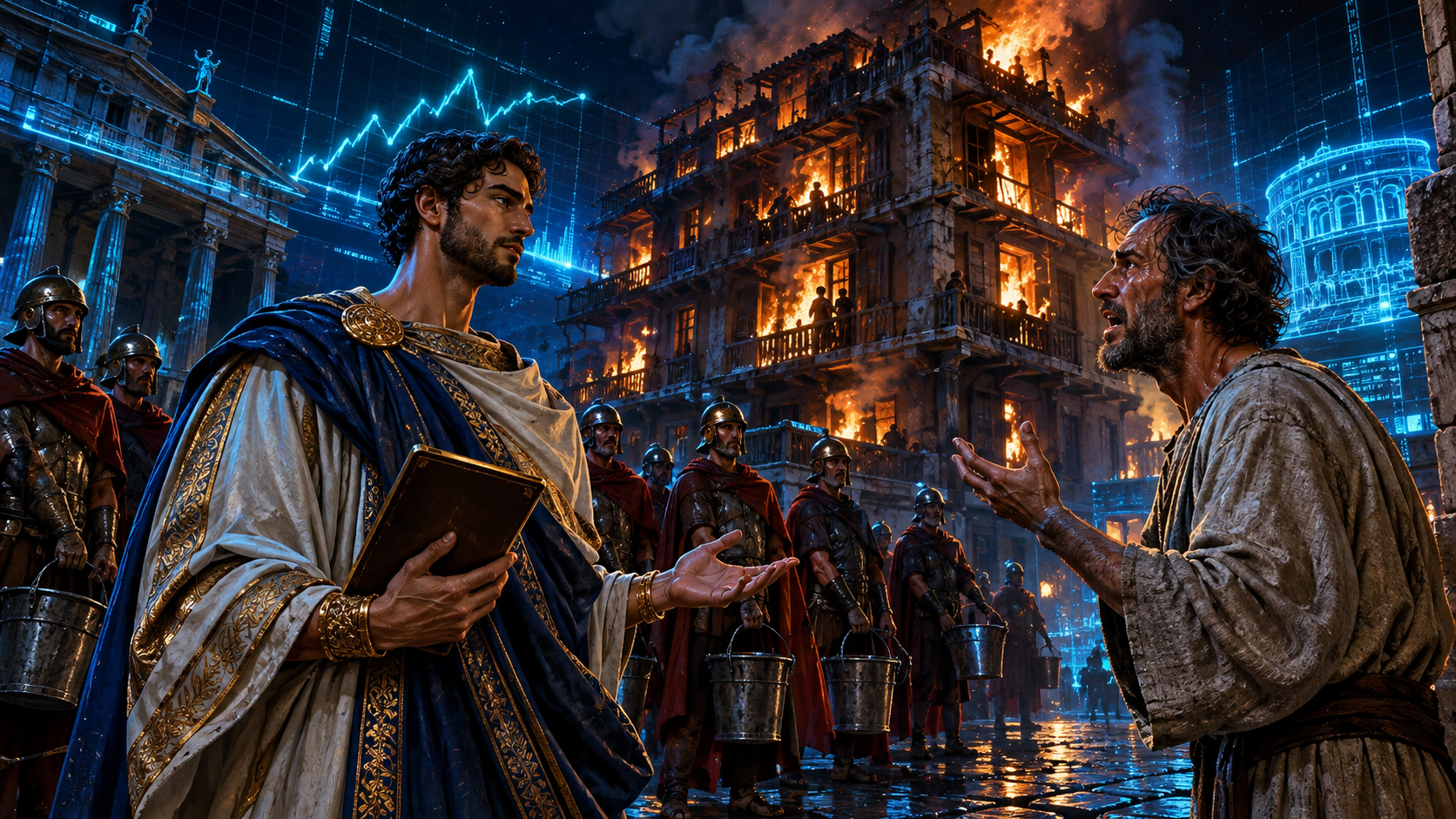
He had a line that tells you exactly how he thought: no man should be called rich, he said, who can't afford to maintain an army on his income. Money was never the scoreboard. It was the instrument. He measured his fortune in what it could field.
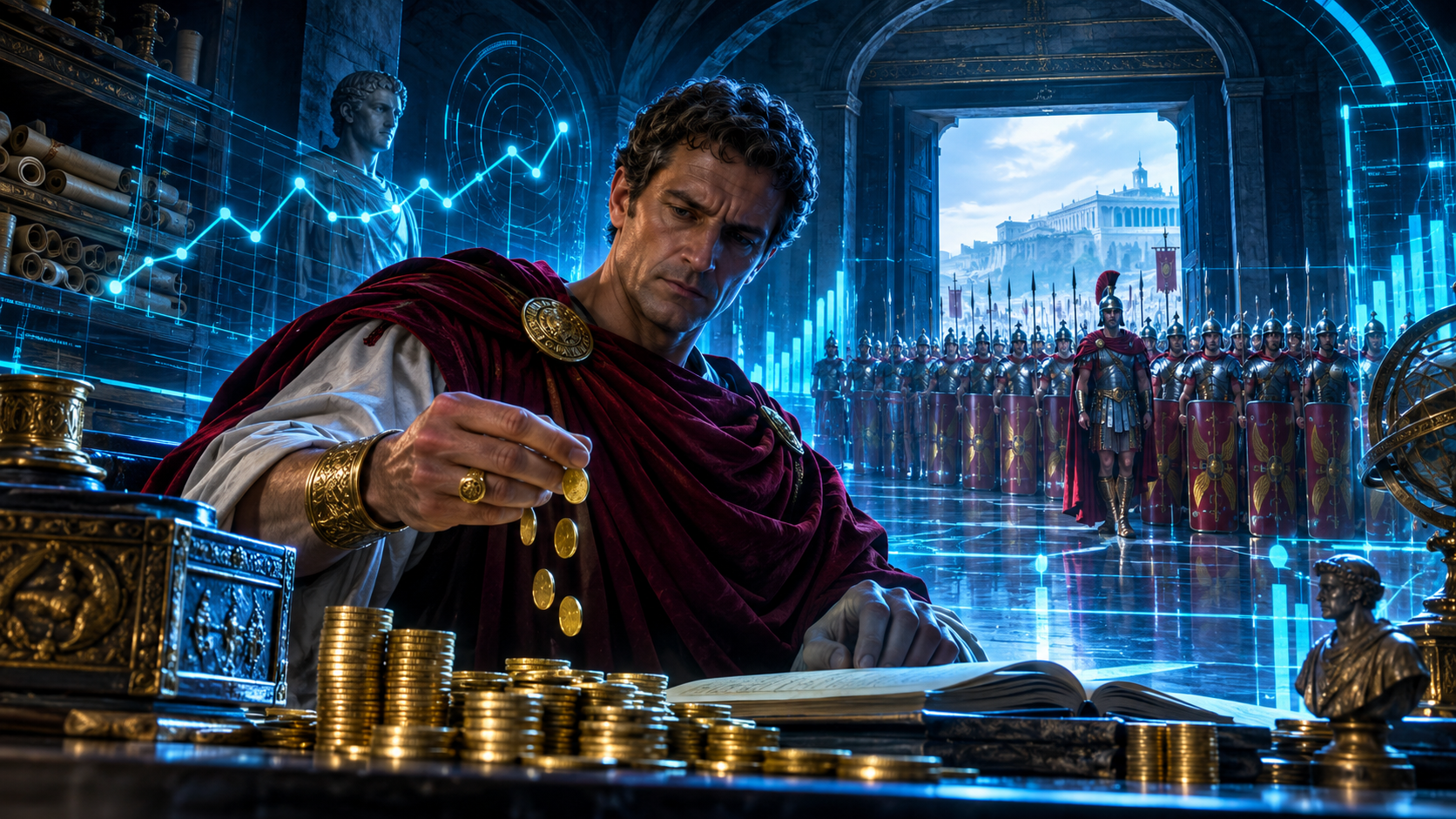
And he spent it on people, relentlessly. He lent to senators, which meant he owned senators. He bankrolled Caesar's early career when Caesar was drowning in debt and nobody else would touch him. He later brokered the alliance between himself, Pompey and Caesar that ran the Republic for years. Crassus didn't win arguments in the Senate. He arrived having already counted the votes.
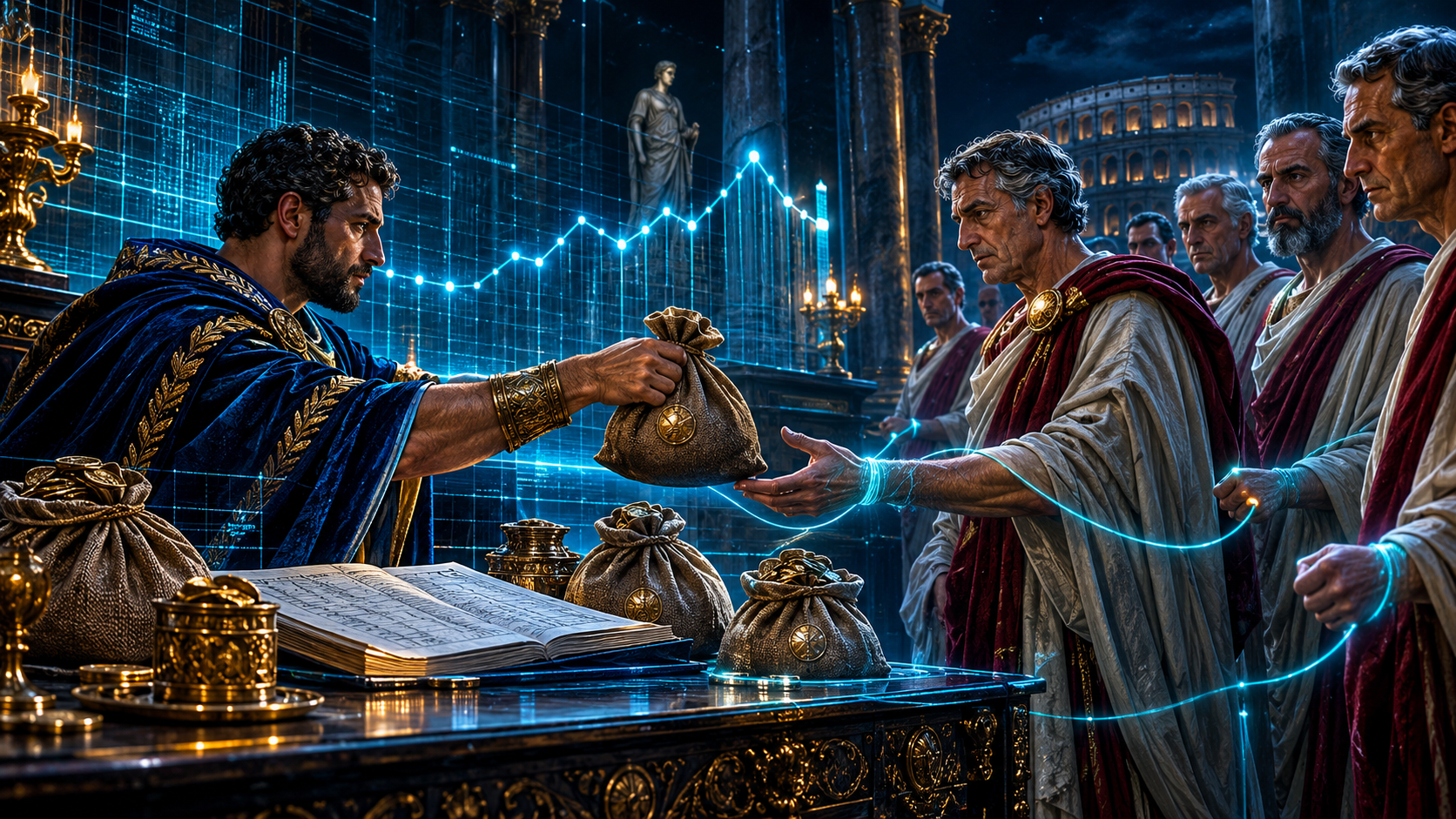
He worked the retail end too — knew a staggering number of citizens by name, took legal cases other patrons couldn't be bothered with, lent to friends without interest while being famously immovable about the due date. That's the whole man: generous on terms, merciless on timing. He wasn't building a pile of gold. He was building an obligation network, and the gold was just how he financed it.

Then he beat Spartacus
In 73 BC about seventy gladiators broke out of a training school in Capua using kitchen knives and cooking spits. That's the whole beginning. Within two years it was somewhere between seventy and a hundred and twenty thousand people, and it had become the most humiliating military problem Rome had faced in living memory.
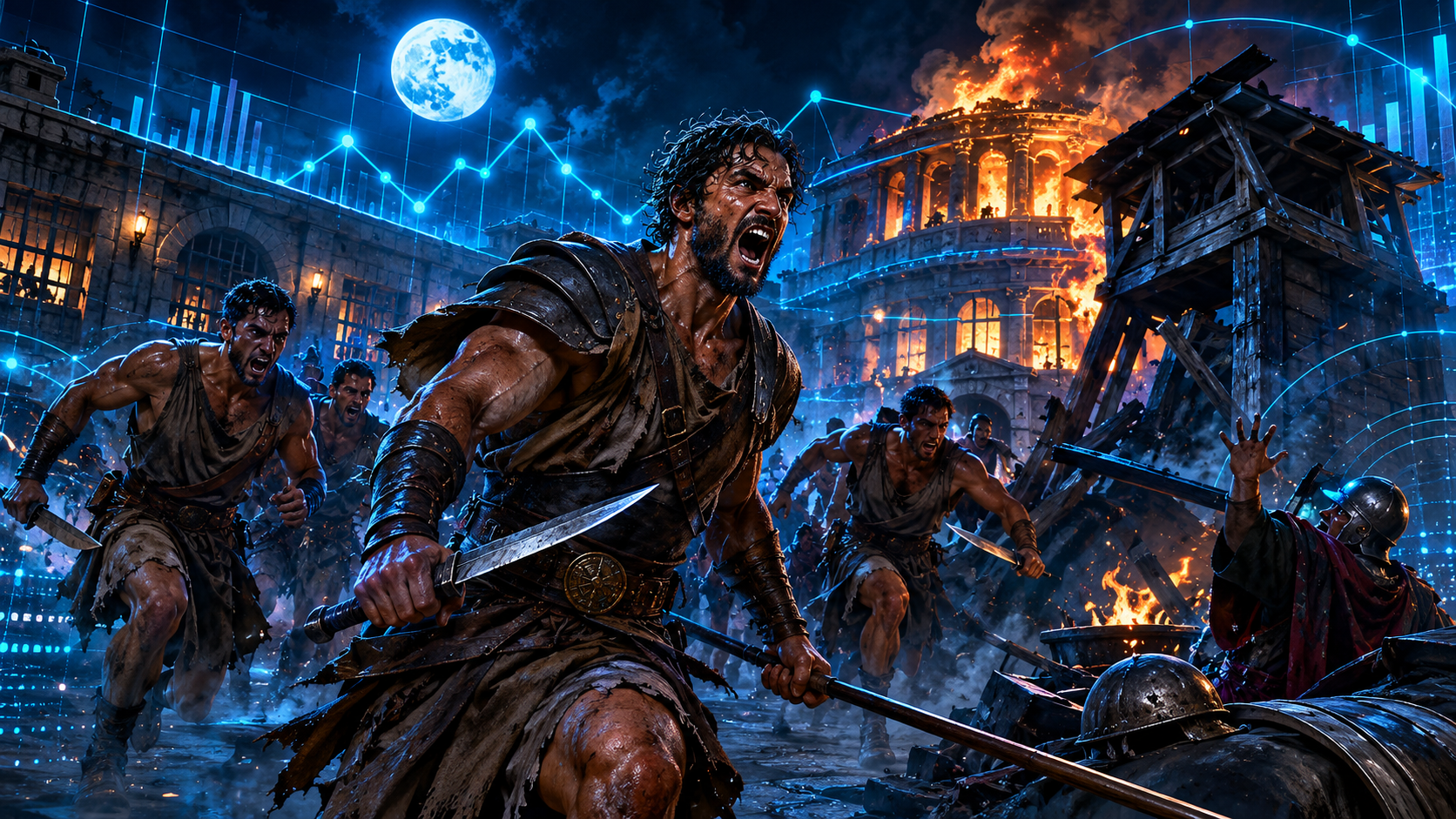
The first force sent against them trapped Spartacus on the slopes of Vesuvius and sat at the only path down, which was sound thinking right up until the rebels braided ropes out of wild vines, climbed down a cliff the Romans had written off as impassable, and came around behind the camp. Then praetors lost. Then in 72 BC both consular armies — the actual top of Rome's military org chart — lost too, separately. Rome was frightened in a way it hadn't been since Hannibal.
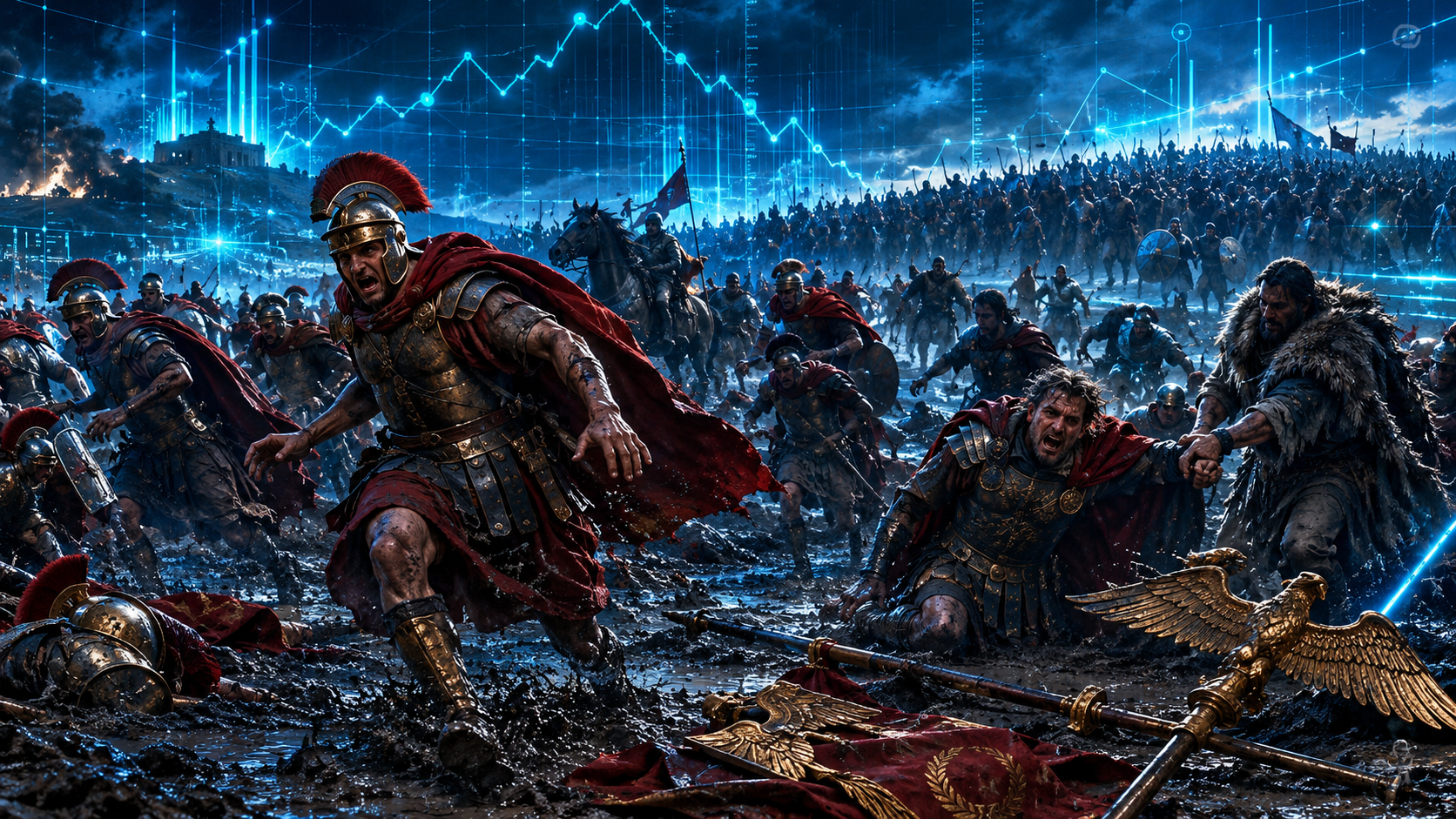
Crassus took the job nobody wanted. Beat slaves and you've done the minimum; lose to them and you're finished forever. He was given the command and raised six fresh legions on top of the beaten consular troops, paying for a large part of it out of his own pocket.
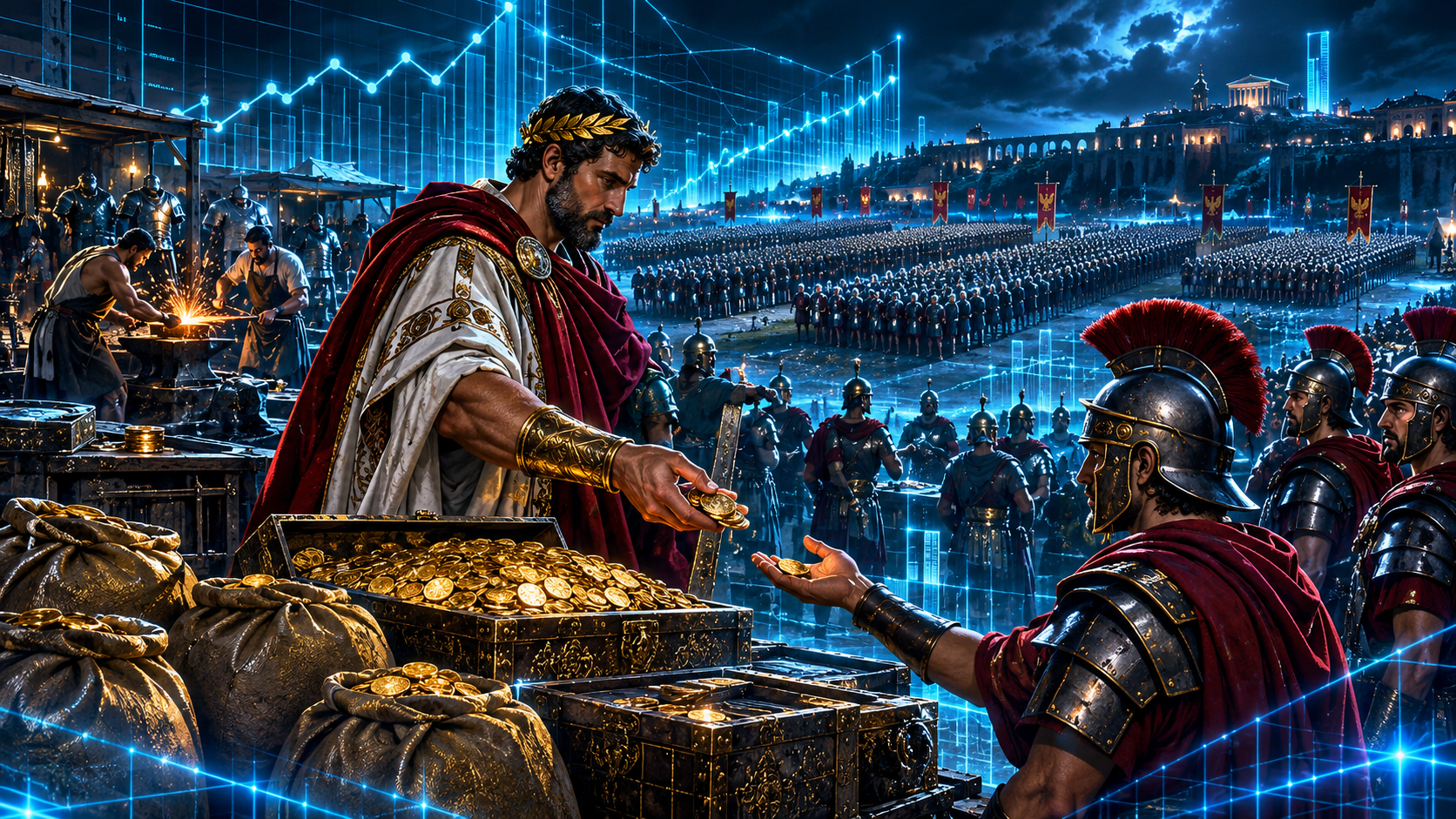
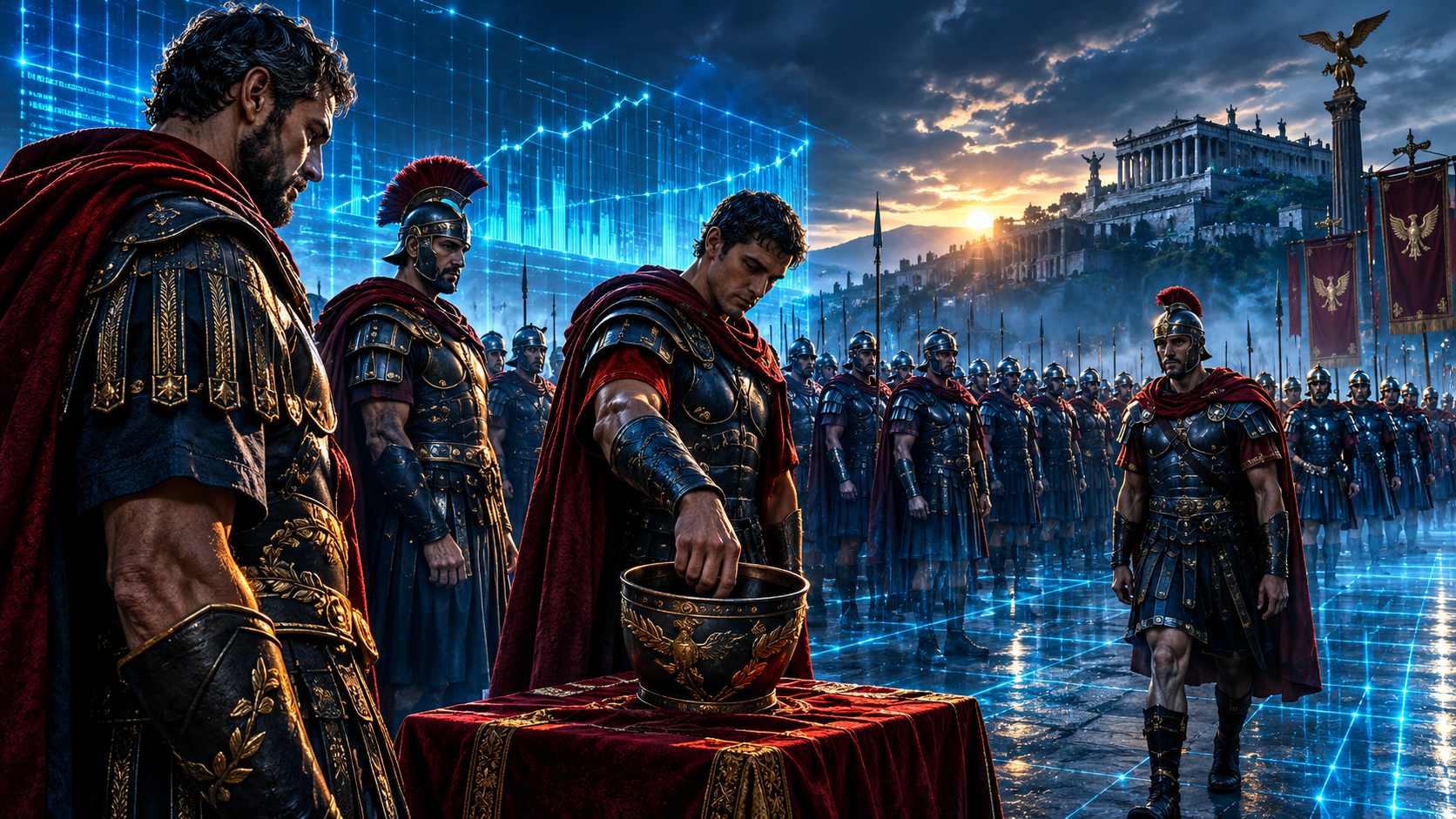
The first thing he fixed wasn't tactics. It was that his army had learned to run. When his legate disobeyed a direct order not to engage and got routed, Crassus revived decimation: the units that broke were split into tens and each group beat one of its own to death by lot. It's monstrous. It also worked. After that his men were, as the sources dryly put it, more afraid of him than of the enemy.
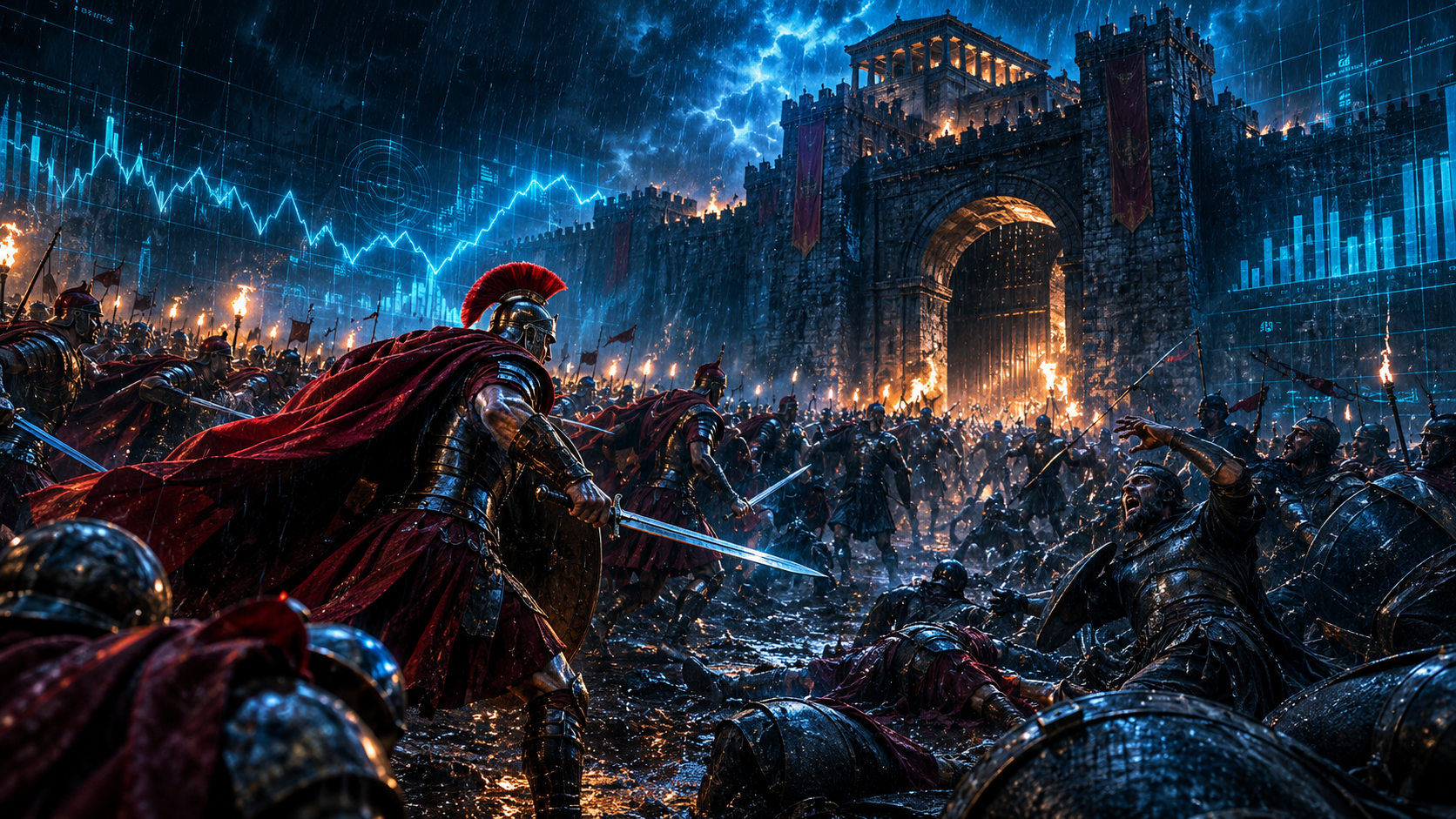
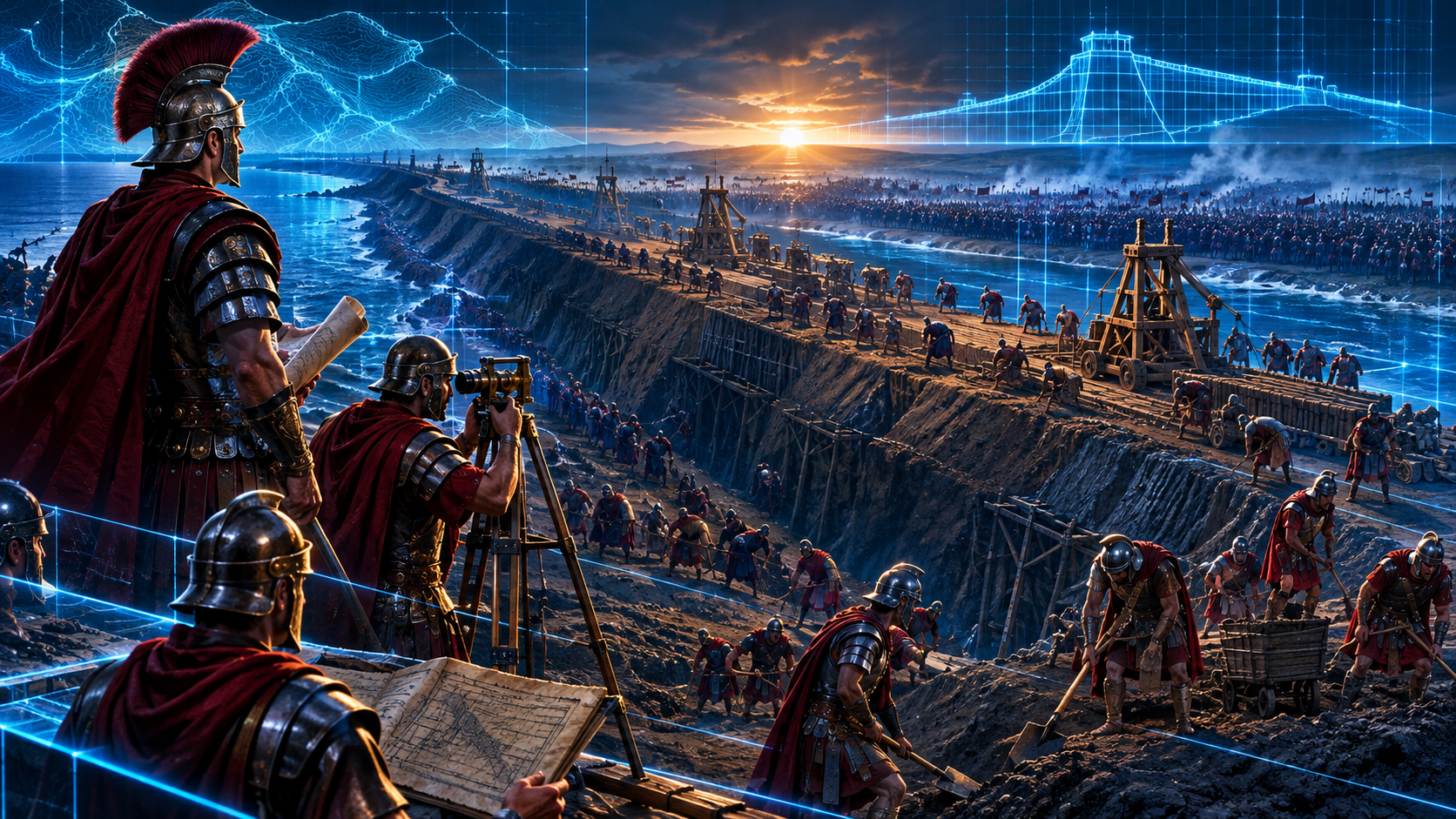
Then he did the thing he was actually built for. He didn't chase Spartacus around Italy looking for a glorious set-piece. He pushed him into the toe of Italy and squeezed. Spartacus had bought passage to Sicily from Cilician pirates; they took the money and sailed away without him. So Crassus closed the bag — a fortified ditch and rampart built clean across the isthmus, coast to coast, thirty-odd miles of it. That's not heroics. That's surveying, logistics and attrition, which is to say it's exactly the skill he used to corner the Roman property market, pointed at an army.
Spartacus broke out anyway, on a snowy night, filling a section of the ditch with earth and timber. Crassus didn't panic and didn't improvise a glorious pursuit. He split the rebel force, destroyed the pieces one at a time, and ground it down. The end came in 71 BC near the river Silarus, where Spartacus went forward on foot straight at Crassus's position and was killed somewhere in the press; his body was never identified. Then six thousand prisoners were crucified along the Appian Way from Capua to the gates of Rome, and left standing.

Then he watched other men get the credit
Pompey was coming back from Spain with an army, happened to intercept about five thousand fugitives fleeing north, cut them down, and wrote to the Senate that Crassus had won a battle but that he, Pompey, had ended the war. Rome believed him, because Rome already liked the story where Pompey is the hero.
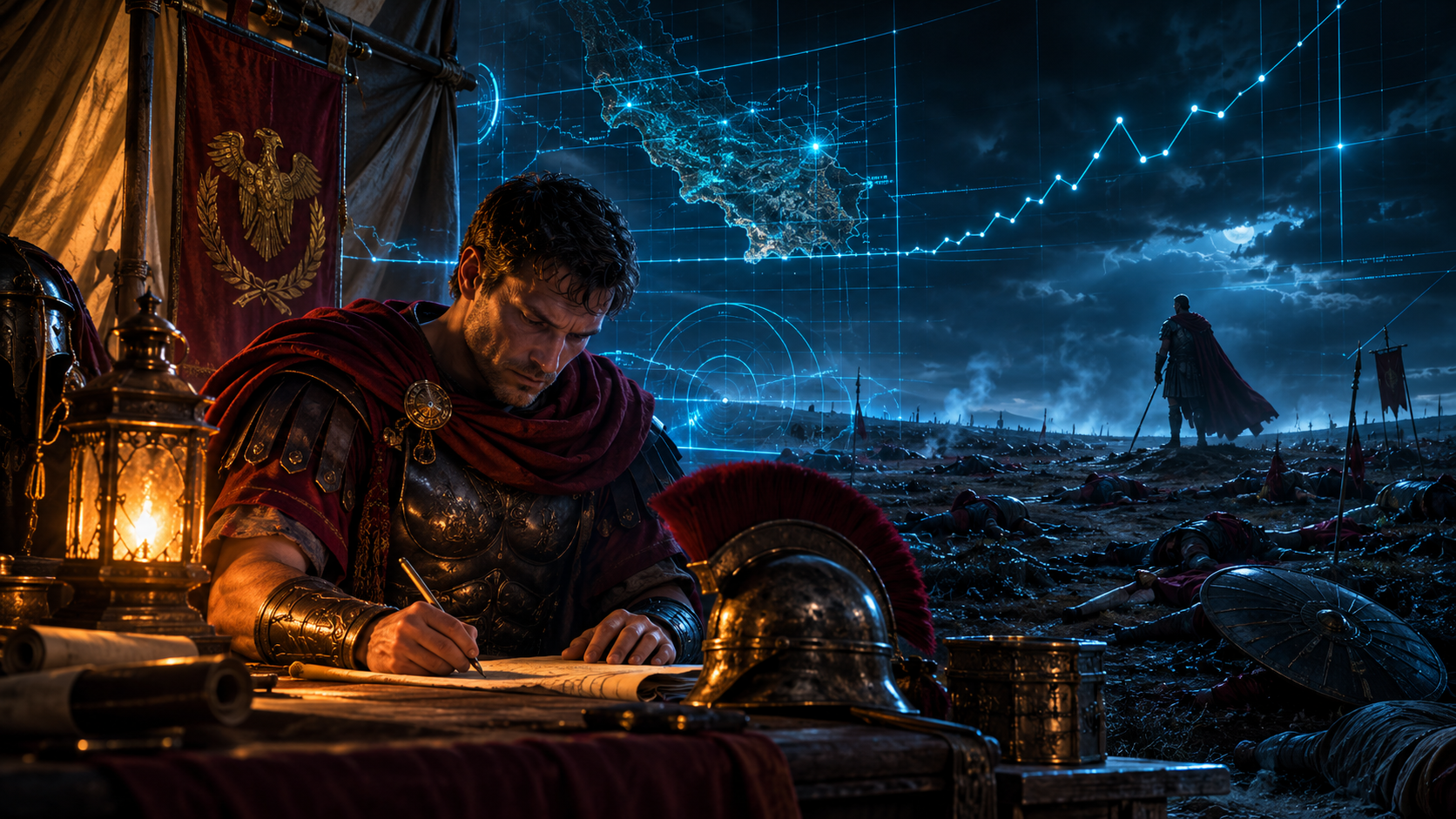
Pompey got a triumph. Crassus got an ovation — the lesser honour, on foot, myrtle instead of laurel. And a triumph was the only currency in Rome that actually counted; you couldn't buy one, and Pompey had been collecting them since his twenties. So the man who took the command nobody wanted, paid for the army himself, and finished a war that had beaten two consuls walked up a side street in a myrtle wreath while the city cheered someone else. He never got over it.
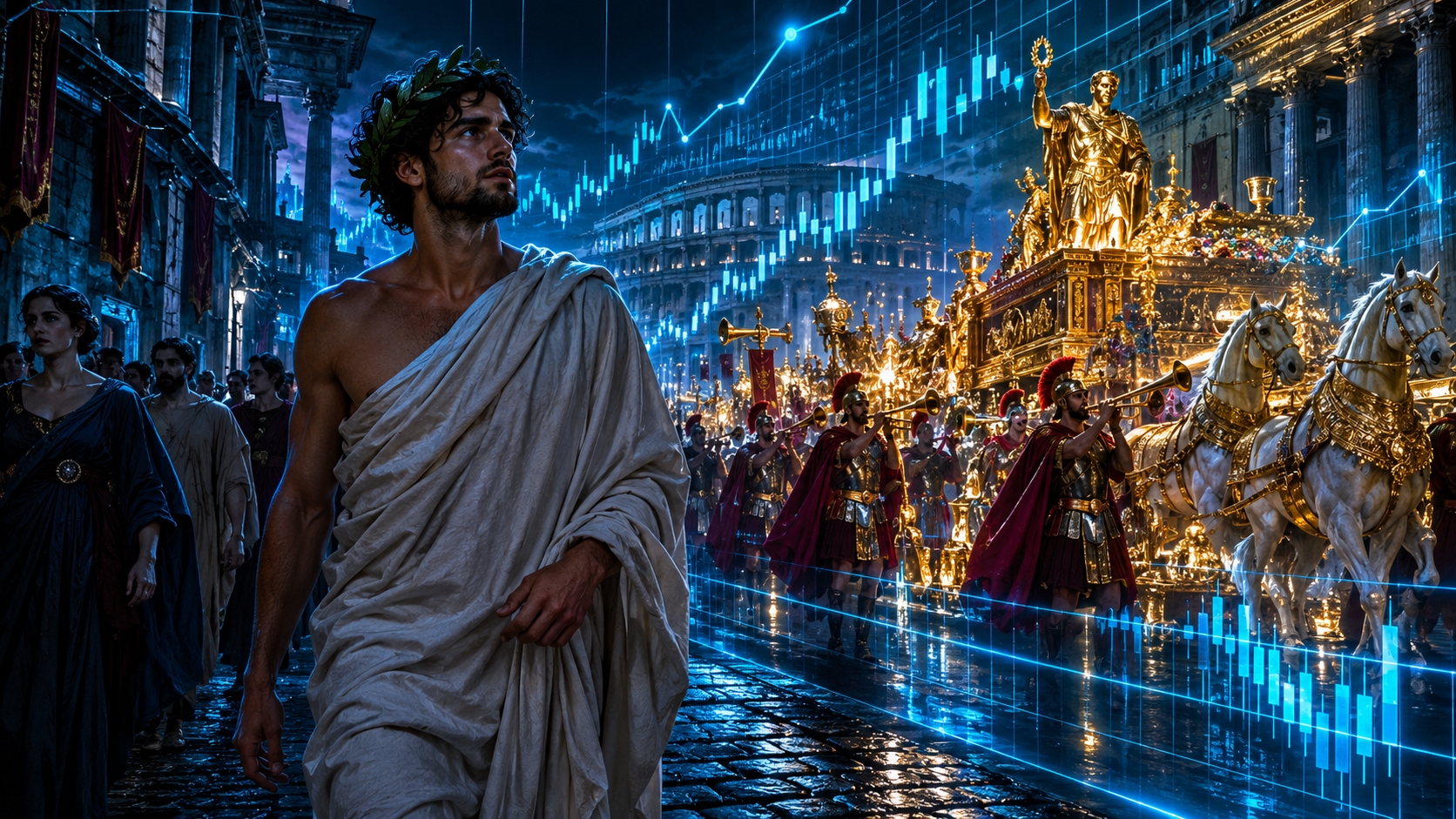
He kept climbing — consul, censor, and in 60 BC the arrangement with Pompey and Caesar that effectively ran the Republic. By any structural measure he had won: he was the hinge the whole thing turned on. But Caesar was conquering Gaul and sending back dispatches that made him a legend, Pompey had his triumphs, and Crassus had bankrolled both of them.
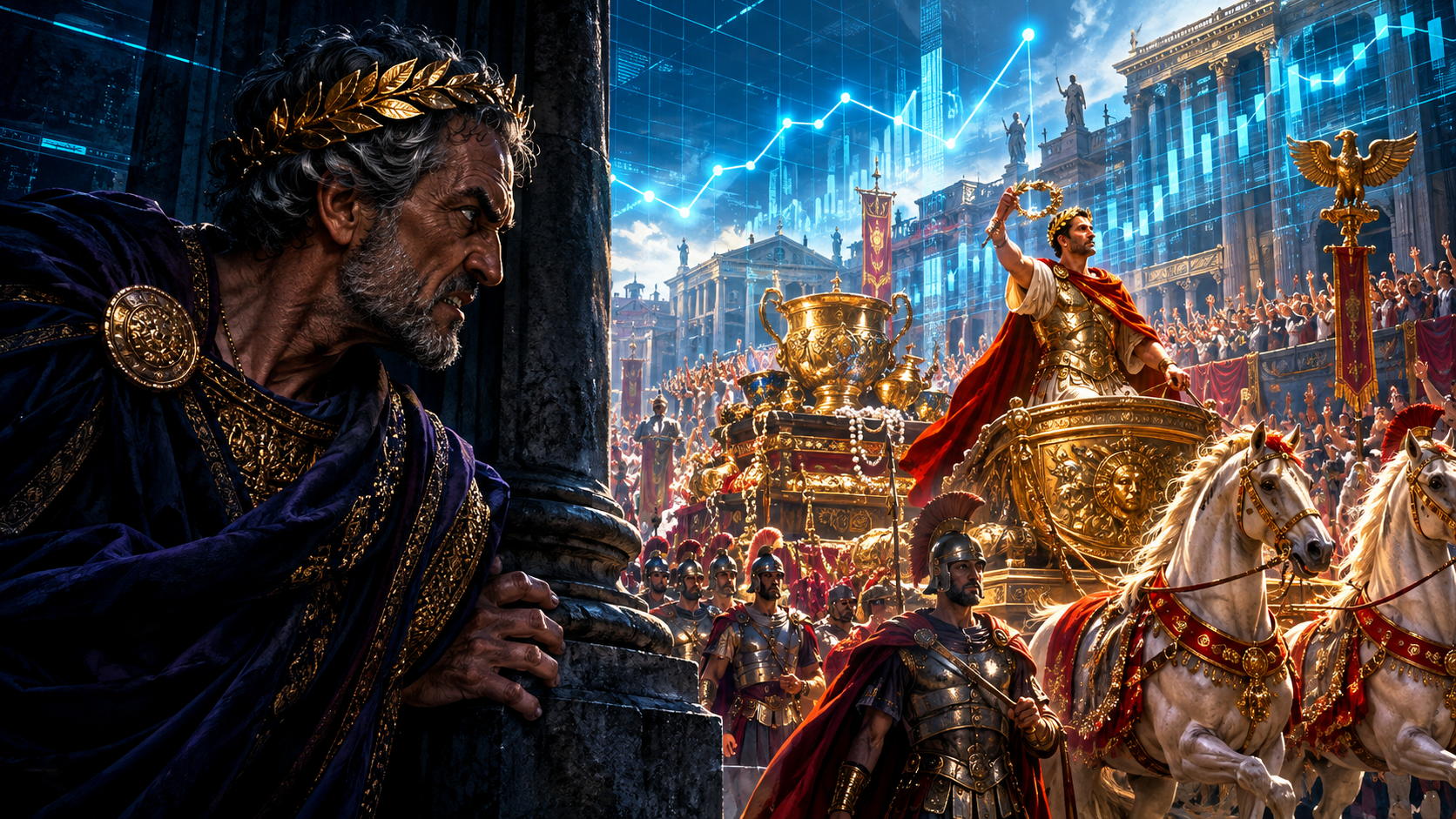
So at sixty he went looking for a desert
He took Syria as his province and went looking for Parthia. Rich, far away, unfamiliar, no provocation worth the name, and crucially, nobody had asked him to do it.

The man waiting for him was called Surena, he was around thirty, and he had solved the one problem that made horse archers a nuisance rather than a threat: ammunition. Horse archers run out of arrows, and then you close with them and win. Surena brought a baggage train of camels loaded with bundled arrows and kept the supply moving all day. That's a logistics insight — exactly the kind of thing Crassus would have spotted instantly in a market. He walked straight into it.
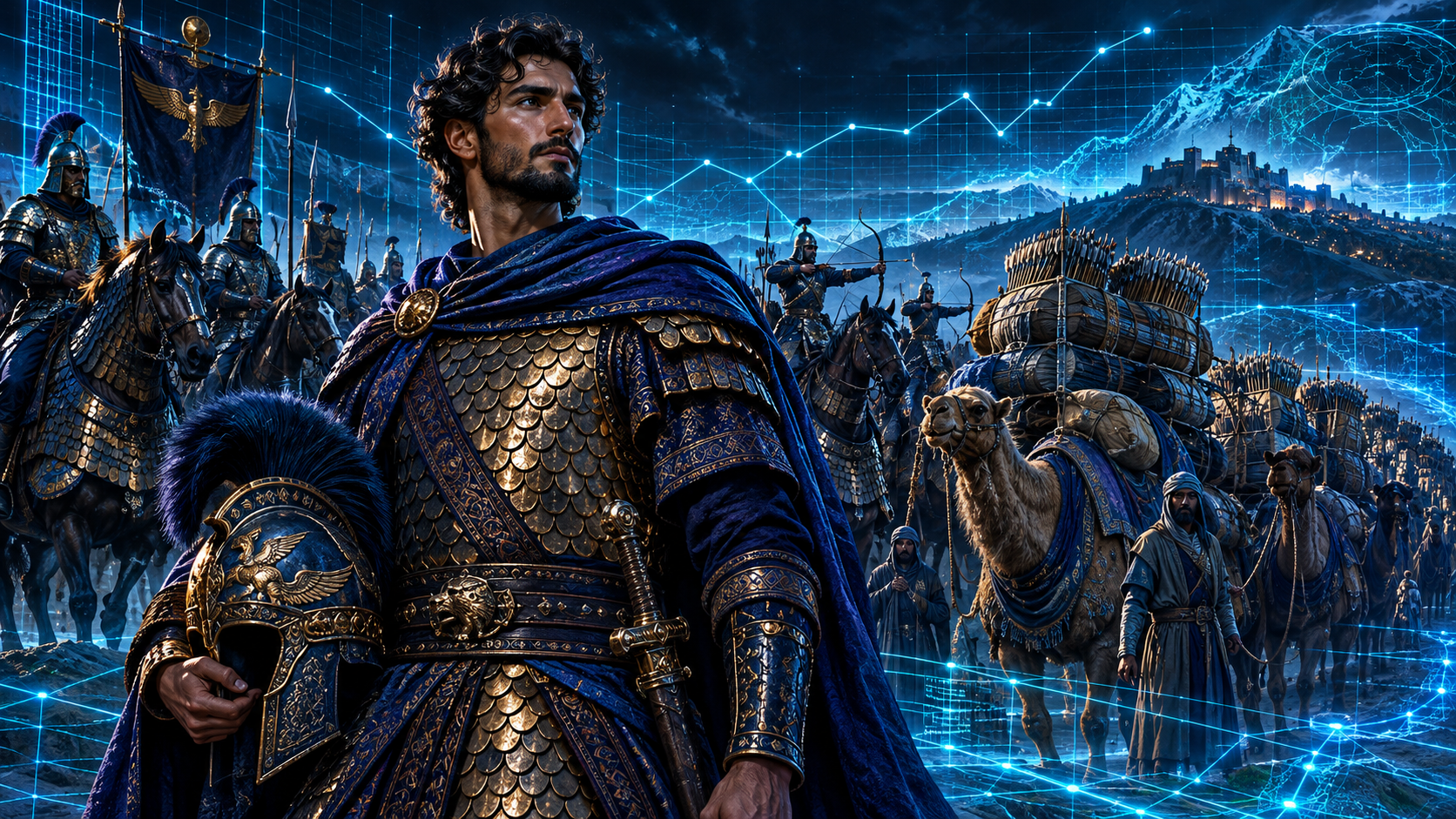
He was warned, clearly, by someone who knew. Artavasdes of Armenia offered a large force of cavalry and urged him to come through the Armenian hills, where broken ground makes horse archers nearly useless. Crassus declined, took the flat open route instead, and trusted a local guide who walked him out into empty desert.

Everything after that was predictable to anyone who'd fought that enemy before. His legions got strung out, then bunched into a defensive square with no room to maneuver, on ground the other side had chosen. The Parthians never closed. They circled and shot, retreating and shooting as they went, and the heavy Roman infantry had nothing to chase and nowhere to hide.

Crassus sent his son Publius out with a detachment to break the encirclement. The Parthians lured him away, killed him, and brought his head back on a spear for his father to look at.
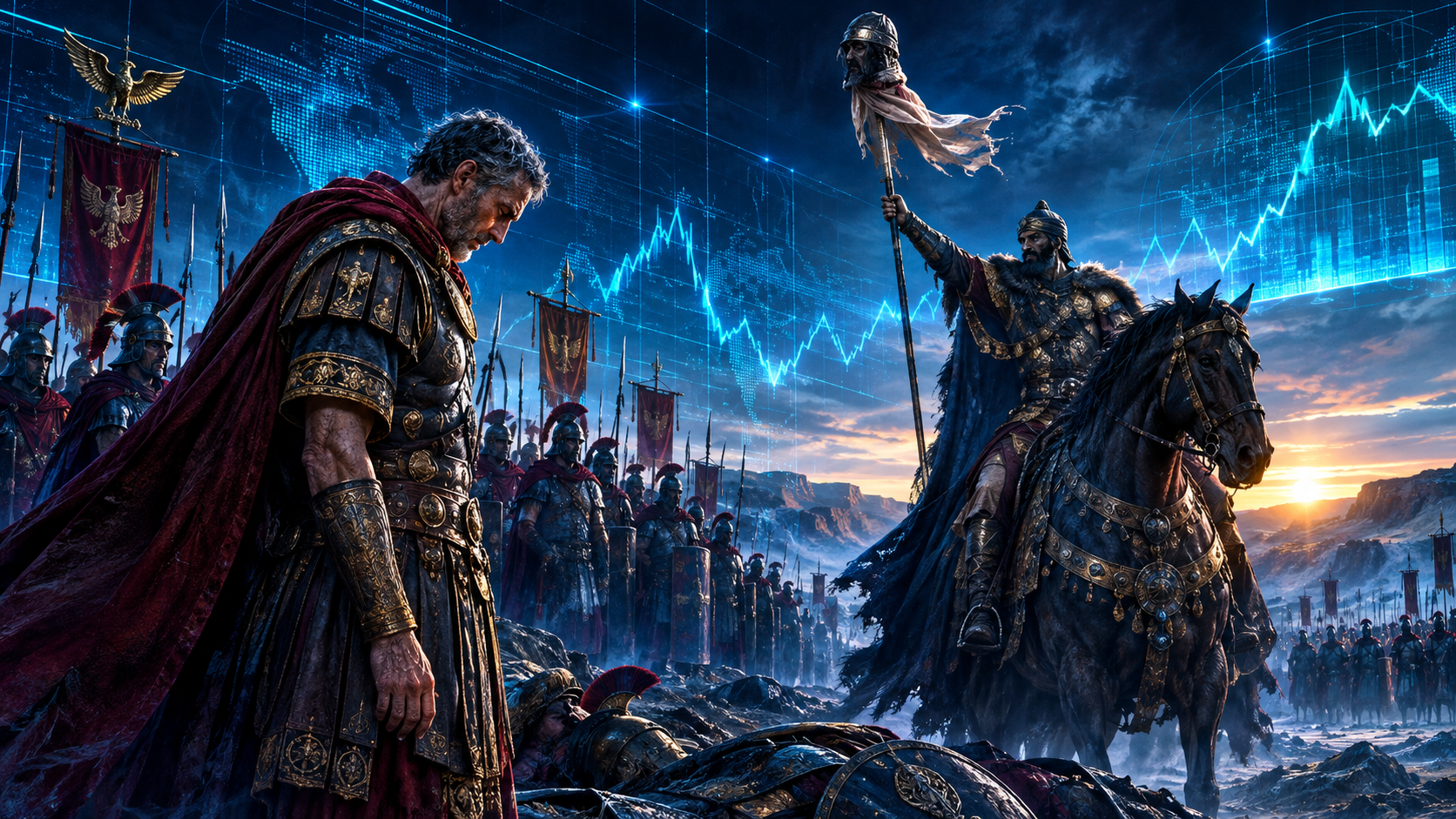
Around twenty thousand Romans died and ten thousand were captured. Crassus was killed during a parley after the battle. The legionary eagles were taken, which to Rome was close to the worst humiliation available — it took thirty-three years to get them back. And the version the ancient sources loved most: they poured molten gold into his mouth, a comment on what he'd actually been good at.

It cost more than his life. Crassus was the counterweight holding Pompey and Caesar in the same arrangement, and with him gone there was nothing between them. Within a few years the Republic was in the civil war that ended it. He was not an incompetent man — he won the Colline Gate, he beat Spartacus when two consuls couldn't. He was a highly competent man who walked into the one arena where his particular edge counted for nothing, and his vanity project broke the structure he'd spent thirty years building.
The founder version of this
I see this constantly, and it's almost always driven by the same thing Crassus felt standing in that myrtle wreath: someone else's lane looks more prestigious than yours.

The sales leader who closes anything and starts making architecture decisions, because being technical feels like being serious. Six months later there's a data model nobody can extend and a rebuild on the calendar.

The systems person, genuinely elite at building the thing, who decides they should run the high-stakes negotiation. They walk into a room where the skill is reading a human being in real time, and they bring a spreadsheet to a knife fight. The deal dies for reasons that have nothing to do with the product.

Every one of these is Carrhae. Competent person, wrong desert.

Understand every lane. Don't try to drive in all of them.
To be precise, because "stay in your lane" gets used as an excuse for willful ignorance: you should understand the other domains well. I can read a P&L and I can read a contract, and as a founder you have to be able to tell whether the person in a seat is doing good work or coasting. That's literacy, and you need it. What you don't need is to take the field in someone else's specialty because your ego wants the credit.

The tell is simple. Are you stepping in because you're the best person available for this, or because you want to be seen as the kind of person who does this? Crassus didn't invade Parthia because Rome needed Parthia invaded. He did it because Pompey had a triumph and he had a myrtle wreath.

Cover each other's weaknesses on purpose
The real move isn't being well-rounded. It's being sharply pointed and surrounded by people pointed in other directions. Here's how I'd actually run it:

- Name the lanes out loud. Who owns product, who owns revenue, who owns the build, who owns money. Unspoken ownership is how two people end up half-owning the same decision, which means nobody owns it.
- Give the lane owner the final call inside it. Not a vote, the decision. You can disagree and you should say so, once, and then the owner decides. Otherwise you don't have lanes, you have a committee with better branding.
- Hire for your opposite, not your clone. The founder who hires three more of himself has built a team that fails in exactly one direction, very fast.
- Audit your own motives when you reach across. "I'm better at this" is a reason. "This is the part that gets respect" is Parthia.
- Stay literate everywhere. Read enough to evaluate the work. That's the difference between trusting your people and being unable to tell if they're any good.

Crassus at sixty, with a counting house full of ledgers and half the Senate in his debt, had already won. He was the most structurally powerful man in Rome and he'd got there from a cave in Spain. The triumph was the one thing he couldn't buy, so he went and tried to earn it in the single arena where everything that made him formidable was worth nothing.

Figure out what you're uniquely good at. Get violently good at that. Then find people who are violently good at the rest, hand them the lane, and stay out of their desert.

Want to talk about what you're building?
Get in touch