
What Is a Refactor?

A refactor is changing how the code is built without changing what it does. Same light switch, cleaner wiring. It used to be the expensive thing developers begged for and never got. Now it's a sentence you type, and it's the reason I stopped paying to upgrade tools and started fixing the code instead.
Here's a word you've heard a developer say, probably while asking for more time and more money: refactor.
It sounds expensive. It used to be. Let me explain what it actually means, and then tell you why it's about to become the cheapest thing in software, and why that should change how you spend money.
The plain English version
A refactor is changing how something is built without changing what it does.
That's the whole definition. Picture a house. The light switch in the kitchen works. You flip it, the light comes on. Behind the wall, though, the wiring is a horror show. Three different electricians over twenty years, each one splicing onto the last guy's mess, nothing labeled, one wire held on with electrical tape and a prayer.
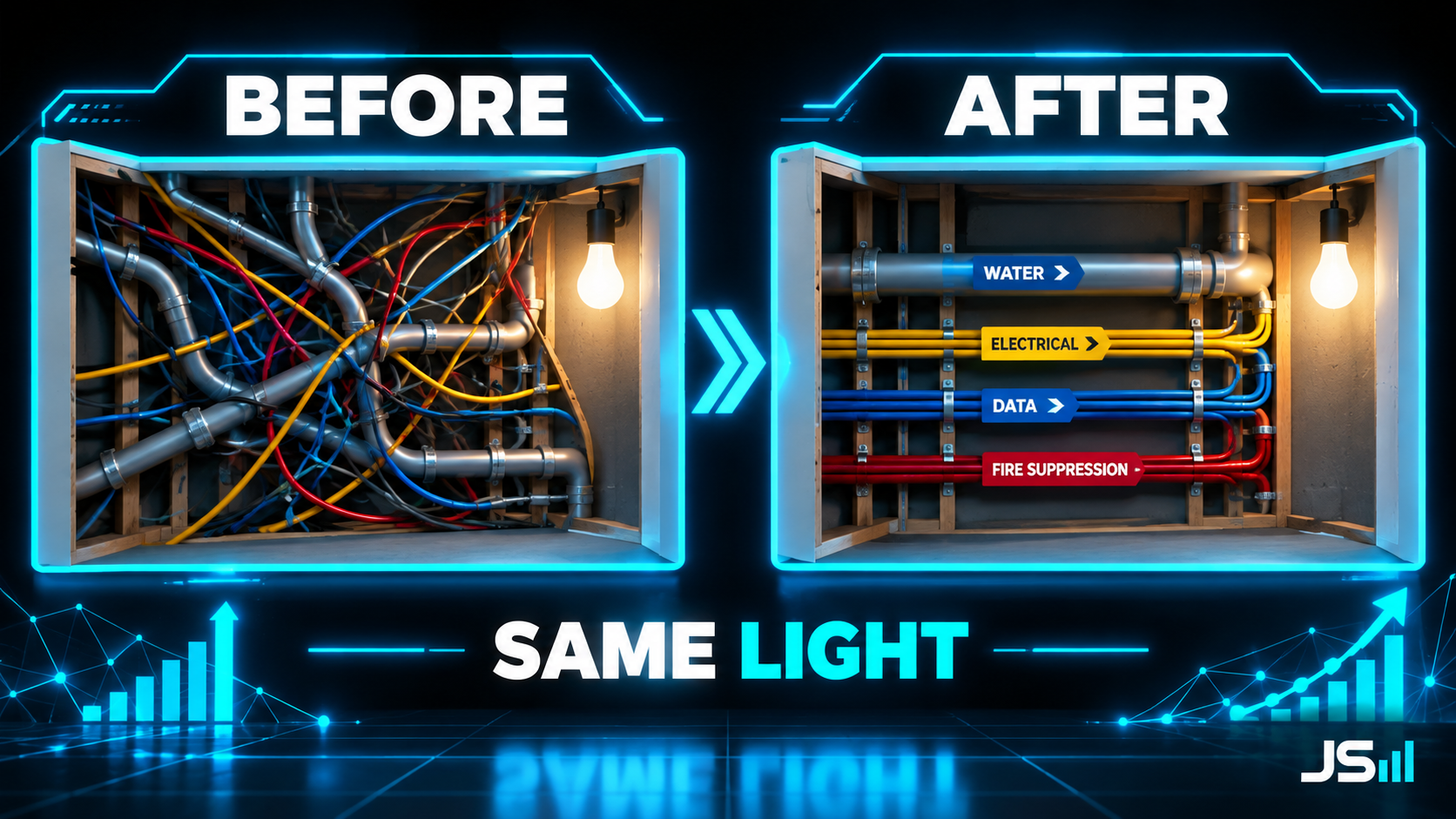
A refactor is when you open the wall, rip out the spaghetti, run clean labeled wire, and close it back up. You flip the switch. The light comes on. Exactly like before. From the kitchen, nothing changed.
But now the next electrician can actually work on it. Now adding an outlet takes ten minutes instead of a day. Now it doesn't catch fire.
That's a refactor. No new features. No visible change. Just the guts, rebuilt so the thing can keep growing.
Why it used to be a fight
Here's the problem with refactoring in the old world: nobody wanted to pay for it.
Think about it from the business owner's chair. Your developer comes to you and says "I need two weeks and it'll look exactly the same when I'm done." That is a terrible pitch. You can't see it. You can't demo it. Your customers will never notice. So it gets pushed. And pushed. And every new feature gets bolted onto the mess, and the mess gets worse, and eventually you have software where changing the color of a button takes three days because nobody knows what else that button is wired to.
Developers have a name for that accumulated mess: technical debt. Like real debt, it charges interest. Every month you don't clean it up, everything else gets a little slower and a little more fragile.
So most companies just never refactored. They paid the interest forever. And when the wiring got too bad to touch, they did the other thing, which brings me to the story.
The thing that changed: refactoring is now a sentence
A while back we hit a wall with HyppoCRM. Our hosting platform has a cap on how many separate API routes a project can have. An API route, if you've never met one, is basically a door into your software. Each one handles a specific job: one door for "create a contact," one for "send an SMS," one for "fetch invoices." We'd been building fast, and we'd built a lot of doors. Too many. The platform said no.

Now, the normal answer, the answer every business would have given three years ago, is obvious: upgrade the plan. Pay more money to the hosting company and the limit goes away. Problem solved, invoice attached.
That's not what I did.
I opened Claude Code and typed, more or less, "condense the API routes." And it did. It looked at the twenty-something doors, figured out which ones were really doing the same kind of job, and merged them into a handful of well-organized ones. Every feature still worked. Every request still went where it was supposed to. Nothing visible changed for a single user. We were under the limit within the hour, and the code was cleaner than before we started.
That is a refactor. And it cost me a sentence.
Why this matters more than it sounds

Think about the shift here. For the entire history of software, the reflex when you hit a limit was to buy your way past it. Bigger server. Higher tier. More seats. Because fixing the actual code was slow, expensive, and invisible, and paying the vendor was fast and easy.
That math just flipped. When AI lets you rewrite the guts of a system in the time it takes to make coffee, "just upgrade the plan" stops being the smart default and becomes a tax you pay for not asking a better question. I've documented how absurdly fast this pace actually is, and refactoring is where it pays off most, because it's the work everyone always skipped.
And it's not just money. The version of us that upgraded the plan would still have twenty tangled doors. The version that refactored has six clean ones, which means every feature we build next is faster to add and less likely to break. We didn't just dodge a bill. We paid down the debt and got a better building out of it.
What a refactor is NOT
Let me be careful here, because the word gets abused.
A refactor is not a rewrite. A rewrite is knocking the house down and starting over. That's a different, much scarier decision, and it's usually wrong.
A refactor is not adding features. If the light switch now also opens the garage, that's not a refactor, that's new work.
And a refactor is not an excuse. "It's just a refactor" is something a developer says right before shipping a change that breaks three things. The entire point is that behavior stays identical. If it didn't, you didn't refactor, you just changed stuff.
Which is why the browser automation I wrote about in Give It Hands matters so much here. When the AI refactors something, it can open the app and verify the light still comes on. Refactor, click, confirm. That's the loop, and it's the only reason I trust it to open the wall in the first place.
What this means if you own a business
Three things.
One: stop reflexively upgrading. Next time a tool tells you you've hit a limit, ask whether the limit is real or whether your setup is just messy. A shocking amount of the time it's the second one, and the fix is now cheap.
Two: technical debt is no longer a life sentence. If your software is a pile of duct tape, that used to mean living with it or paying six figures to replace it. Now it can mean a week of AI-assisted cleanup. This is genuinely new, and most people haven't updated their instincts yet.
Three: only touch the wall if you can test the switch. Refactoring without a way to verify nothing broke is how you turn a clean-up into an outage. The speed is real, but so is the need to check. That's not optional.
The one-paragraph version
A refactor is rebuilding how the code works without changing what it does. Same switch, cleaner wiring. It used to be the invisible, expensive work nobody would pay for, so software rotted and people bought bigger plans instead of fixing anything. AI turned it into a sentence. We hit a route limit, I said "condense the API routes," and we were done in an hour with better code than before. If your instinct is still "upgrade the plan," update the instinct. Fix the wiring.
More in this series: What Is an API?, What Is an SDK?, What Is SQL?, What Is an API Key?, What Is a .env File?, and What Is a Cron Job?
Want to talk about what you're building?
Get in touch