Your AI Agent Has a Brain. Give It Hands.

Claude Code can write beautiful code and then just sit there, because it can't click anything. Give it a browser with Playwright or Puppeteer and it can fix the bug, open the page, and check its own work. I automated about 90% of my UI QA that way. Just don't hand it your credit card.
Here's the dumbest thing about most AI coding agents, and almost nobody talks about it.
They can write the code. They can't click the button.
You tell Claude Code to fix a bug, it edits the file, it says "done," and then it just sits there. It has no idea whether the thing actually works, because it has never seen the page. It's a brilliant developer who has been told to work with a blindfold on and both hands tied to the desk.

So the single biggest upgrade you can give an AI agent right now isn't a smarter model. It's hands.
What "browser automation" actually means
Plain English version. Browser automation is a library you install that lets a program drive a real web browser the way a person would. Open a page. Click a button. Type in a form. Scroll. Read what's on the screen. Take a screenshot.
Two of my favorites are Playwright and Puppeteer. (Yes, Puppeteer. Hence the top hat. I'm not above a pun.) They've been around for years and were originally built so developers could run automated tests against their websites. What's new is that you can hand them to an AI agent.
Install one, give Claude access to it, and suddenly the agent that could only write code can now use the thing it wrote. It can open your app in a browser. It can click through it. It can see what you'd see.
The demo everyone shows, and why I don't care about it

The demo you've seen on your feed is the agent ordering something on Amazon. "Watch it buy me a coffee maker!" Cool. It works. I'm not disputing that it works.
I'm just not doing it.
Call it paranoia, but I'd rather not hand an AI robot my credit card and the ability to click "Place Order." Not for my personal stuff, definitely not for company money. A little paranoia has never hurt anybody, and the downside of "it bought the wrong thing 40 times" is very real. Money is one of the places I want a human in the loop, full stop. If the agent wants to help, it can do the research, compare the options, and come to me with a recommendation. Then I click the button. That's the deal.
And honestly, ordering makeup on Amazon is the least interesting thing this technology does. The value isn't in the shopping cart. It's in the software.
Where it actually changed my life: the QA loop
Here's the old way of fixing a UI bug. Say there are two back arrows on a page where there should be one. Or a button that doesn't do anything.
- Go into the code, find the problem, fix it.
- Switch to the browser, reload the page, click around.
- Oh, it's still broken. Or it's fixed but now something else is off.
- Back to the code.
- Back to the browser.
- Repeat until you die.
That loop is where an enormous amount of a developer's day goes, and it is mind-numbing. I've written more articles than I can count about iteration loops, because the speed of that loop is basically the speed of your whole company. Shorten it and everything downstream gets faster.
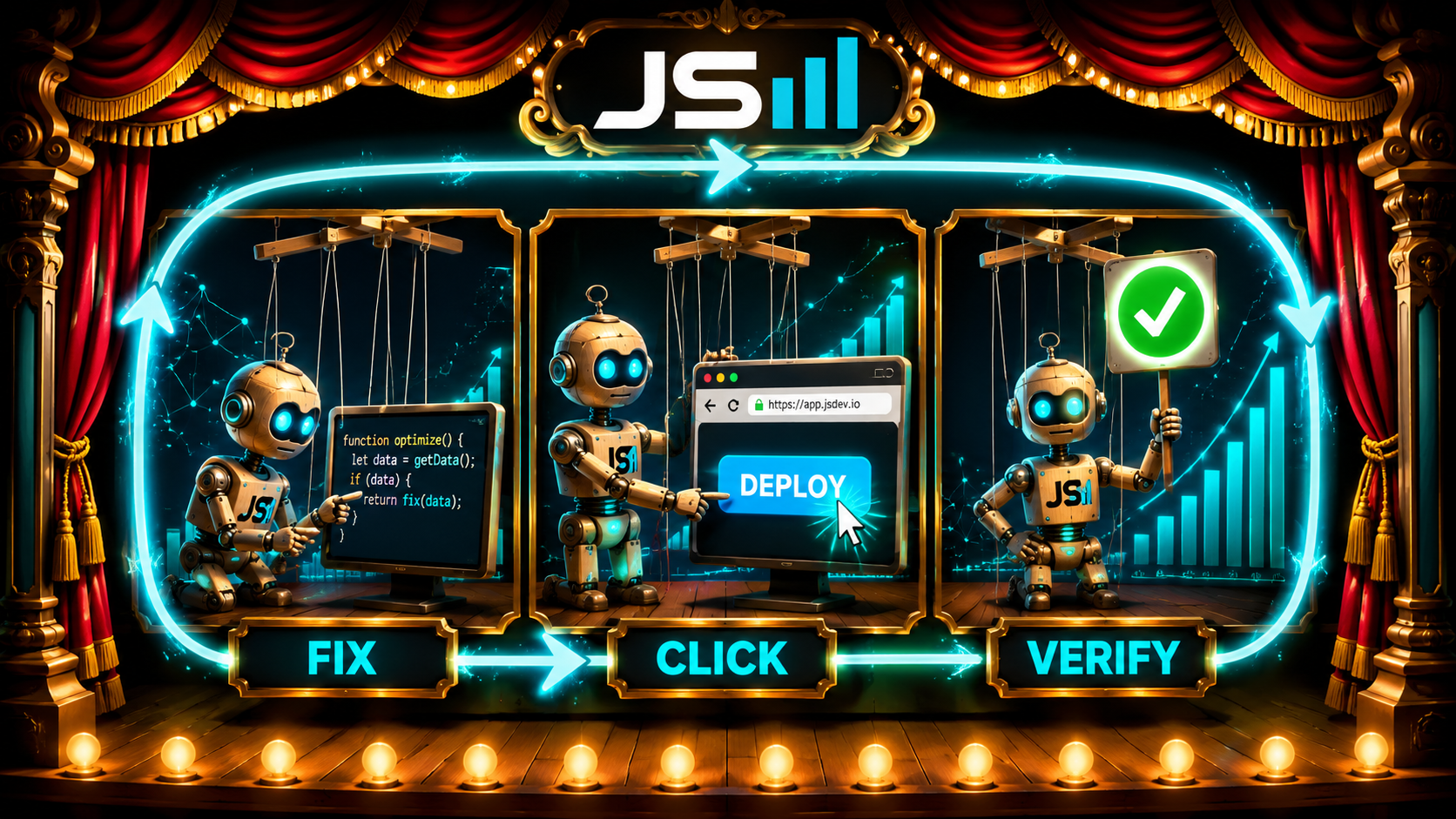
Now, with browser automation wired in, here's what happens. I tell Claude: "there are duplicate back arrows on the settings page, fix it." He makes the change. Then, without me asking, he opens the page in a browser, navigates to settings, looks at it, and confirms there's exactly one back arrow. If there isn't, he goes back and fixes it again. He only comes to me when it's actually done.
I've automated something like 90% of my UI QA this way. I am not exaggerating that number. The fix-then-verify loop that used to eat my afternoons runs on its own now, and I read the summary.
That's the real product. Not the coffee maker. A developer who checks his own work.
A few more places it earns its keep
Once the agent has hands, you start finding jobs for them everywhere. A handful I actually use or have set up for clients:
Smoke tests after every deploy. Push to production, and the agent walks the five most important pages like a customer would: home, pricing, signup, login, checkout. If anything's broken, I hear about it before a client does.
Form testing. Every lead form on every client site gets submitted by the agent, and then it checks that the lead actually showed up in the CRM. I wrote a whole rant about AI websites where the contact form goes nowhere. This is how you make sure yours doesn't.
Reading dashboards that don't have an API. Some platforms just don't give you a clean way to pull data. The agent can log in, navigate to the report, and read the numbers off the screen. Not elegant. Works.
Screenshot-driven bug reports. Instead of "the button looks weird," the agent takes a screenshot at three screen sizes and tells me exactly what's wrong, with pictures. Then fixes it.
Checking the competition. Pull up a competitor's pricing page once a week, note any changes. Boring, useful, zero effort.
Notice what all of those have in common. None of them spend money. None of them send anything to a customer. They read, they click, they verify, they report. The human still makes every decision that matters.
Where this is going: UI for humans, UI for agents
Here's my prediction, and it's the part I actually think matters long term.
For thirty years, software has been designed for one kind of user: a person with eyeballs and a mouse. Good UI meant a human could figure it out. That's still true and it's still table stakes.
But increasingly, the thing clicking through your app is not a person. It's somebody's agent, sent to do a task. And an interface that's lovely for a human can be a nightmare for an agent: unlabeled buttons, popups that appear at random, content that only loads when you scroll, a "Submit" that's actually a div with an onClick. The agent stumbles, guesses, and fails.
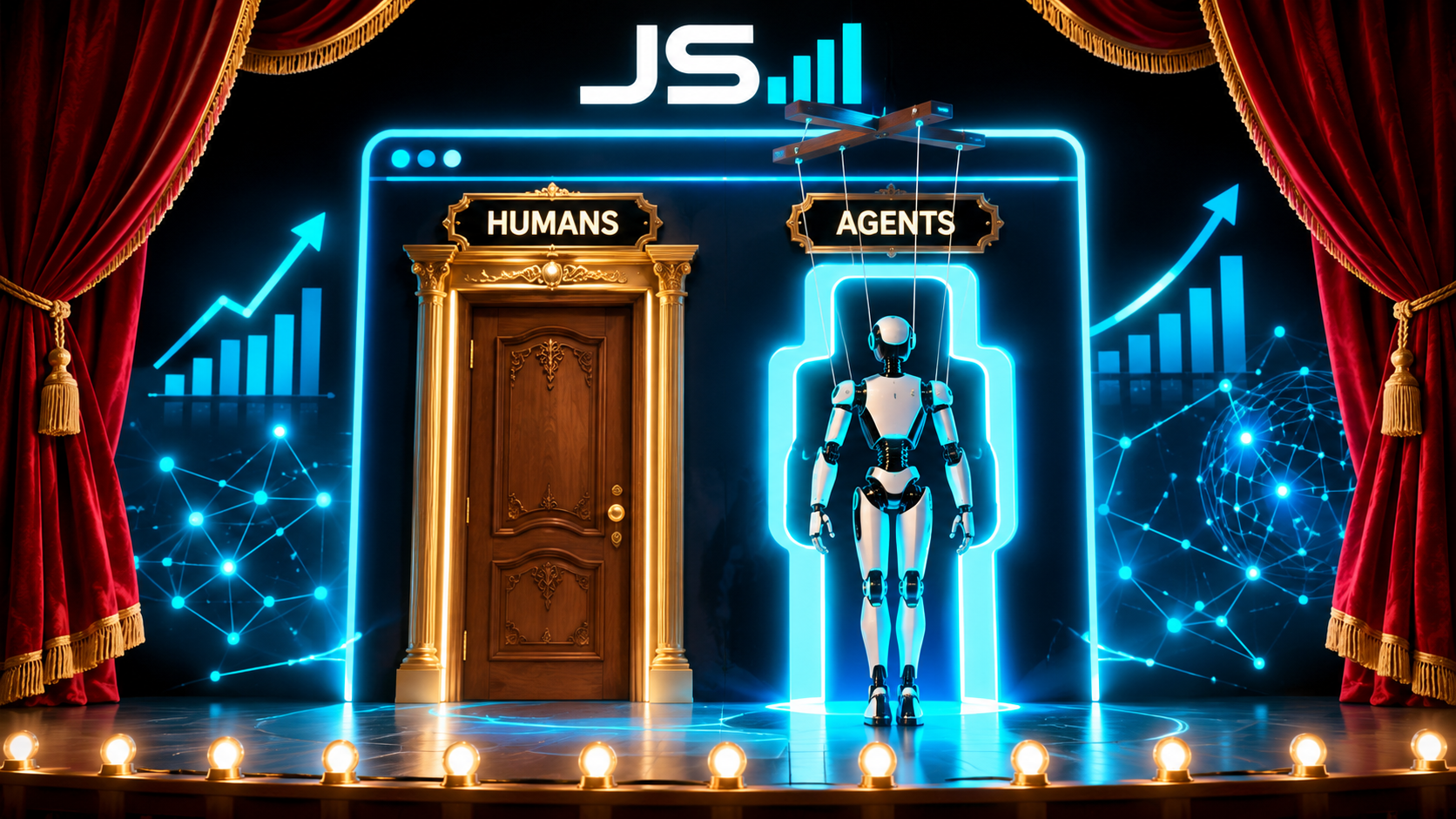
So platforms are going to need two front doors. A great UI for humans, and a navigable interface for agents. Call it an agentic interface, or don't, the term's a little awkward. The point is: clean structure, labeled elements, predictable flows, a machine-readable way to say "here's what this page does." The companies that build that will get used by every agent on the internet. The ones that don't will get skipped.
And to be clear, none of that means the agent gets to spend my money. Even in that future, I want the robot to research, navigate, and report, and then hand me the last click on anything with a dollar sign on it. Human in the loop isn't a phase I'm going through. It's the design.
The short version
- An AI agent that can only write code is working blindfolded. Give it a browser.
- Playwright or Puppeteer. Install one, wire it in, done.
- The killer use case is not shopping. It's the agent verifying its own work. Fix, click, check, repeat, without you.
- Let it read, click, and report. Don't let it spend.
- Build your own software so an agent can navigate it, because soon that's half your users.
Your agent already has a brain. Go give it hands. Just keep the wallet.
Want to talk about what you're building?
Get in touch