Starting a Company in 2026: Building Was Never the Hard Part
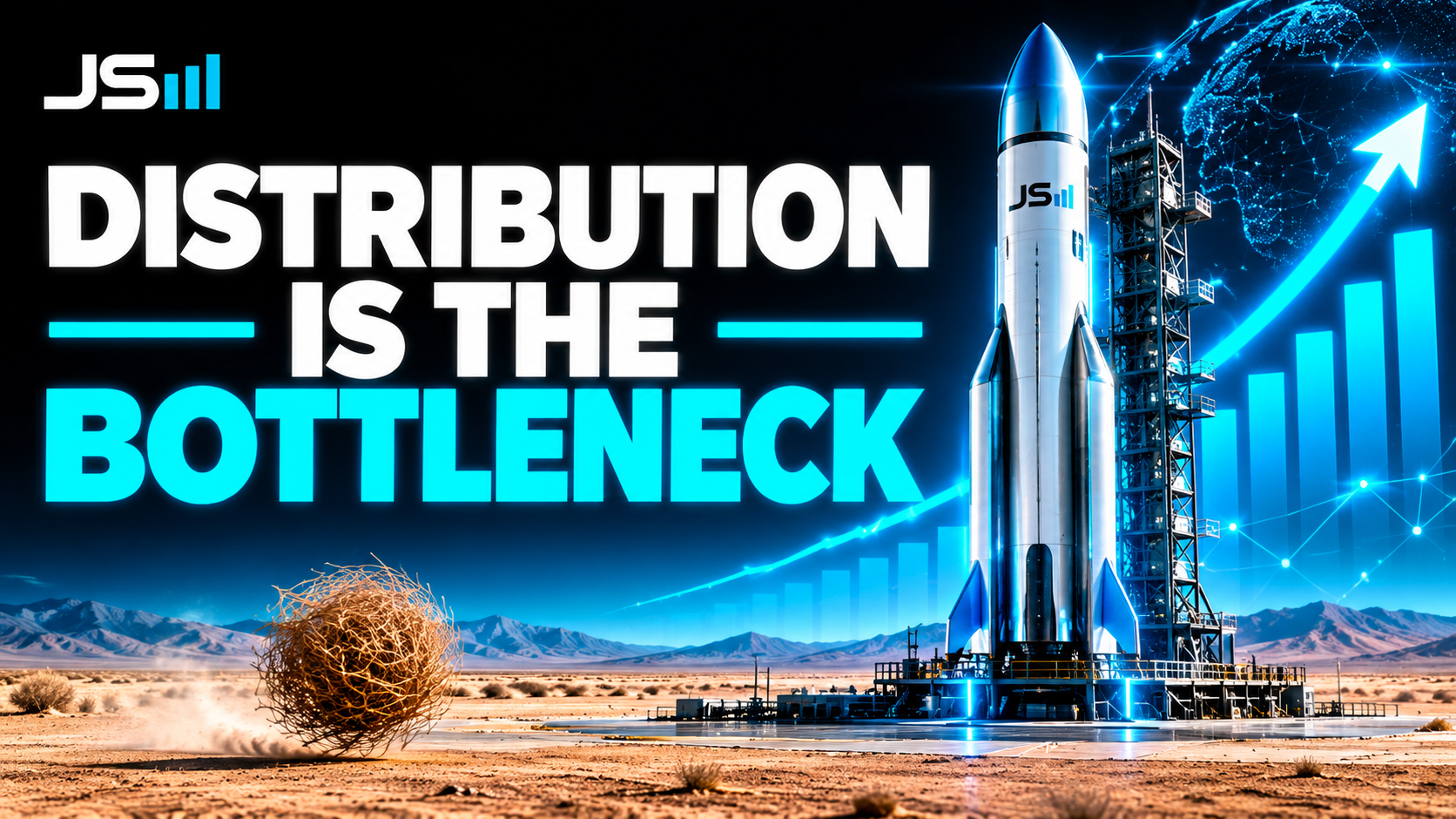
Claude Code and friends collapsed the two-to-three-year SaaS build into a couple of months. Great. Now you have a rocket on a launchpad in the middle of a desert and nobody knows it exists. Distribution is the new bottleneck, and I'm not going to pretend I've solved it. I started on it today.
If you've been living under a rock for the last two years, let me catch you up: with tools like Claude Code, Codex, pick your poison, the ability to build a software product has gotten absurd. Not "a little faster." Absurd. Things that were science fiction in 2023 are a Tuesday now.
Which means starting a company in 2026 has a completely different shape than it used to. And most of the advice floating around is still written for the old shape.
The old way was a horror movie
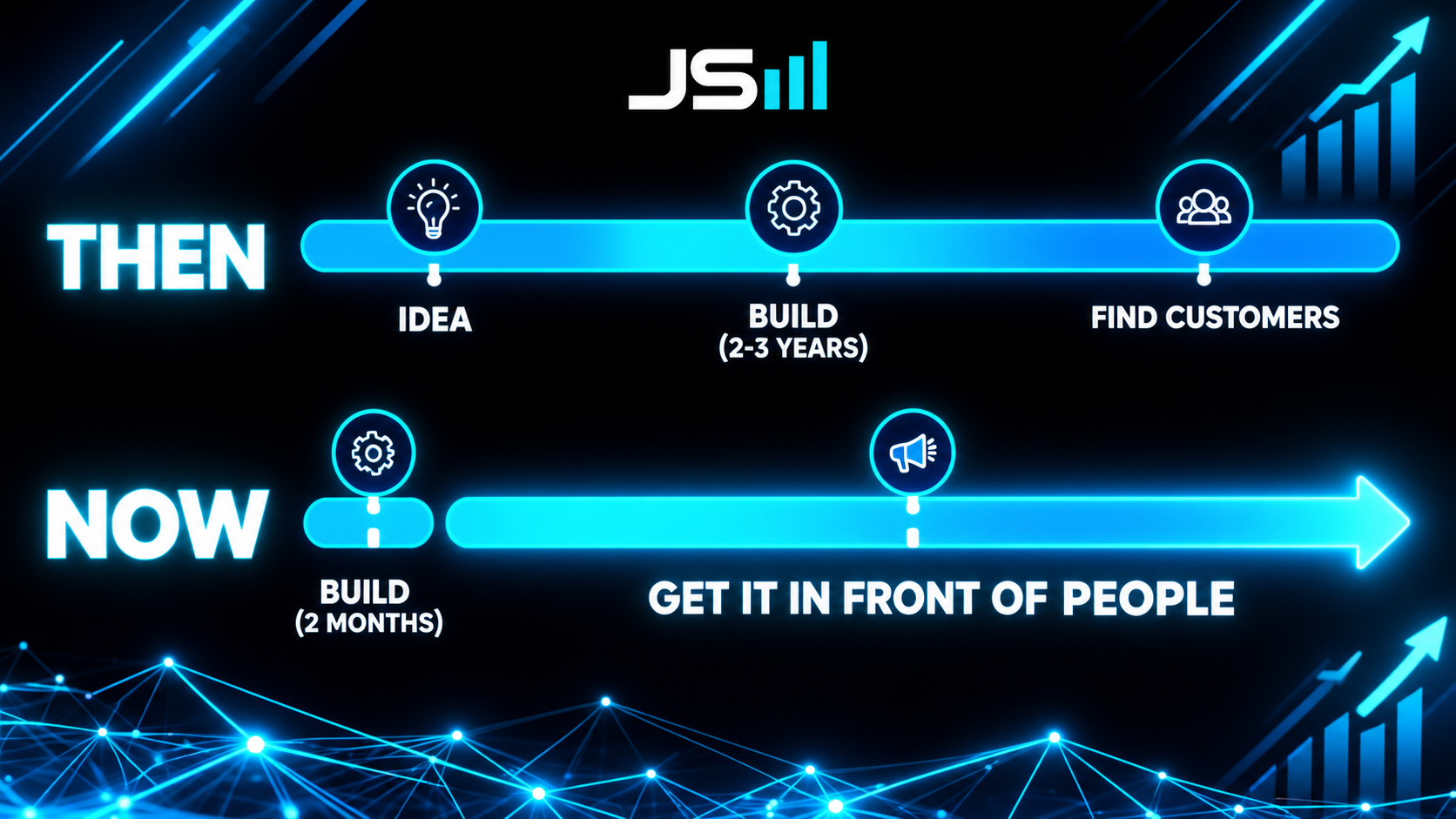
Building a SaaS company used to go like this. Raise or scrape together money. Hire engineers, or be one and give up sleep. Spend two to three years building the thing. Then, at the end of all that, finally find out whether anybody wanted it. Product-market fit was the light at the end of a very long, very expensive tunnel, and a lot of companies died in the tunnel.
That's just not the game anymore. AI compressed the product development cycle down to something that would have gotten you laughed out of a room a few years ago. I've written about this from a few angles, including the actual numbers behind shipping HyppoCRM, 856 releases in 155 days, and how a thing that used to be a two-week refactor is now a sentence. The iteration speed is the whole story. You build, you test, you fix, you ship, and you do it faster than a traditional team can schedule the meeting to discuss it.
My own receipts: HyppoCRM took me about two months to get to an MVP, and about six months to a fully fleshed-out product. And I had paying customers on it at month two. Two months. That timeline was not available to a solo founder three years ago at any price.
Now the disclaimer, because the internet is full of liars
Anybody who tells you that you can spin up a working SaaS in a weekend with Claude Code is lying to you, and usually selling a course.
Fast is not the same as done. You still have to harden it against the edge cases that will absolutely punch you in the face. You still have to do security right, so you don't end up like the app that shipped patient data on open URLs. You still need real architecture, so the thing doesn't fall over the moment your third user logs in. Best practices didn't get repealed. They just got faster to apply.
So no, building isn't trivial. But it went from "the entire multi-year bet" to "the first couple of months." And that changes where the pain lives.
Meet the new bottleneck
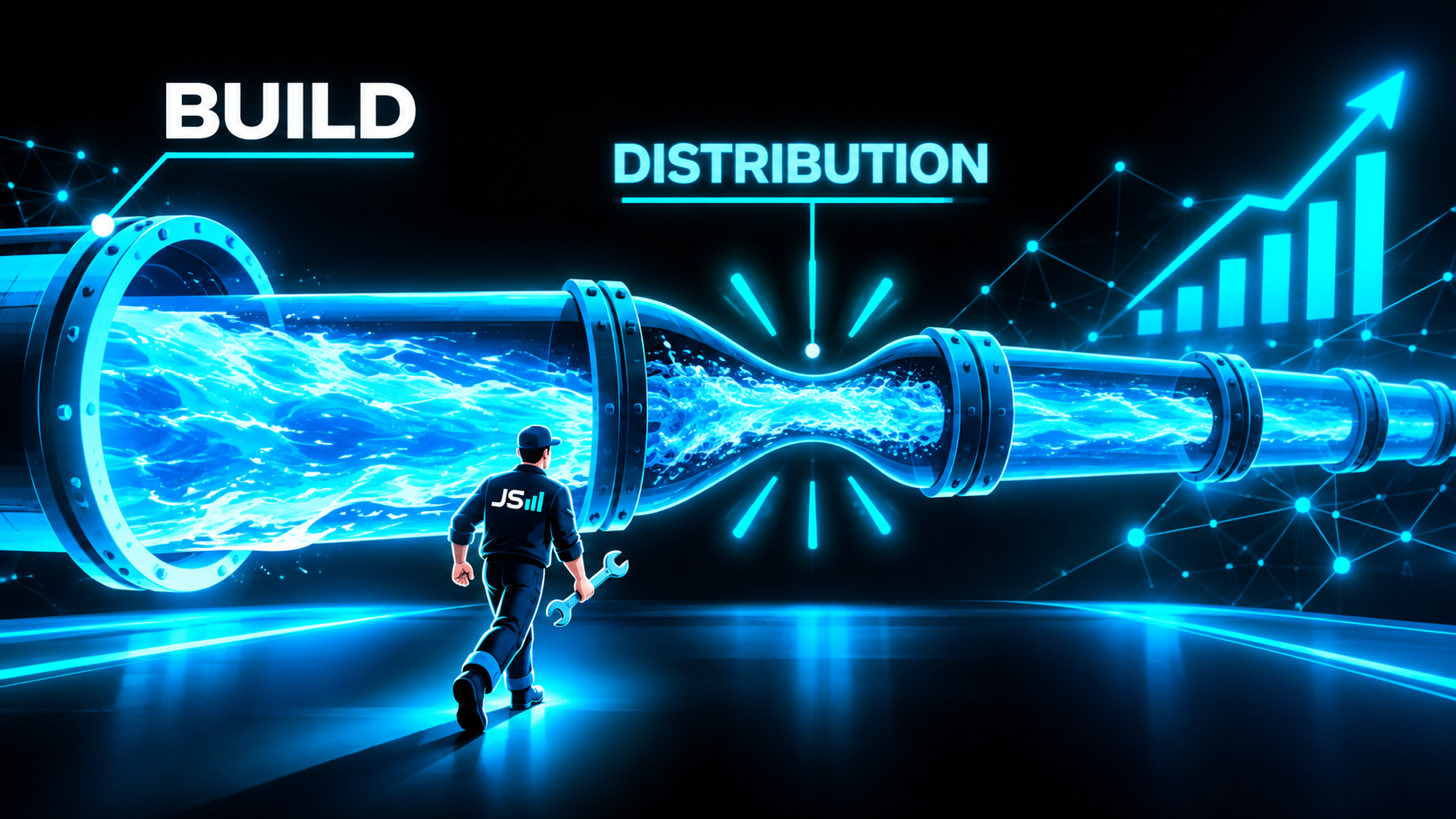
Here's the thing about making one part of a system dramatically faster: it doesn't make the whole system faster. It just moves the bottleneck. That's Theory of Constraints, and I'm a big believer in it. Every business has exactly one constraint at a time. Your job is to find it, dog it until it goes away, and then go find the next one.
For most of software history, the constraint was building. Now it isn't. Now the constraint is distribution. Getting the thing you built in front of the people who'd pay for it.
And I want to separate that from sales, because they get lumped together. I've written that sales is a system and that it's the skill that beats every other skill, and I stand by all of it. You should get good at sales before you worry about distribution. But sales doesn't matter if nobody knows the salesperson exists. Distribution is the thing that puts someone in front of your salesperson in the first place. It's the top of the funnel, and right now, for a lot of founders who can suddenly build anything, it's empty.
Full disclosure: I hate this part

Let me be honest, since that's the whole point of this blog. I'm a tech guy. I would like to sit in a dark room all day and build things. Running paid ads, doing cold email, posting content, making myself visible, all of it is the opposite of what my brain wants to do. Given the choice, I would much rather not.
But we've got to do it, folks. Wanting to skip distribution is exactly how you end up with a beautiful product in a desert.
And I'm not going to pretend I've cracked it. I literally started working on this seriously today. Not this quarter. Today. So this is not a "here's my proven distribution playbook" article. It's a "here's the wall I just hit, and here's what I'm about to throw at it" article.
How I got to $20K a month without it
Quick context so the above makes sense. I scaled this company to around $20K a month by, essentially, brute force. I dogged it on Upwork. I knocked on doors. I sold face to face and over the phone until my voice went. That's distribution too, technically, just the most manual, un-scalable version of it imaginable.
It worked. It got us here. And it does not get us to the next number, because there's only one of me and I've already hired fourteen sales reps to take the door-knocking off my plate. To scale past $20K a month, the pipe feeding those reps has to get a lot wider than one guy with a truck. That's the constraint. So that's what I'm attacking.
What I'm actually going to try
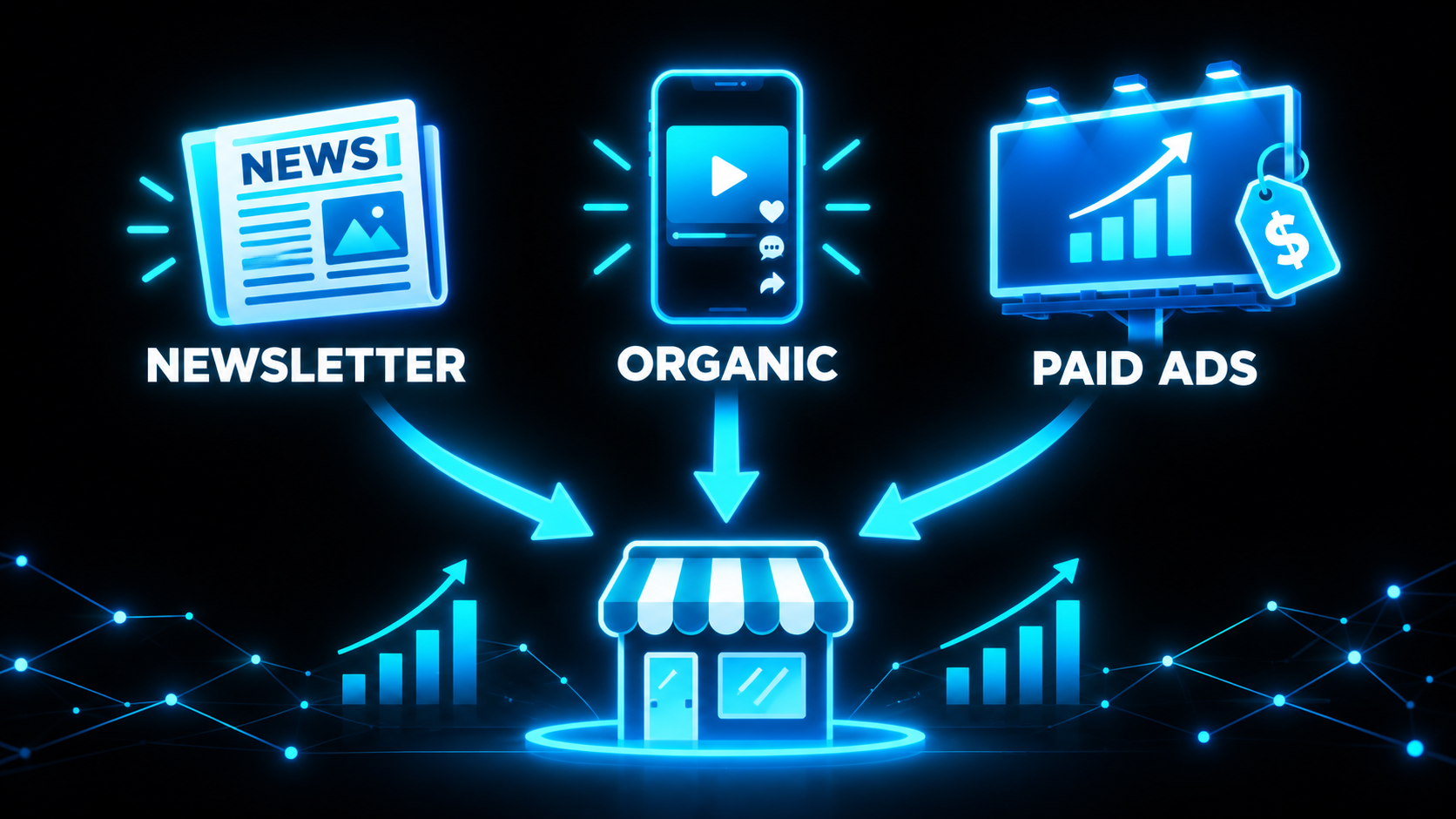
Three levers, and everybody you've ever seen with a big audience is pulling at least one of them:
1. A newsletter. You've seen the AI newsletters everywhere. There's a reason. Email is the one distribution channel you actually own. Nobody's algorithm can turn it off. Building a list of people who asked to hear from you is slow and boring and compounds like nothing else.
2. Organic content. Posting. Consistently. On the platforms where your customers actually are. This blog is part of that. So is LinkedIn, so is video. It's the long game, and the long game is where the cheap customers live.
3. Paid ads. The fast lever. Money in, attention out. I've written about being personally terrible at ads and building a machine to compensate, and I'm going to point that machine at my own company for once instead of just at clients.
My business partner and I have a few strategies cooking on top of those, some of which I think are genuinely fun, and I'll report back with real numbers as they come in. Not vibes. Numbers. If it works I'll tell you exactly what worked. If it flops, I'll tell you that too, because I've done that before and it's more useful than the wins.
If you're starting something in 2026
- Build fast, but build right. Use the AI. Ship the MVP in weeks, not years. Then harden it, because the weekend-SaaS crowd is lying.
- Don't confuse "I can build it" with "I have a business." You have a product. A business is a product plus people who know it exists.
- Learn to sell before you scale distribution. Otherwise you'll pour attention into a funnel that leaks at the bottom.
- Find your constraint and dog it. One at a time. Right now, for most builders, it's distribution. It won't be forever. When it moves, chase it.
- Pick your levers and measure them. Newsletter, organic, paid. Run them, track them, cut what doesn't work.
The build is easy now. That's the good news and it's also the trap. Go get in front of people. I'll be over here doing the same, mildly annoyed about it, and I'll let you know how it goes.
Want to talk about what you're building?
Get in touch