
The $200 Subscription That Replaced a Million-Dollar Dev Team

My standing desk was a good ROI. Claude Code is an absurd one. At its core my company is a CRM, the kind of build that pre-AI means roughly 20 developers, three years, and millions of dollars. My version: me, six months, clients on the MVP by month two, and a $200-a-month subscription. That's $2,400 a year against a seven-figure build. Add Joe 3.5 saving 10 hours a week of my $1,500-an-hour time, and the math stops being a percentage. Run your own numbers, they'll embarrass you.
A little while back I wrote that my standing desk was a great ROI, mostly because my neck had started filing an HR complaint against me for running a hostile workplace. Funny, but real. Today I want to talk about ROI on a much more serious note, because the return I'm getting from AI is, frankly, absurd. Let me show you the math.
First, the setup
Full disclosure: I'm a Claude Code power user. On a normal day I'm in it 10, 12 hours. On a truly caffeinated day, 16. (Coffee is a wonderful drug and I will not be taking questions.) So I've got a pretty good sense of what this tool actually does at scale.
Here's the context. My whole philosophy, which I've written about in the SaaS playbook, is this: get a product in front of customers fast, watch them break it, iterate, and harden it against the weird edge cases. Speed of iteration is everything. And AI has done something ridiculous to that speed.
The build that should have cost millions
At its core, my company is a CRM. (We've also got a stack of AI features our competitors are too lazy to build, plus domain hosting, but core level, CRM.) So let's compare it to building something like GoHighLevel the old way.
Realistically, pre-AI, a build like that looks like: a team of around 20 developers, roughly six months just to reach an MVP, closer to three years for a full product, and millions of dollars in development costs. That's an honest ballpark for software of that scope. (More on those kinds of numbers in AI Is a Cheat Code.)
Now here's my version. I have one person who does some minor UI patching. Everything else, the core architecture, the product, the hard decisions, I handle myself, as the co-founder and main product guy. I've been building it for about six months. We started migrating real clients onto our MVP around month two.
And the cost of the tool that made that possible? Two hundred bucks a month.
Let's actually do the math
So line it up. On one side: 20 developers, three years, millions of dollars, plus a fat monthly retainer to some agency. On the other side: me, six months, and a $200-a-month subscription. That's $2,400 a year, against a build that traditionally runs seven figures.
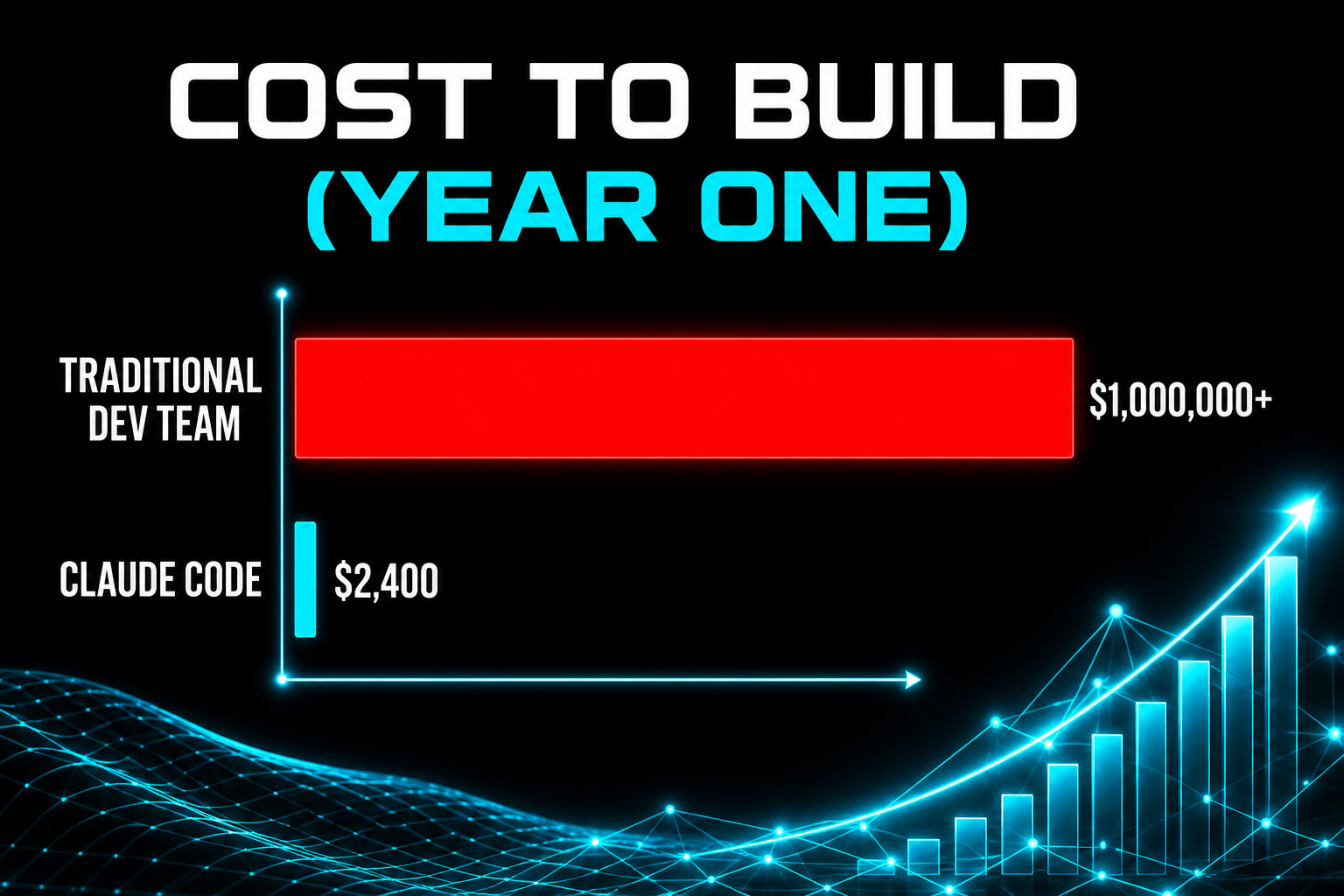
I'm not going to pretend $200 a month is nothing. But set it against millions of dollars and years of calendar time, and the ROI isn't a percentage anymore. It's a rounding error against a fortune. (And fine, throw in a few extra bucks a month for the coffee that keeps me at the keyboard. Still absurd.)
And that's just the building
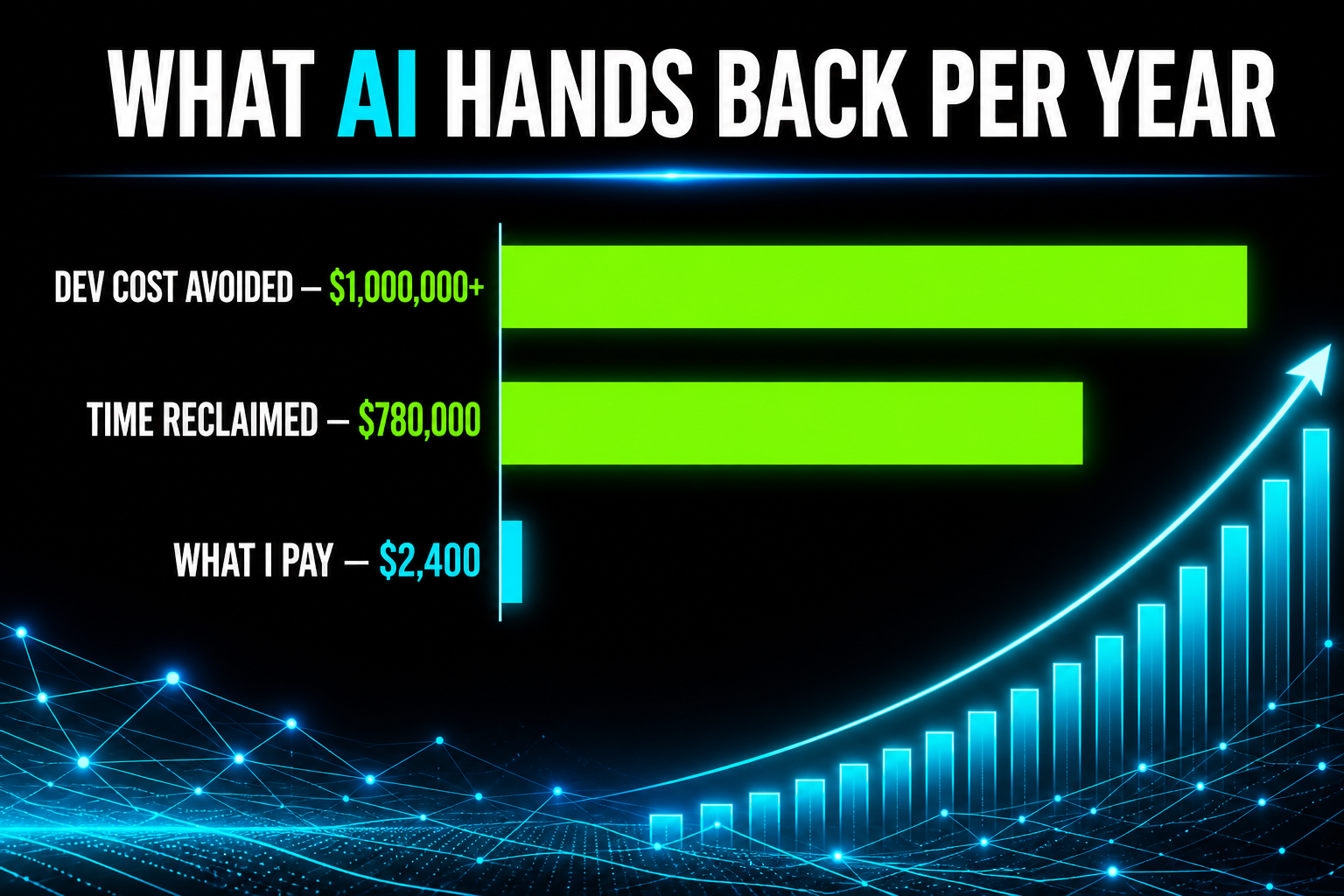
The dev tooling is only half of it. My AI executive assistant, Joe 3.5, saves me a genuinely conservative 10 hours a week. I don't even open my inbox anymore. He reads it, tells me if something actually matters, and drafts the reply. I just approve it, because human in the loop is the hill I'll die on.
Here's why that matters in dollars. My time is worth $1,500 an hour. (That's my current rate. It's probably going up soon, because I'm slammed. If you want me personally setting up your DNS records, that's the number. Clients on an agreed project scope, relax, this isn't about you.) So 10 hours a week, at $1,500 an hour, is $15,000 a week of my time handed back to me. Run that over a year and you're north of $700,000 in reclaimed time, from an assistant that runs on a little computer in my office.
Oh, and we sell it too
Here's the part that really closes the loop. Because we build with AI, we can package these capabilities straight into our product and sell them. I won't bore you with the full revenue and profitability breakdown, but SaaS has beautiful recurring margins, and ours are healthy. So the same AI that slashes our costs also becomes something we turn around and monetize. Cost down, revenue up, at the same time.
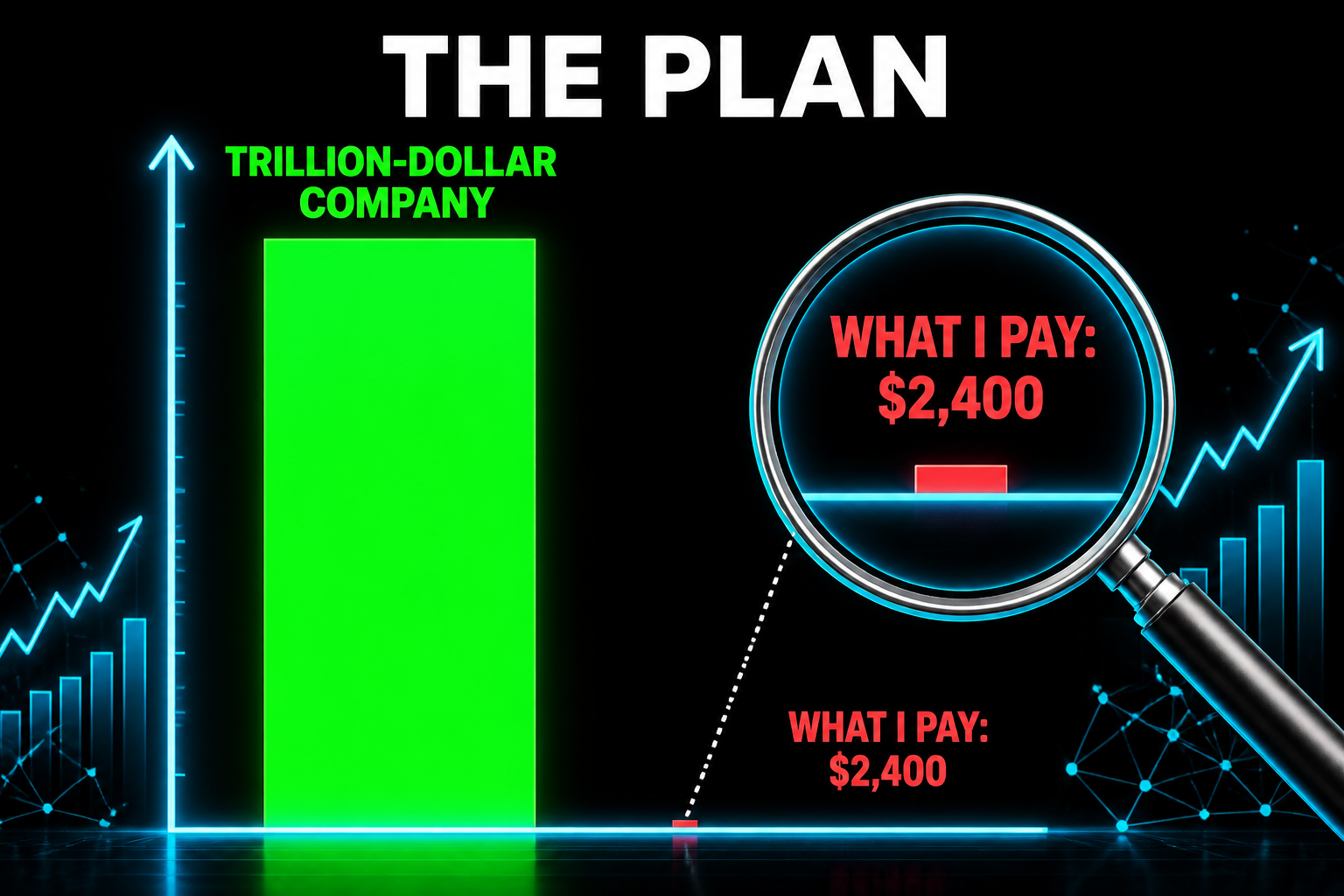
And I'll say the quiet part out loud: my goal is to turn this into a trillion-dollar company. When your cost base is a $200 subscription and your leverage looks like these charts, that ambition stops sounding delusional and starts sounding like arithmetic. AI is the tool that actually makes a number that big thinkable.
A fair caveat
Now, I'll be honest about one thing. I suspect these AI tools are priced cheap right now to win the market. I wouldn't be shocked if the price jumps significantly, maybe several times over, once the land grab is done. But here's the kicker: even if my $200 became $1,000 tomorrow, the math still isn't close. When you're comparing against millions of dollars and years of your life, the ROI stays insane.
The takeaway
This is why I keep preaching speed of iteration. AI didn't just make things a little cheaper or a little faster. It collapsed a three-year, multi-million-dollar effort into six months and a subscription that costs less than a nice dinner. If you're a business owner still on the fence about this stuff, run your own numbers. I promise they'll embarrass whatever you're doing now.
Anyway, I just got back from Panera with a fresh coffee, so I'm going to go compress another iteration cycle. Do the math yourself. It's ridiculous.
Want that kind of ROI in your business?
We build the AI systems that collapse your costs and grow your revenue at the same time. That's what we do at HyppoAI.
Want to talk about what you're building?
Get in touch