Most AI Consultants Are Charlatans

"AI consultant" is one of the fastest growing job titles, and most of the people holding it have never shipped anything. The two varieties to watch for, why everything looks great on PowerPoint until you build it, what the 6% of AI projects that work have in common, and the one question that separates a practitioner from a snake oil salesman.
I saw a post on LinkedIn this week breaking down the fastest growing job titles, and one of the explosive ones was "AI consultant." I read that and laughed, because I've met the AI consultants. A lot of them. And I'm going to say the quiet part: most of them are charlatans.
Not all. There are real ones, and I'll tell you how to spot them at the end. But the title is cheap, the demand is enormous, and that combination always attracts a certain kind of person. So before you hire one, read this.
The two varieties
You'll run into two types, and they're both bad in different ways.
Type one is the visionary. This person pitches things with AI that are, in order, stupid, barely possible, and even if they were possible, wouldn't work. "We'll have an AI agent that autonomously runs your entire sales org." Cool. It can't. And if it could, your customers would hate it.
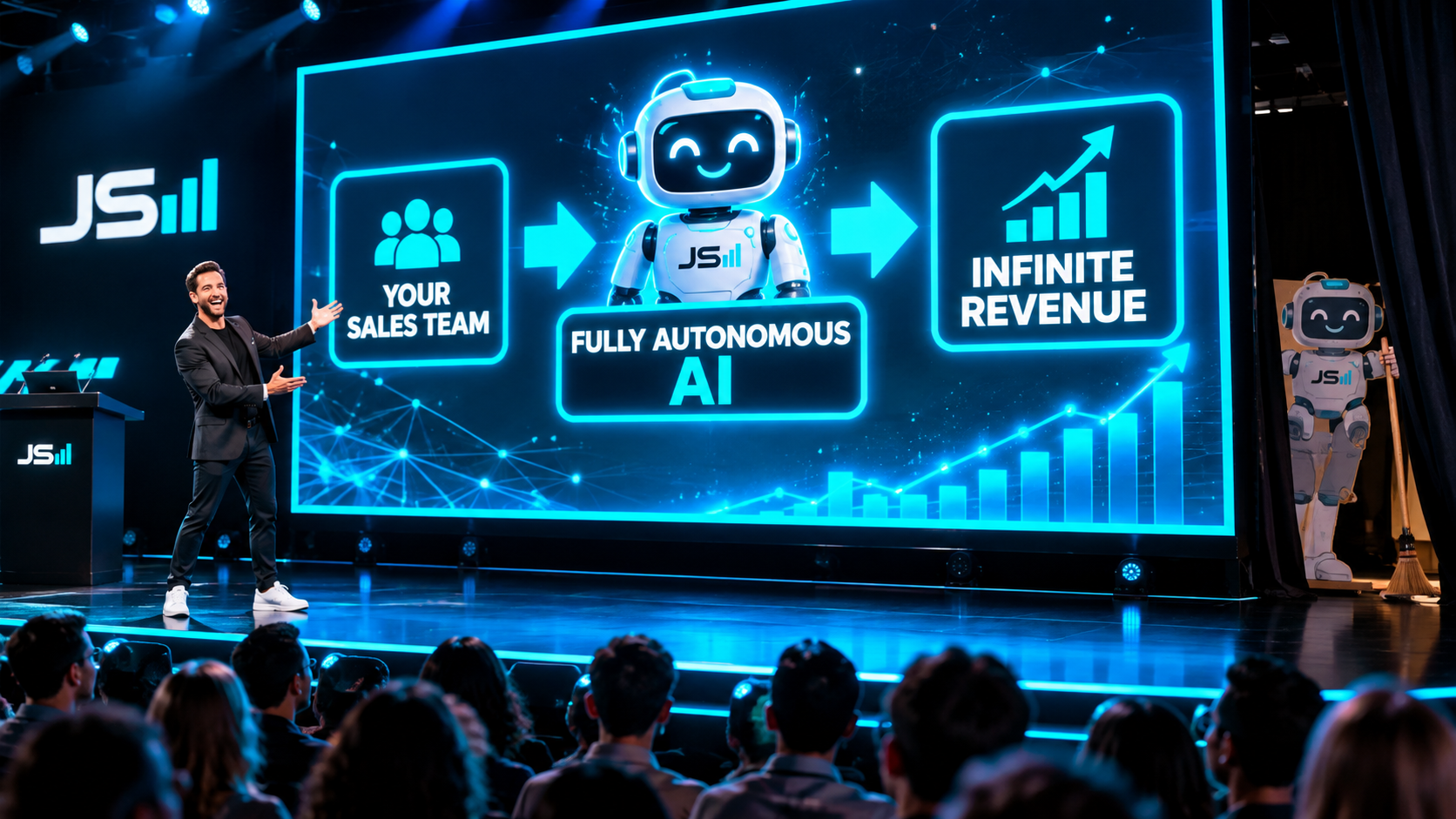
They sell the slide, not the system, and the slide always looks incredible because a slide doesn't have to run in production. Ask one of them what happens when the customer says something the flowchart didn't predict and watch the pivot to "well, that's phase two."
Type two is the prompt guy. Seven prompts to fix your life. Seven prompts to grow your business. The entire body of expertise is ChatGPT 101, and they've decided that knowing how to type into a chat box makes them an AI expert. It doesn't. It makes them someone who typed into a chat box.
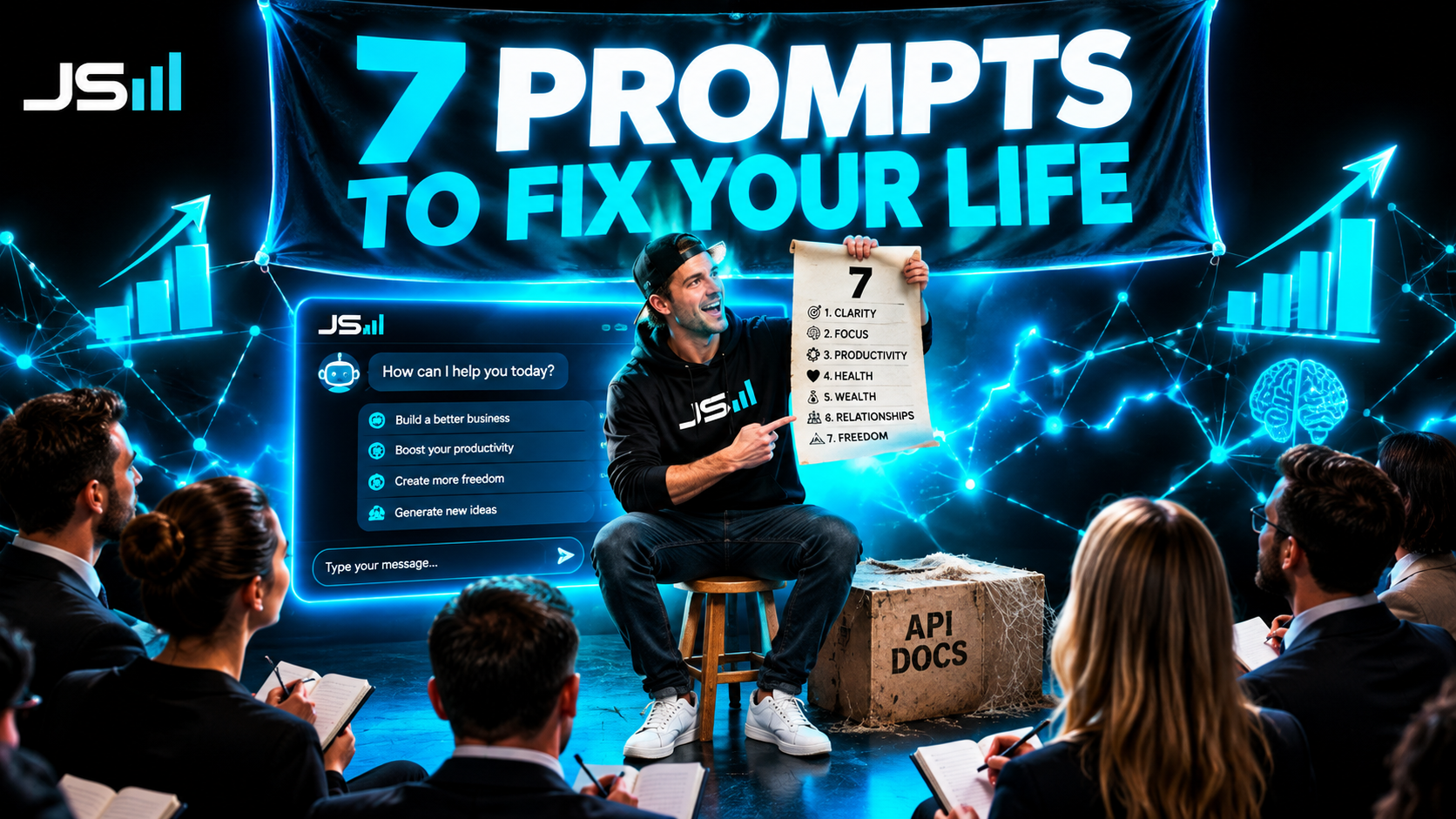
Worse, they take whatever the machine spits out as gospel instead of a starting point, and then they teach your team to do the same. You end up with a company full of people who've stopped checking.
Neither type has ever shipped anything. That's the tell. Hold onto it.
Everything looks great on PowerPoint
Elon says a version of this constantly and he's right: everything looks great on PowerPoint. Any idea, any architecture, any business model. On a slide it's flawless, because a slide has no latency, no edge cases, no angry customer on hold, and no integration that returns a 500 at 2am. The slide is a drawing of a thing. It is not the thing.

The moment you actually start building the product is the moment reality starts voting. Things break. Assumptions die. The elegant five-box diagram turns out to need a sixth box nobody wanted. That's not failure, that's information, and it's information you can only get by building.
And here's the part worth tattooing somewhere: the moment you have a product, even in a rudimentary, ugly, barely-working form, that's when you have a real business. Not when the deck is done. Not when the strategy is validated. When the thing exists and does something for somebody. That's also the entire argument behind the MVP, and it's the line most AI consultants have never crossed. They live permanently on the slide side of it.
I use the chat box too. That's not the point.
Let me be fair, because I'm not an AI skeptic. I'm a CTO. I use these models constantly. I brainstorm architecture with them, I pressure test ideas with them, I let them write the boring parts of my code. The technology is incredibly useful and I'd be slower without it.

But a starting point is what it is. The moment you outsource your judgment entirely, bad things happen. I know this personally, because my own agent once decided the right fix for a problem was to put my Mac mini on the public internet. It was confident. It was wrong. If I'd treated its output as gospel I'd have had a very bad week.
That's the difference between a practitioner and a prompt guy. The practitioner knows exactly where the model is brilliant and exactly where it'll walk you off a cliff, because they've been walked off the cliff. The prompt guy has never been close enough to the edge to find out.
Ask for proof
So here's the whole article in one sentence. Before you hire the AI consultant pitching you at whatever absurd rate, ask them for proof. Not a deck. Not a framework. Proof that they have used AI in a way that solves a problem instead of looking pretty on a slideshow. Because at the end of the day, that's what the technology is for. It solves problems. That's the only test.

Here's what proof looks like from where I sit. Did you take a cabinet shop from $700K to $1.3 million with an AI receptionist answering every call and AI-powered ads bringing in leads at a quarter of the industry rate? Did you plug AILA, an AI receptionist for law firms, into a practice so they could finally fire the answering service that couldn't manage basic English on the phone? Did you automate the tedious crap and empower the experts who were buried under it?
Or are you somebody who thinks ChatGPT is cool and wants keynote speaking gigs?
Those are the only two answers. One of them comes with numbers.
The 94%
The stat going around is that 94% of corporate AI initiatives fail. I believe it. And I'm somebody who uses this technology in my business every single day, so I'm not saying that as a skeptic. I'm saying it as the guy in the 6%.
The difference between the 94 and the 6 is not the model. Everyone has the same models. The difference is whether you pointed it at an actual problem. A specific, boring, expensive problem. Calls going to voicemail. Leads going cold. An expert spending half her day on work a machine should do. That's where the 6% lives. The 94% bought "AI transformation" and got a chatbot nobody uses.
Does your consultant know what an API is?
Quick test. Ask your consultant what an API is. If they can't answer, end the meeting.
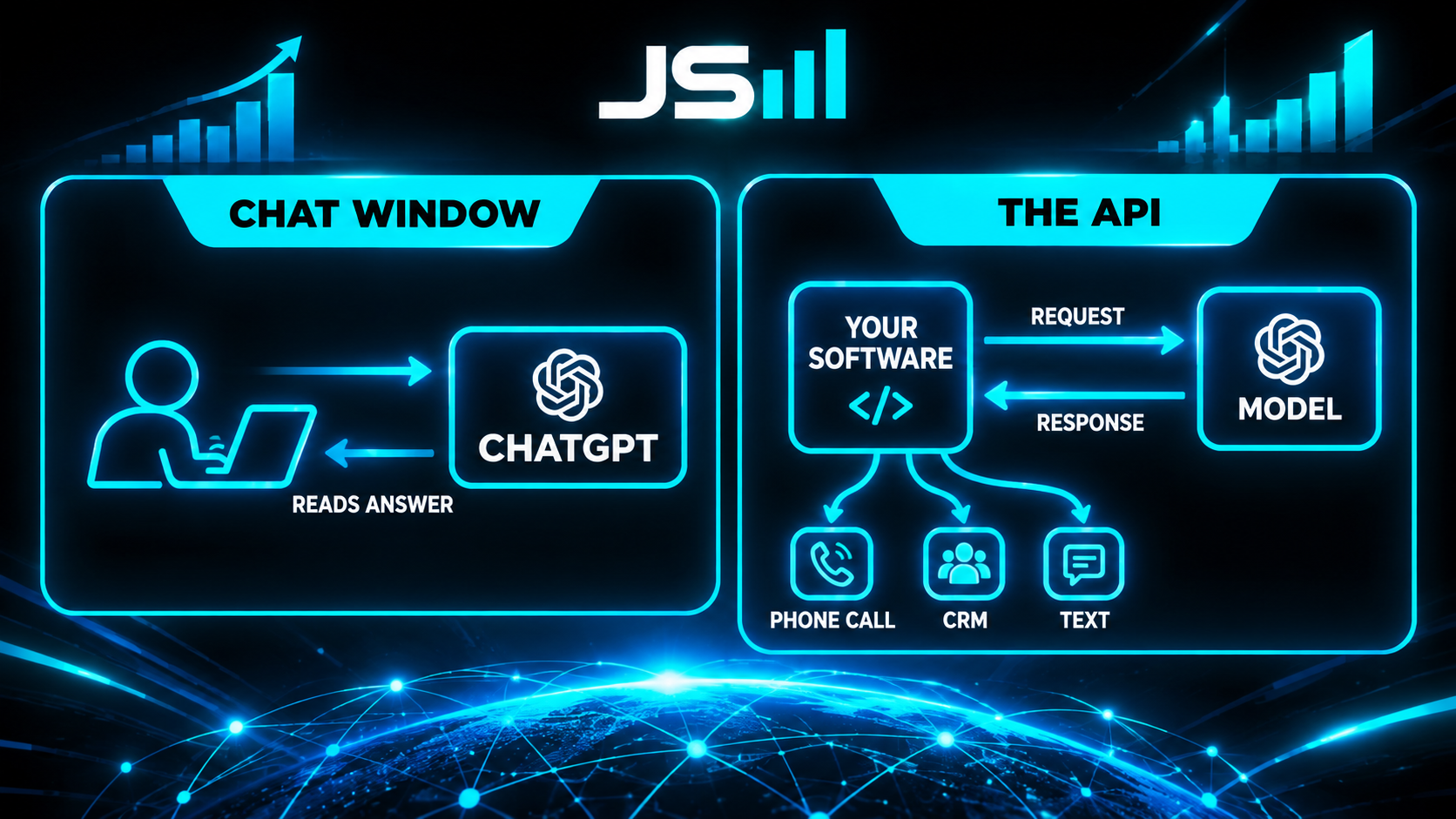
Here's why it matters. The chat window is where most people's understanding of AI starts and stops. You type, it answers, you read. That's a human in a loop, one message at a time, and it's barely scratching the surface. An API is how one program talks to another, and the moment you put the model behind one, it stops being a chat box and becomes a part. A part inside your software. Now it can answer the phone at 2am, write the follow-up text, update the CRM, route the lead, and do it ten thousand times without a human typing anything. Imagine ChatGPT inside a program instead of a browser tab. That's wild. That's also the entire business.
A consultant who only knows the left side of that diagram can sell you prompts. A consultant who knows the right side can build you a receptionist. Only one of those changes your revenue.
How this ends
Two predictions, and I'd bet on both.
One, the market corrects itself. It always does. The gold rush title attracts the tourists, the tourists fail to deliver, the clients get burned, and in a couple of years "AI consultant" means about what "social media guru" means today. The real ones will still be around. They'll just be called something else.
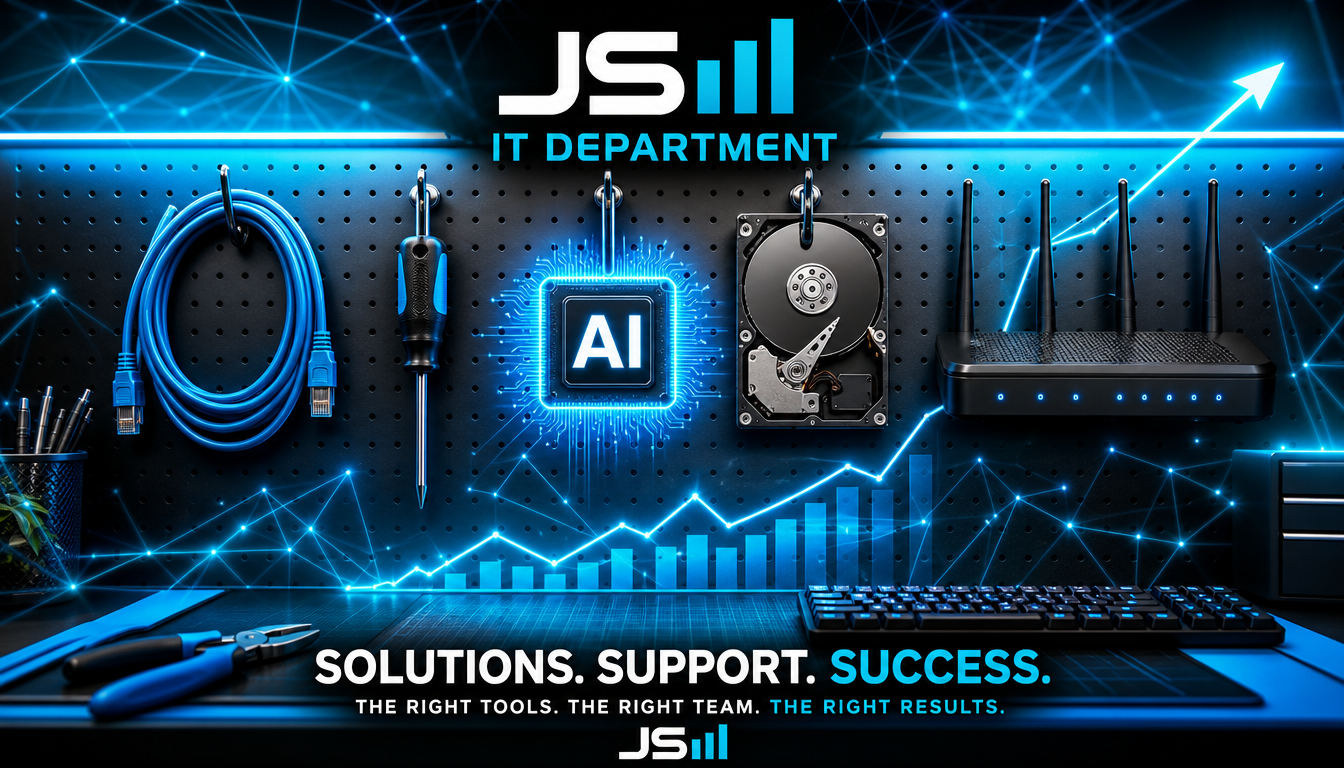
Two, AI just becomes an IT thing. It gets folded into software engineering the way databases did, the way cloud did. Because here's what I notice from the inside: the people getting real value out of this technology are the top 2%, honestly the top 0.1%, who use the coding tools and the APIs to solve actual problems. For them it's incredibly valuable, every day. It's a tool on the wall next to the other tools. It's not a keynote.
And by the way, that's exactly why the CTO just became the most valuable seat in the building. If AI lives in the engineering function, then the person who can take your experts and turn what they know into a system is the person who multiplies your company. Not replacing the expert. Encoding her. She stops doing the work by hand a thousand times, the system does it, and she steps in to correct it when it's wrong. That's a totally different job than it was five years ago, and it needs someone who can hold both the business and the build in their head at once. It also needs someone holding the compass, which is the other half of the same story.
Your AI consultant cannot do that. Your CTO can.
The takeaway
AI is a revolutionary technology. I'd stake my company on that and I have. But the fluff, the marketing, the snake oil, the seven-prompt gurus, all of it is noise on top of a real signal, and the noise is getting louder because the job title is free.
So ask for proof. Ask what they've shipped. Ask what the number was before and after. Ask them what an API is. The real ones will love the question. The charlatans will change the subject to the roadmap.
Want someone who's shipped it?
Every number in this post came from a HyppoAI build. Ask us for the proof. We'll show you.
Want to talk about what you're building?
Get in touch