What Is an MVP?

MVP stands for minimum viable product: the smallest, ugliest version of your thing that actually works. My first social posting tool was HighLevel, a pile of middleware, and a Zapier endpoint because the posting tool didn't have an API. Disgusting under the hood. It worked. And it taught me more in a month than three years of building something pretty ever could have.
Full disclosure: I'm chewing gum as I write this. Which is fitting, because this whole article is about building things held together by duct tape and chewing gum, and why that's not a confession. It's the strategy.
The definition
MVP stands for minimum viable product. Break it down and it says exactly what it means:
Minimum. The smallest version you can build. Not the version with every feature you dreamed up in the shower. The one with the single feature that matters.
Viable. It has to actually work. A mockup isn't viable. A slide deck isn't viable. Somebody has to be able to use it and get a result.
Product. A real thing in front of real people. Not a plan for a thing.
So an MVP is the minimum version of your idea that works. Even if it's ugly. Even if, under the hood, it's a horror show. Especially then.
My horror show
Let me show you mine, because I'm not going to lecture you about shipping ugly things without owning one.
One of our products is called ASP. Today it's a clean piece of our own platform: a client uploads a photo of a finished job, adds a quick note, and the AI writes the caption and posts it to their social media. Simple.
The first version was not simple. The first version was a crime scene.

Here's what it looked like. The front end was a form in HighLevel. That form fed a pile of middleware I'd hacked together to massage the data. And then, because the social posting tool I was using at the time didn't have an API, the only way to get a post into it was through a Zapier endpoint. So the chain was: HighLevel form, into my middleware, into Zapier, into the posting tool, out to Facebook.
If you know me, you know how I feel about Zapier. I've called it button-pushing, not architecture, more than once. And there I was, duct-taping my own product together with it, because it was the only piece of tape that fit.
It was the most disgusting thing on the planet under the hood. It also worked. Clients uploaded photos, posts went out, their social media ran without them touching it. Somehow.
And that "somehow" is the whole point.
Why ugly is correct
Here's what the ugly version bought me that a beautiful version never could have.
I found out if anyone wanted it. Before I spent months building a proper system, I found out in weeks that clients would actually use the thing and keep paying for it. That's the only question that matters at the start, and the pretty version can't answer it any faster than the ugly one.
I found out what broke. Every weird edge case, every format the posting tool choked on, every time a client uploaded a photo sideways. I learned all of it while the stakes were tiny. When I eventually rebuilt it properly on our own platform, I wasn't guessing what it needed to handle. I had a list.
I got paid while learning. People were paying for a product running on Zapier and prayers. That revenue funded the real version. The ugly thing paid for the pretty thing.
Then you fix what broke, you ship again, and you watch what breaks next. That's the loop.
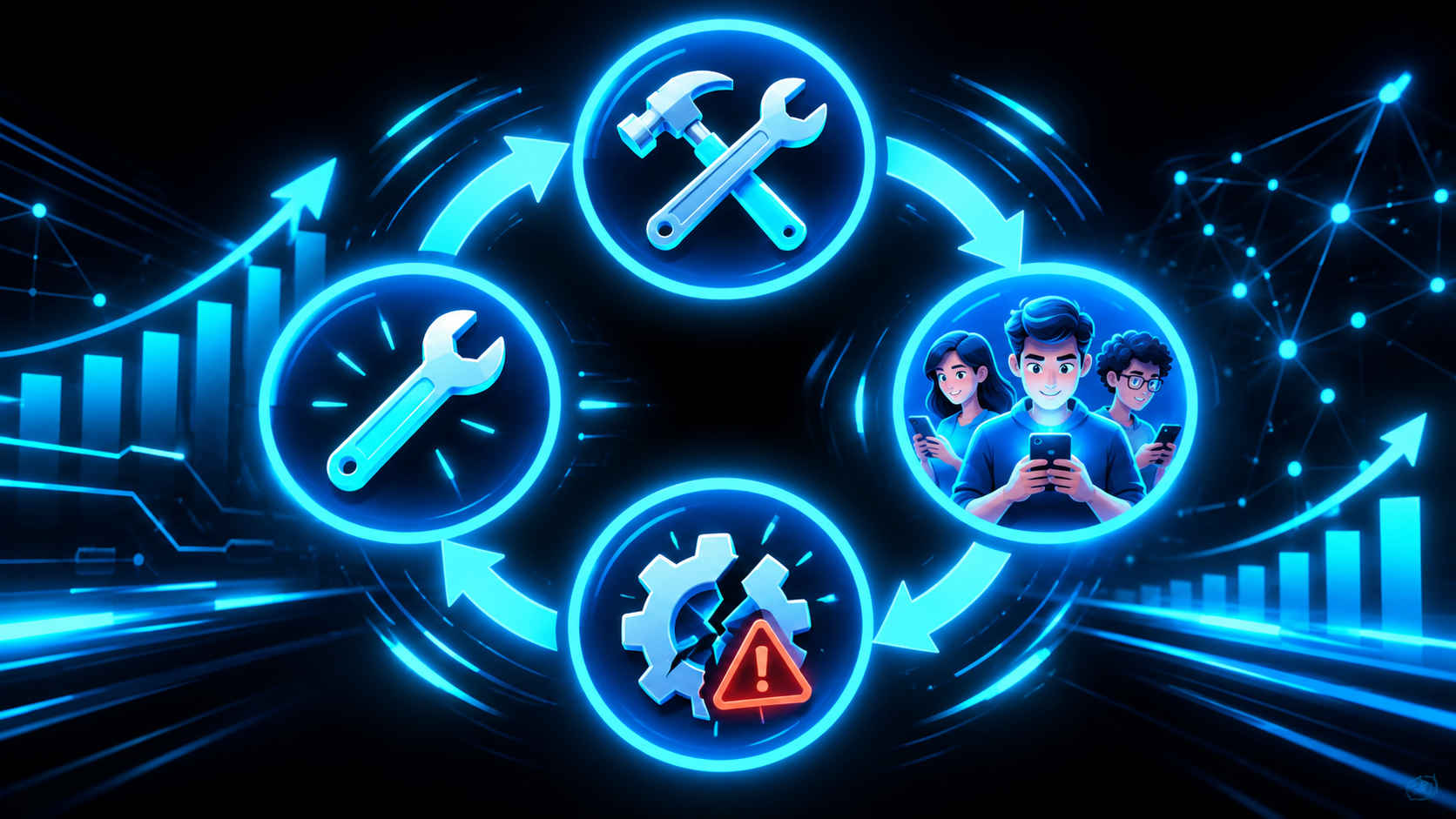
I've written about that loop a lot, because it's the engine behind everything we do. On Automation is basically "ship it, watch it break, harden it." And what's changed in the last couple years is that AI lets you run that loop at obscene speed. A rebuild that used to take a quarter takes a weekend. Which means there's even less excuse to polish before you ship. Ship, learn, fix, faster than ever.
The expensive mistake MVPs save you from
Here's the version of this story that doesn't end well, and I've watched it happen more than once.
A founder has a vision. It's a good vision. And they decide that the vision deserves to be built right. So they spend two, three years, and a frankly scary amount of money, building something beautiful. Every feature. Every edge case. Perfect design. Then launch day comes, they put it in front of the market, and the market shrugs.
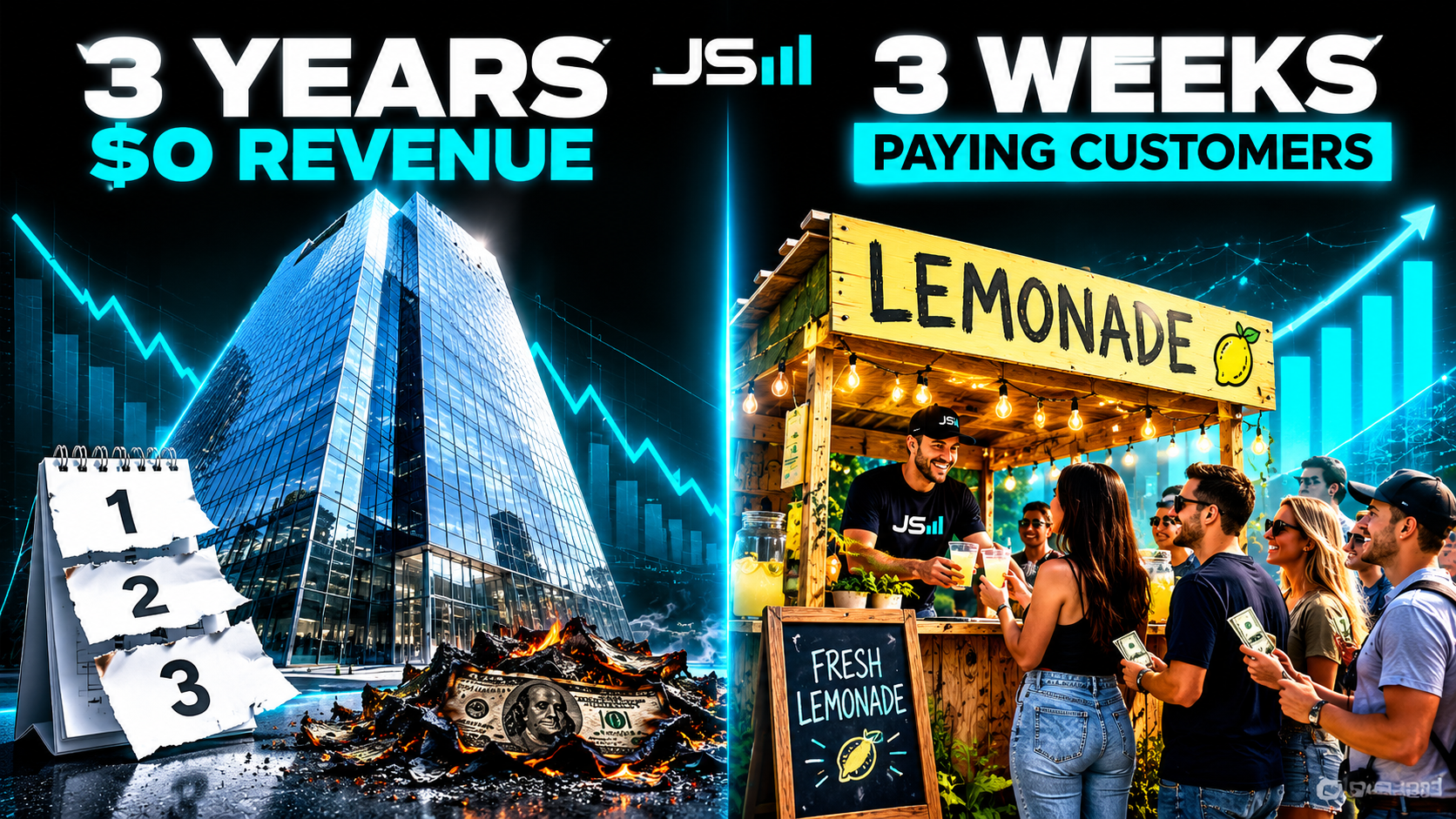
Three years. Millions of dollars. Zero feedback until it was too late to use any of it.
The MVP flips that. You put something hideous in front of people in three weeks. If they don't want it, cool, you just saved yourself three years. If they do want it, you've got paying customers telling you exactly what to build next. Either way you win, and either way you win fast.
This is also, by the way, the cheapest way to get through the valley of despair. Every founder hits the stretch where nothing's working and you wonder if you're an idiot. The founder with an ugly product and three paying customers climbs out of that hole a lot faster than the one with a beautiful product and a launch date six months away.
The part nobody mentions: confidence
One more benefit, and if you're just starting out it might be the biggest one.
Building something ugly that works and watching it get somebody a real result does something to you. It changes "I think I could build a business" into "I built a thing and it worked." That's not a small shift. That's the difference between a person with an idea and a founder.
The first time a client's social media ran for a month on my duct-tape machine without them lifting a finger, I stopped wondering whether I could do this. Not because the product was good. It wasn't. Because it got someone a result, and I'd built it.
You don't get that from a pitch deck. You get it from shipping.
What an MVP is not
Two quick guardrails, because people take this too far in both directions.
An MVP is not an excuse to ship something broken. Minimum, yes. Viable is still in the name. If the core thing doesn't work, it's not an MVP, it's a bug with a logo.
And an MVP is not the final product. The duct tape is a phase, not a philosophy. Once people are paying and you know what they need, you rebuild it right. We did. ASP today runs natively on our platform, no HighLevel, no middleware, no Zapier. But it only exists in that form because the ugly version proved it deserved to.
The takeaway
Build the smallest version that works. Put it in front of real people before you're comfortable with it. Watch what breaks. Fix it. Do that over and over, fast.
Don't spend three years building something beautiful to find out nobody wants it. Spend three weeks building something ugly and find out for sure.
And if it's held together by duct tape and chewing gum and it works? Congratulations. You've got a product. Now go get it in front of someone.
If you've got the idea and want it built fast and built right the second time, that's what we do.
Want to talk about what you're building?
Get in touch