The Most Underrated Skill in Business Is Being Wrong Out Loud

I've written about systems thinking, sales, and judgment. Here's the skill that makes all three work: being able to say "I was wrong, here are the receipts" without flinching, and in the same breath being able to say "no, absolutely not" when you're right. This morning both happened in one conversation, and our opt-in rate went from nobody to six out of seven.
I've spent a lot of this blog on skills. Systems thinking, seeing where things break before they do. Sales, getting a human to say yes. Judgment, knowing which of the fast options is the one that won't blow up.
Here's one I haven't written about, and it quietly powers all three. The ability to be wrong out loud. And, in the same breath, the ability to say no and mean it.
This happened to me this morning, so it's fresh.
The conversation
I was talking with somebody I genuinely respect. A mentor. One of the people I go to when I want to be told something I don't want to hear. He looked at how we were collecting consent on our lead forms, the opt-in for marketing texts and emails, and said: you should do it this way instead. You'd get a lot more people saying yes.
My honest reaction was, I don't know about that. I wasn't sure it was doable the way he described, and I had reasons. So I said so. We disagreed. I said, let me go look.
Then he added a second suggestion. And the second one I was pretty sure was a hard no. Not a "let me think about it" no. A "that'll get us in trouble" no. I've written about what happens when people get cute with consent, and I wasn't about to become the example.
So I had two things on the table. One I thought was probably wrong. One I thought was definitely wrong. And a person I respect telling me I was off on both.
Step one: go actually find out

The lazy move here is to pick a side on the spot. Either cave because he's the mentor, or dig in because I'm the technical guy and this is my system. Both of those feel like decisions. Neither one is.
So I did the boring thing. I went and did the research. Read the actual rules. Looked at what's actually allowed, what's actually doable in our stack, and what the numbers said.
Here's what came back.
The first suggestion, the one I'd pushed back on? He was right. It was completely doable. I'd been wrong about the constraint, and once I actually looked instead of assuming, it was obvious.
The second suggestion? Absolutely not. The research confirmed it. That one stays dead.
Step two: say it plainly, with receipts

So I went back to him and said two things.
On the first one: look, I thought it worked this way. I was wrong. You were right. Here's what I found, here's the proof, and we're doing it your way starting now.
On the second one: we definitely can't do that. Here's why. And honestly, we don't need to, because the first thing already fixed the problem.
That's the whole skill. Not "being humble." Not "being confident." Being able to do both in the same conversation, with evidence, and without it costing you anything emotionally. I was wrong about one thing and right about the other, and the only reason I know which was which is that I went and checked instead of defending my first take.
Step three: it worked
Here's why this isn't just a nice story about feelings.
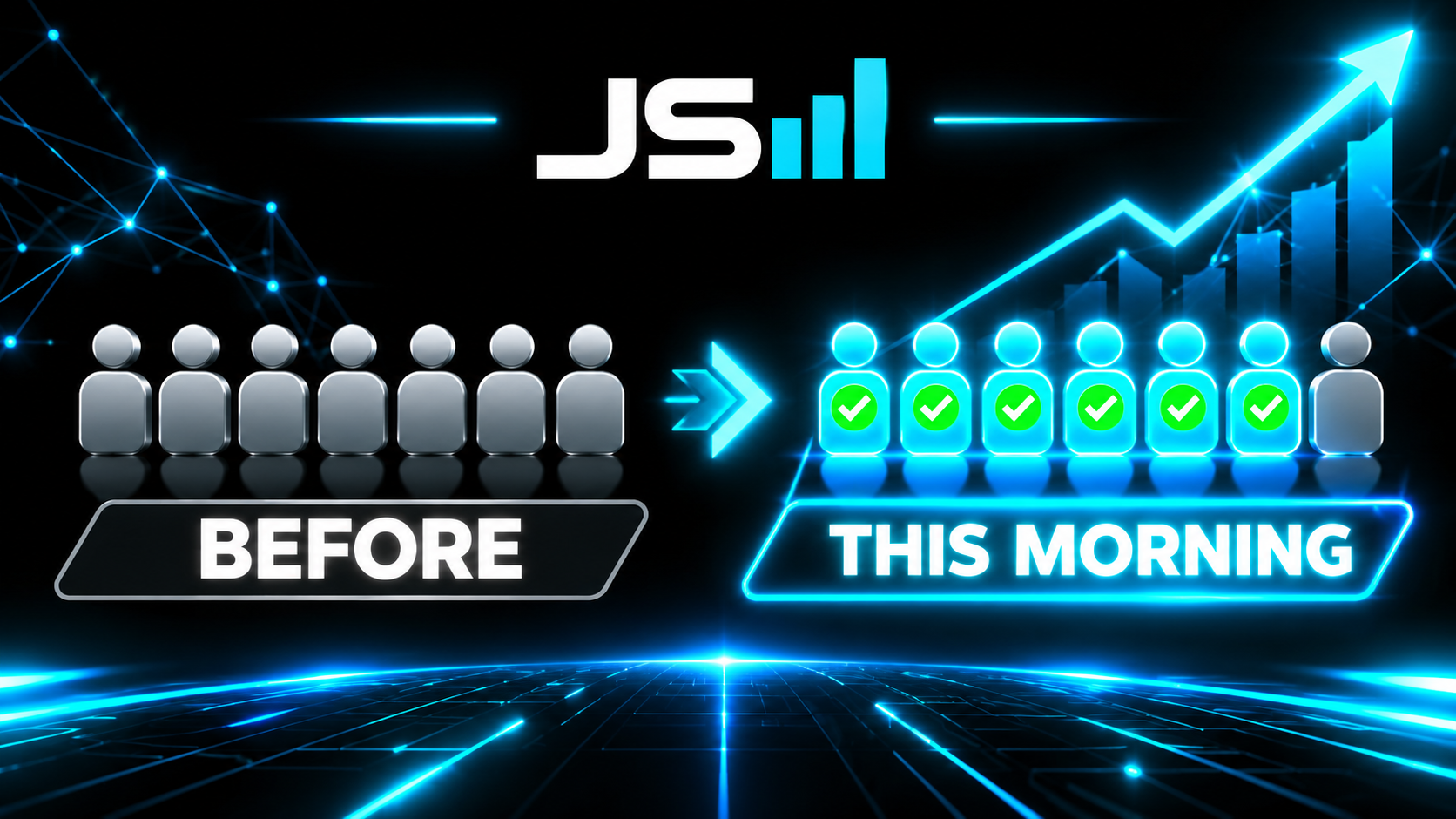
Before the change, our opt-in rate on marketing texts and emails was basically nobody. Leads would come in, and almost none of them would check the box. After the change he suggested, the one I'd argued against? Six out of seven leads opted in. This morning. Same ad spend, same traffic, same offer. The only thing that moved was the thing I'd been wrong about.
And those leads aren't expensive, because I built a machine that iterates the ads for me. So now I've got cheap leads AND the right to actually follow up with them. That's not a small win. That's the difference between a list and a pipeline.
If I'd defended my first take, that number would still be zero. If I'd caved on the second suggestion to keep the peace, I'd be the subject of a very different article.
The two halves, and why you need both

Most people are good at one of these and terrible at the other.
The people who are great at admitting they're wrong often can't hold a line. Someone they respect pushes, and they fold, even when the push is bad. That's not humility, that's just agreeableness, and it'll walk you straight into a mistake because somebody senior sounded sure.
The people who are great at holding a line often can't admit they're wrong. They've got the conviction, but it's pointed at everything equally, including the stuff they never checked. That's not confidence, that's ego with a good posture.
The skill is the combination. Be wrong fast and out loud when the evidence says so. Be immovable when the evidence says so. And the only way to know which situation you're in is to go get the evidence first, before you've committed to a position in front of anybody.
A specific warning if you're good at the technical stuff
This one's for my people, and it's the actual lesson of the story.
If you're strong technically, you will get used to being right. Not occasionally. Routinely. You'll look at an architecture and know it won't hold. You'll spot the failure point nobody else sees. You'll get told "that's impossible" and then go do it by Friday. That track record is real, and it's earned, and it's exactly what makes you dangerous to yourself.
Because being right a hundred times in a row teaches your brain a bad habit: it stops distinguishing between "I know this" and "I assume this." They start to feel identical from the inside. And that's precisely what happened to me this morning. I didn't check whether his suggestion was doable. I pattern-matched it against what I thought I knew about our stack and the rules around consent, and my confidence filled in the gap where the research should have been.
That's a blind spot, and technical skill creates them, it doesn't prevent them. I've watched my own AI tooling confidently try to do catastrophic things and caught it every time because I know where things break. Same instinct, pointed slightly off target, cost me an opt-in rate for who knows how long.
So don't be so sure of your technical ability that you stop looking. Your competence is a flashlight, not floodlights. It lights up a lot, brilliantly, and the stuff just outside the beam is still pitch dark. The guy who isn't technical but has watched a thousand lead forms convert can see something you can't, and if your instinct is to dismiss him because he can't read your code, you just lost free information.
Why mentors make this easier, and harder
I wrote in Nobody Is Self-Made that you need people who'll tell you the truth. This is the flip side. Once you've got them, you have to be able to hear it, and you have to be able to push back on it, with the same person, sometimes in the same hour.
A mentor who's right about the first thing and wrong about the second thing is a normal mentor. That's what every good advisor looks like. If you can only receive the advice as a package, all of it or none of it, the relationship is useless to both of you. The value is in being able to say "you were right, thank you" and "no, not that one" and have both land as respect.
The takeaway
When someone you respect tells you you're wrong, don't decide. Go look. Then come back and say exactly what you found, in plain words, whichever way it cuts.
"I was wrong, here's the proof, we're doing it your way" costs you nothing and just made me six out of seven opt-ins.
"No, we can't do that, here's why" costs you nothing either, and it's the only reason I get to keep the first win.
Be wrong out loud. Be right out loud. Just make sure you checked before you did either one.
Want to talk about what you're building?
Get in touch