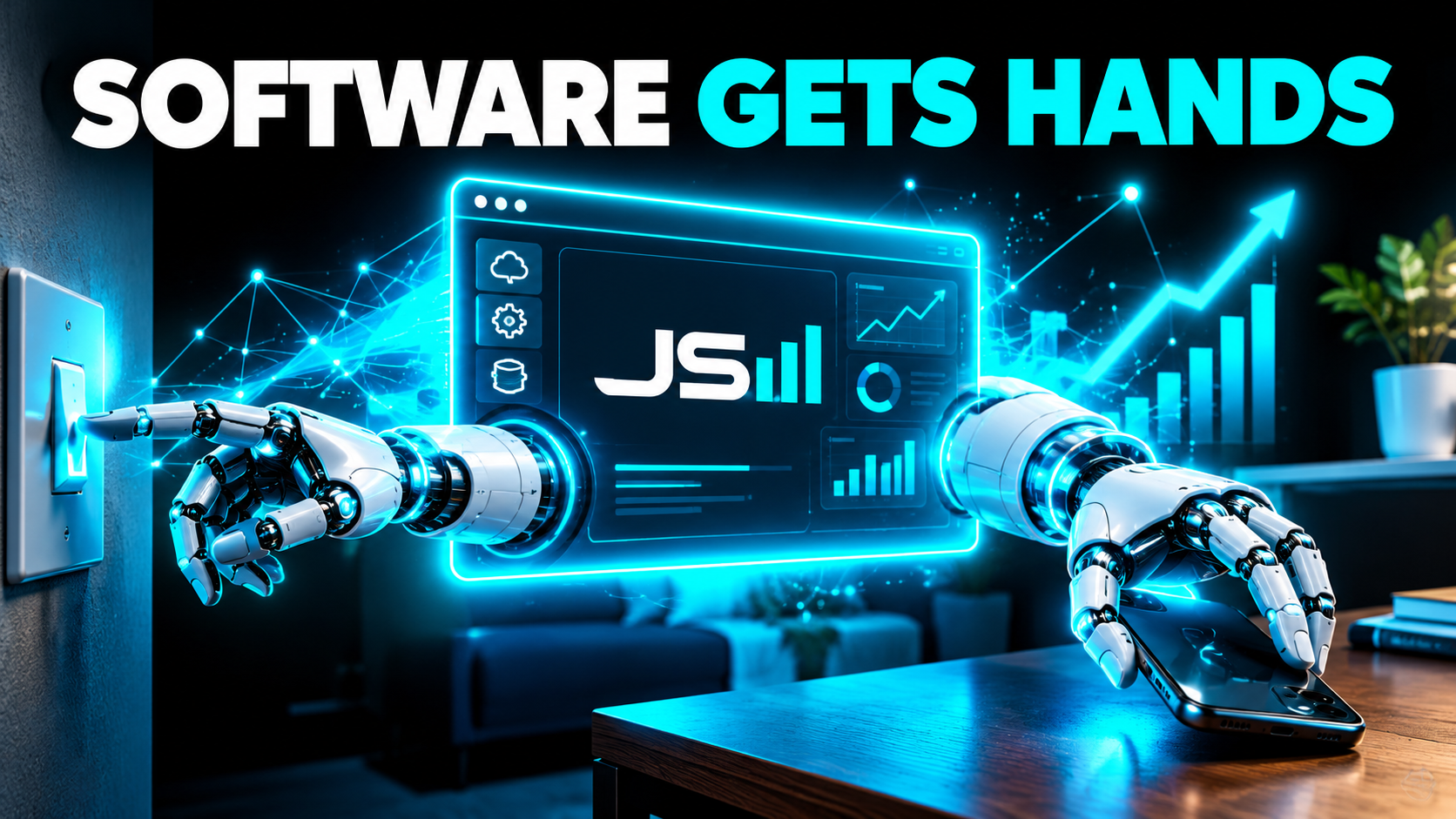
Software Is About to Get Hands
SaaS never sold software, it sold outcomes. The next insanely valuable companies will sell outcomes in the physical world: AI plus cheap sensors, cameras, relays and a phone line. Elder care, job sites, service businesses, access and logistics, and the ugly side of the ledger nobody wants to list. I'm building one. Not telling you what yet.
Here's a prediction I'd put money on: the next insanely valuable companies are going to combine AI with hardware. Not robots-in-a-movie hardware. Boring hardware. Sensors, cameras, relays, a phone line. Software that can see the real world, decide something, and then actually do something about it.
Let me walk the logic, because it's a straight line from where we already are.
SaaS never sold software. It sold outcomes.
Nobody buys a CRM because they want a database. They buy it because they want leads to stop falling through cracks. Nobody buys AILA because they want "an AI receptionist." They buy it because they're sick of missed calls and they want every one answered. The software is the delivery mechanism. The thing being sold is the result.
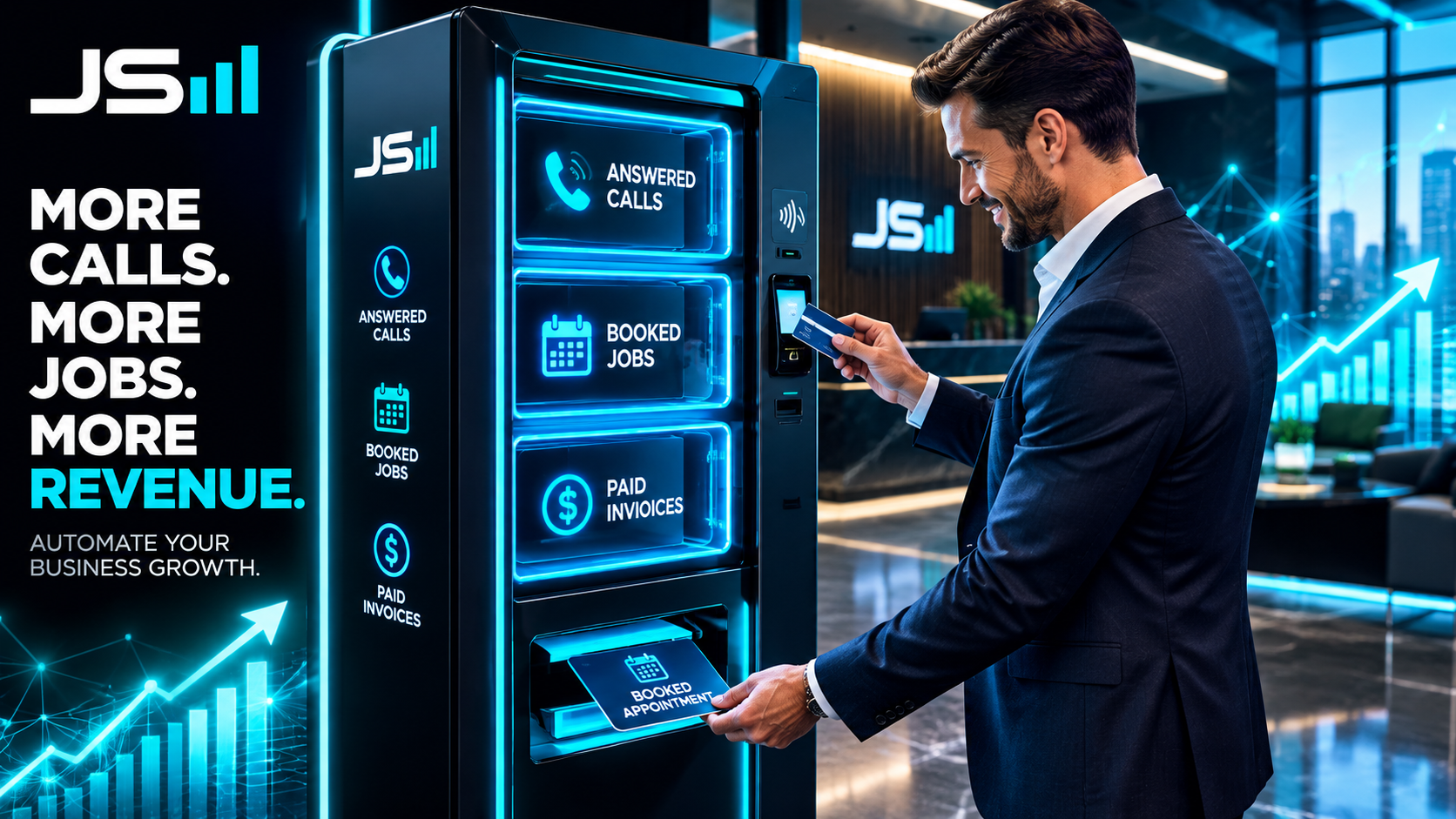
That's the entire SaaS business model in one sentence, and AI pushed it further. A year ago software could organize your work. Now it can do a meaningful chunk of the work: answer the phone, write the follow-up, book the appointment, chase the invoice. The outcome got bigger and the price stayed flat. Great business.
But notice the boundary. All of that happens inside a screen. The second a job requires touching the physical world, the software stops and a human picks up the slack. That boundary is where the next decade of value is sitting.
The next step: paying software to act in the real world
If SaaS sells outcomes, the obvious next step is outcomes that happen in physical space. Not "we'll tell you the stove is on." We'll turn it off. Not "a lead came in." We'll unlock the gate for the delivery, confirm it arrived on camera, and release the payment.
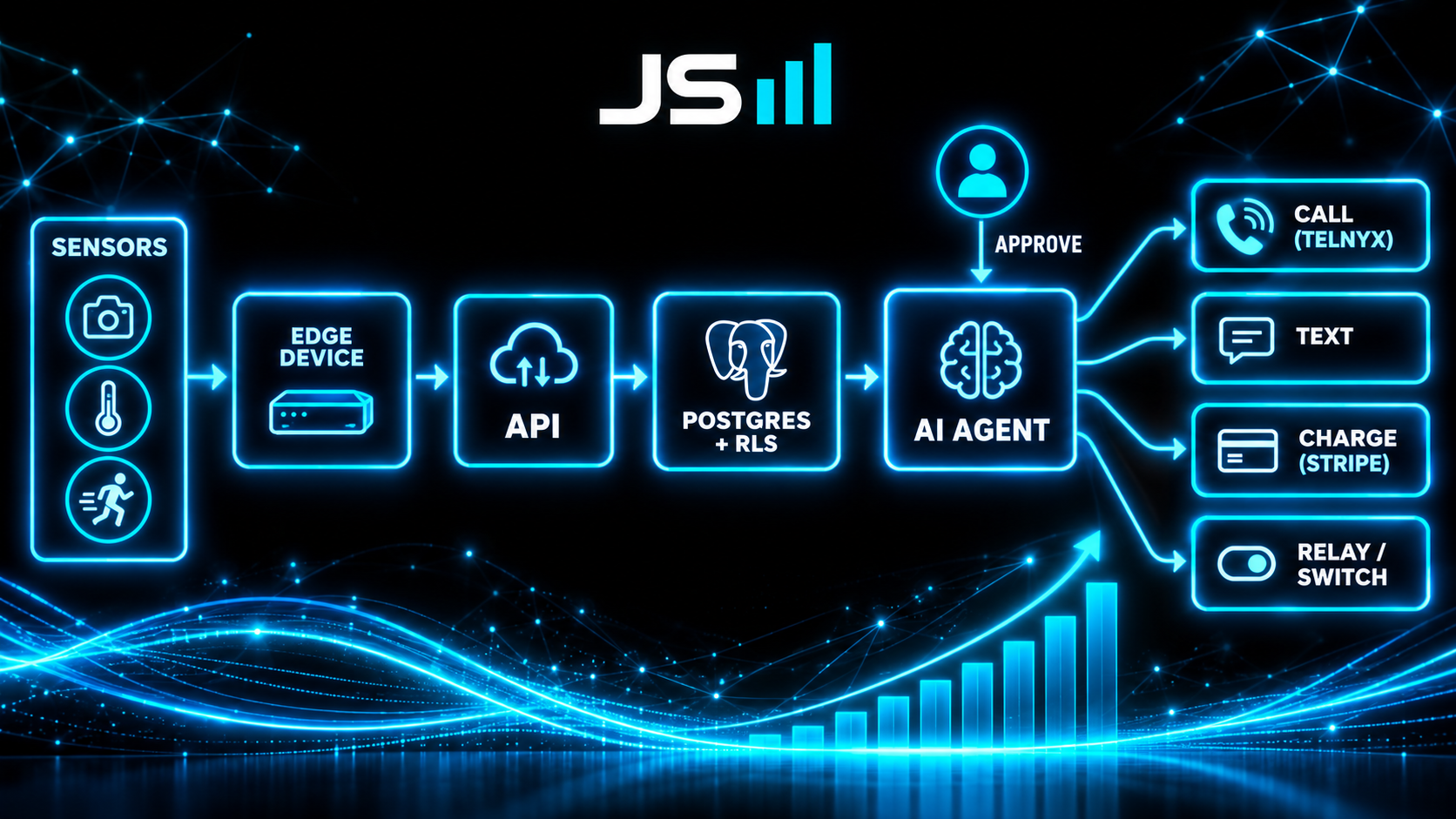
The pieces are all cheap now, which is why this is happening today and not in ten years. A camera that can be read by a model is forty dollars. A relay that flips a switch is five. A phone line that can make a call is an API. The models can see, hear, and reason well enough to handle the routine cases, and the port between the model and the world is getting standardized. The hard part was never the parts. It's wiring them into a system that owns its data, makes a decision, and takes an action someone will pay for.
Beyond "find my keys"
Every demo of this stuff is a smart home. Lights, thermostat, a speaker that tells you where your keys are. That's cute and nobody's building a billion-dollar company on it. The money is in the places where a physical outcome is expensive, recurring, and currently done badly by tired humans.

Elder care. This is the one I'd bet on first. A parent living alone, a few sensors, a model that knows the difference between "went to bed early" and "hasn't moved since 2pm." Stove left on gets turned off. A fall gets a call, then an escalation to a human if nobody answers. Medication not touched by noon gets a text to the daughter, not a notification nobody reads. The outcome isn't data. It's "my mother is okay," delivered daily, which is worth real money to a lot of people.
Job sites. A contractor with four crews can't be at four sites. Cameras plus a model that knows what "the drywall delivery arrived" looks like, confirms it, and texts the foreman. Equipment left running after hours gets shut off. Someone on the site at 2am gets a call to the owner, not a clip he reviews Monday.
Service businesses. An HVAC unit reporting its own vibration and temperature, a model that spots the failure pattern a week before it dies, and a system that books the tech, texts the customer, and bills the job. Nobody called. The outcome was "it didn't break."
Access and logistics. Gates, doors, lockboxes. The delivery truck shows up, the camera reads the plate, the gate opens, the drop is confirmed on video, the invoice goes out. Four human touchpoints collapsed to zero.
The pattern is the same every time. Sensor, judgment, action, outcome you can invoice. And underneath every one of them, a human above the agent for the calls that matter, because a model that can flip a switch is a model that can flip the wrong switch.
Not all of it is pretty
I'd be lying if I only listed the warm examples, so here's the other side.
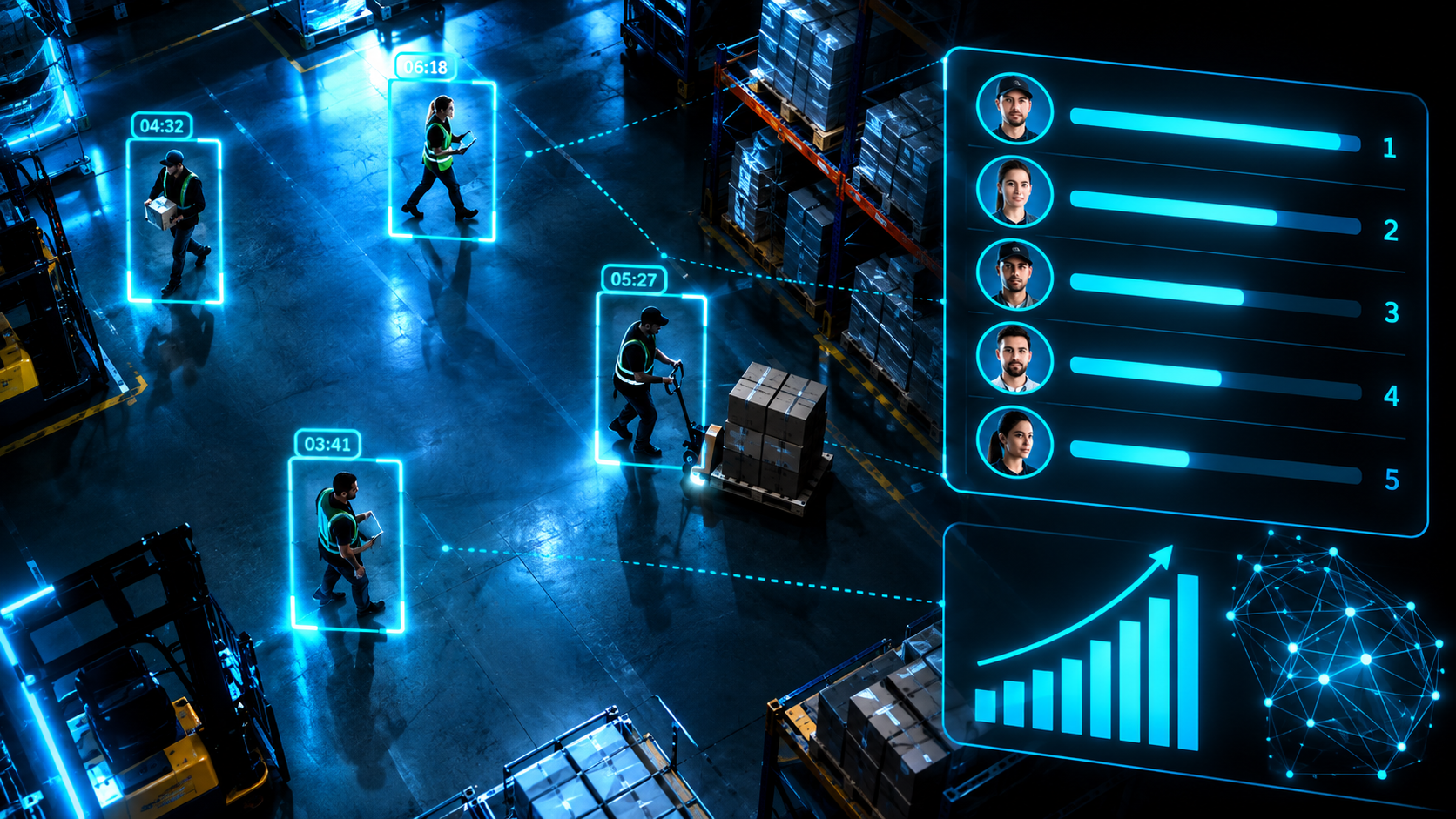
The exact same system that notices a fall can time a warehouse worker's bathroom break. The camera that confirms a delivery can rank employees by how fast they walk. Insurance companies will price you off the sensor in your car and your fridge. The gate that opens for a delivery can lock out a tenant who's behind on rent, automatically, at midnight, with no human in the chain. Some of the most valuable companies in this space are going to be built on the ugly side of the ledger, and pretending otherwise is naive.
And I'm saying this as a founder, by the way. Not as a critic from the outside. I want to build in this space, I am building in this space, and I'd still rather say the uncomfortable part out loud than pretend the incentives point somewhere nice on their own.
So here's the warning. What works brilliantly in the short term can be a disaster in the long term. In 1929 the smartest money in America was buying stocks on ninety percent margin, and it was the best trade anyone had ever seen, right up until October. The quarterly numbers on a surveillance product will look incredible. The bill comes later, and it comes for everyone.
And a company's duty is not only to its shareholders. The Belgian Congo was, on paper, one of the most profitable enterprises of its era. Leopold II ran it as a private business, rubber quotas enforced by force, and the returns were spectacular for exactly one stakeholder. It is remembered today as one of the worst things a company has ever done. Profit was never the problem with it. The absence of any duty to the people inside the system was. When your software has hands, the people on the other end of those hands are stakeholders whether or not they're on the cap table.
I'll also say, as an architect: the long-term political results of getting this wrong look like insanity to me. Governance is just systems design. Same discipline, bigger blast radius, and we already have a lot of failure points in the current design. But that's another conversation and a much longer post, so I'll leave it there.
I don't have a tidy answer and I'm not going to fake one. I'll say two things. First, the architecture is neutral and the business model isn't, so pick your customers like it matters, because it does. Second, this is exactly why I keep insisting on a human above the agent. Not because the model is incapable, but because a system that acts on the physical world with nobody accountable is a system that will eventually do something nobody would have approved.
How to actually build one
If you're a founder reading this and thinking "I should build the elder care thing," slow down and do what I'd do: diagnose before you pitch. Don't start with the gadget. Start with a specific person who has a specific expensive problem and find out what outcome they'd actually pay for. Then work backward to the minimum set of sensors and actions that delivers it. Most of these businesses need two sensors and one action, not a smart home.
And build the system like it's going to matter, because it is. Own the data. One backend. Real code, not glue. A heartbeat on every sensor so you know when one goes quiet. A human approval step on anything that can hurt someone. The deck version of this is easy. The version that runs for three years in somebody's mother's kitchen is the business.
I'm working on one
I'll be straight: I'm building something in this space right now. I'm not sharing what, and I'm not going to drop hints. When there's something real to show, you'll see it here first. Until then, you get the thesis and not the product.
The takeaway
SaaS sold outcomes on a screen. The next wave sells outcomes in the room. The hardware is cheap, the models can see and decide, and the plumbing to make a call, charge a card, or flip a switch is an API away. The companies that win won't be the ones with the smartest model. They'll be the ones that picked a real problem, owned the whole system end to end, and kept a human above the agent when it counts.
Software is about to get hands. Decide what you want it holding.
Want to build the real-world version?
Sensors, judgment, action, and the follow-up that gets you paid. That's a HyppoAI build.
Want to talk about what you're building?
Get in touch