Twilio Makes You Pay Double for the Same 160 Characters
Twilio is the plumbing behind a huge chunk of the texts you get. It works, it almost never drops a message, and it charges roughly double what the competition does for a commodity, behind an API that makes you juggle three credentials to send one SMS. A 6.5 out of 10, and here's exactly why I didn't build on it.
Let me start with the part that keeps this review from being a hit piece: Twilio works. It is reliable in the boring, load-bearing way that most software only pretends to be. There's a reason it quietly sits underneath an enormous slice of the internet.
I still didn't build on it. 6.5 out of 10. Let me show my work.
What Twilio actually is
If you've never dealt with it, Twilio is the pipe between your software and the phone network. You want your app to send a text, make a call, or receive a reply? You don't go negotiate with Verizon. You call Twilio's API, hand it a number and a message, and it does the carrier wrangling for you. It also sells phone numbers and handles the A2P registration you need to text businesses legally.
When your business depends on a text actually arriving, "it just works" is worth a lot. Twilio earns real credit there.
Now the two problems.
Problem one: it's a commodity priced like a luxury
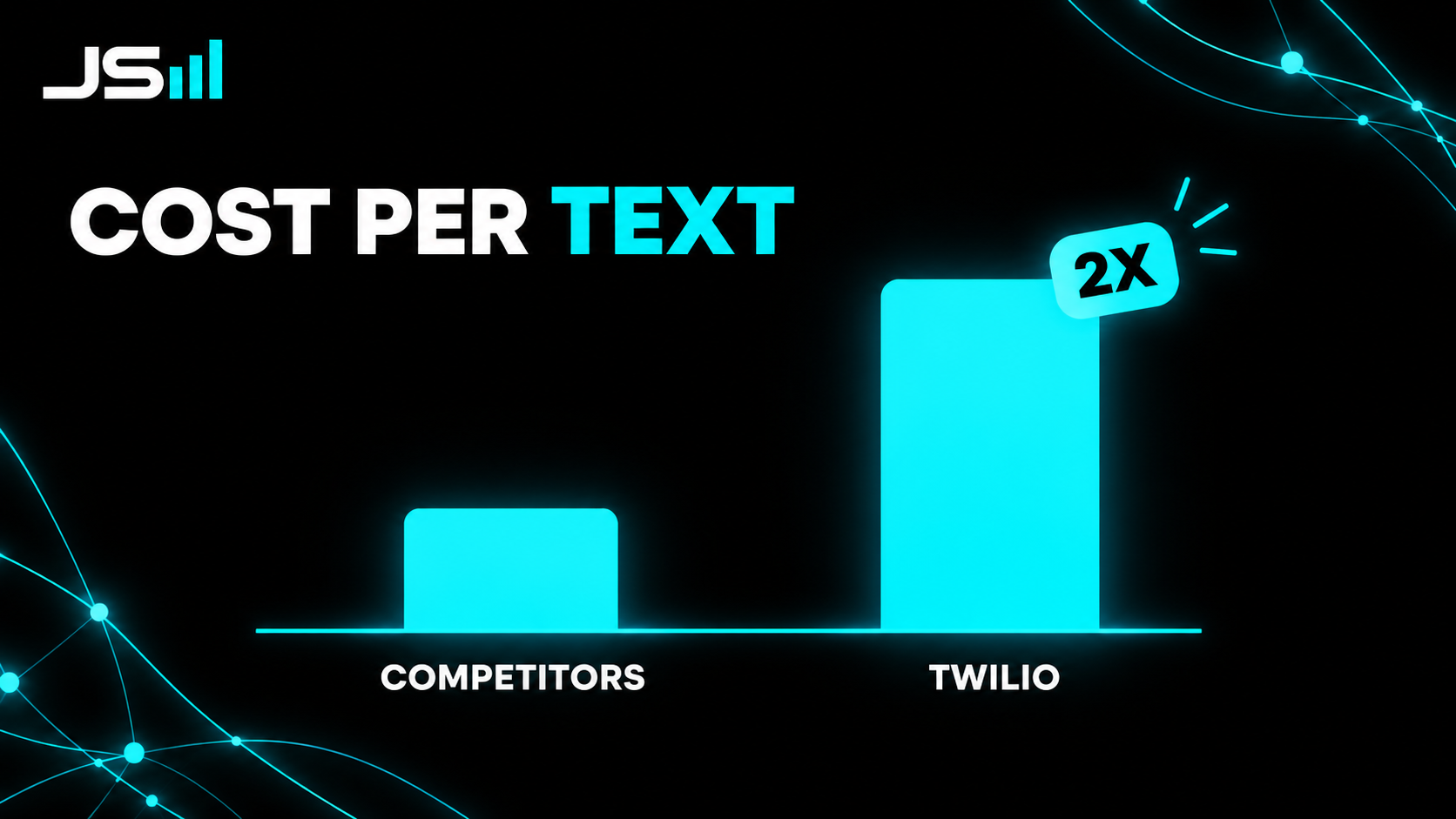
A text message is a commodity. It is the same 160 characters going over the same carrier network no matter who you buy it from. There is no artisanal SMS. And Twilio charges, from what I saw comparing providers while picking a messaging layer for my own platform, roughly double what most of its competitors charge for the exact same thing. I found an alternative I like a lot better and I'll write that one up separately, but the short version is: same deliverability, a fraction of the markup.
Now, I get the counterargument. Price on value. Twilio has the brand, the distribution, the trust. Those are real, and I've written a whole article about how distribution is the actual bottleneck in this business. Twilio solved that bottleneck years ago and they're charging you for it.
Fine. But here's the math from the buyer's side. Yeah, it's a few cents per message. When you're sending twenty texts a week, who cares. When you're scaling a SaaS company and your platform is sending texts on behalf of every customer, every follow-up, every reminder, every announcement, it adds up fast. Doubling your messaging line item isn't a rounding error anymore. It's a real number on a real P&L, and it grows exactly as fast as the thing you're trying to grow.
Paying a premium for a premium product is fine. Paying a premium for a commodity because the vendor got there first is a tax, and I've been thinking about where my money leaks too much lately to sign up for that voluntarily.
Problem two: the API feels like it was built for a different decade
This is the one that actually bothers me, because I'm the guy who would have been wiring it in.
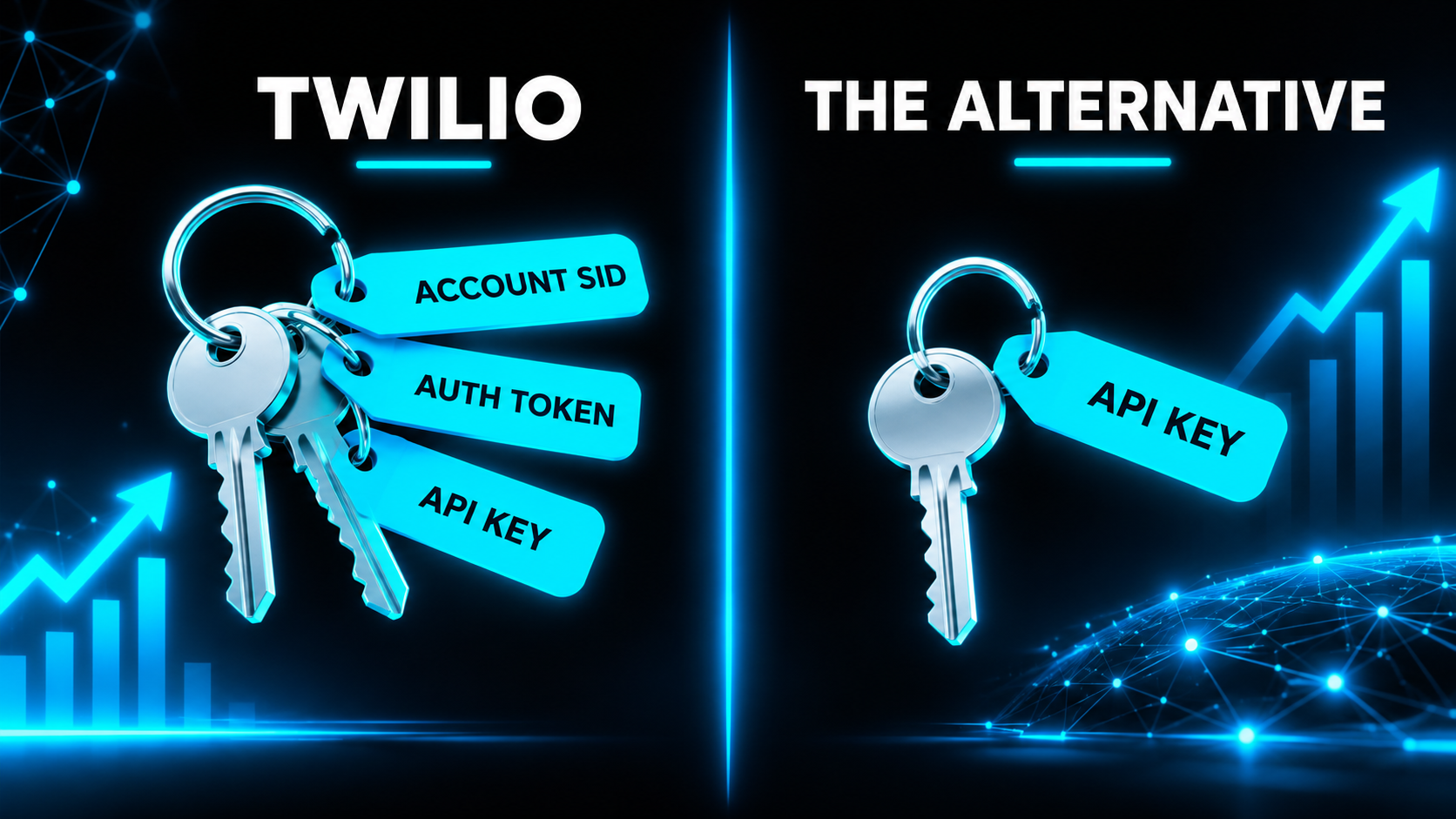
To integrate Twilio into a SaaS application you end up managing something like three different credentials. An account identifier, an auth token, a separate API key and secret if you do it the "right" way, plus a messaging service identifier on top if you're doing anything at scale. Every one of those is a thing that can be wrong, expired, scoped incorrectly, or copied into the wrong .env file at 2am. It is not hard, exactly. It's just clunky in a way that tells you the architecture was laid down a long time ago and nobody wanted to break the people already on it.
Compare that to the alternative I went with, where the entire integration is one API key. One. You paste it, you send a text, you're done. That's what a modern developer experience looks like, and after using it, going back to Twilio would feel like being handed a flip phone.
Where it really bites is the edge cases. Handling a failed delivery, a carrier rejection, a number that's been flagged, a webhook that fires twice. All of that is doable with Twilio. It's just more surface area, more objects, more places for the plumbing to leak. And every leak is a bug somebody eventually has to go find. I'm obsessive about keeping systems simple enough to reason about, and Twilio's API is a place where you work harder than you should to do that.
The part where I'm fair about it
Let me say the nice things clearly, because they're true.
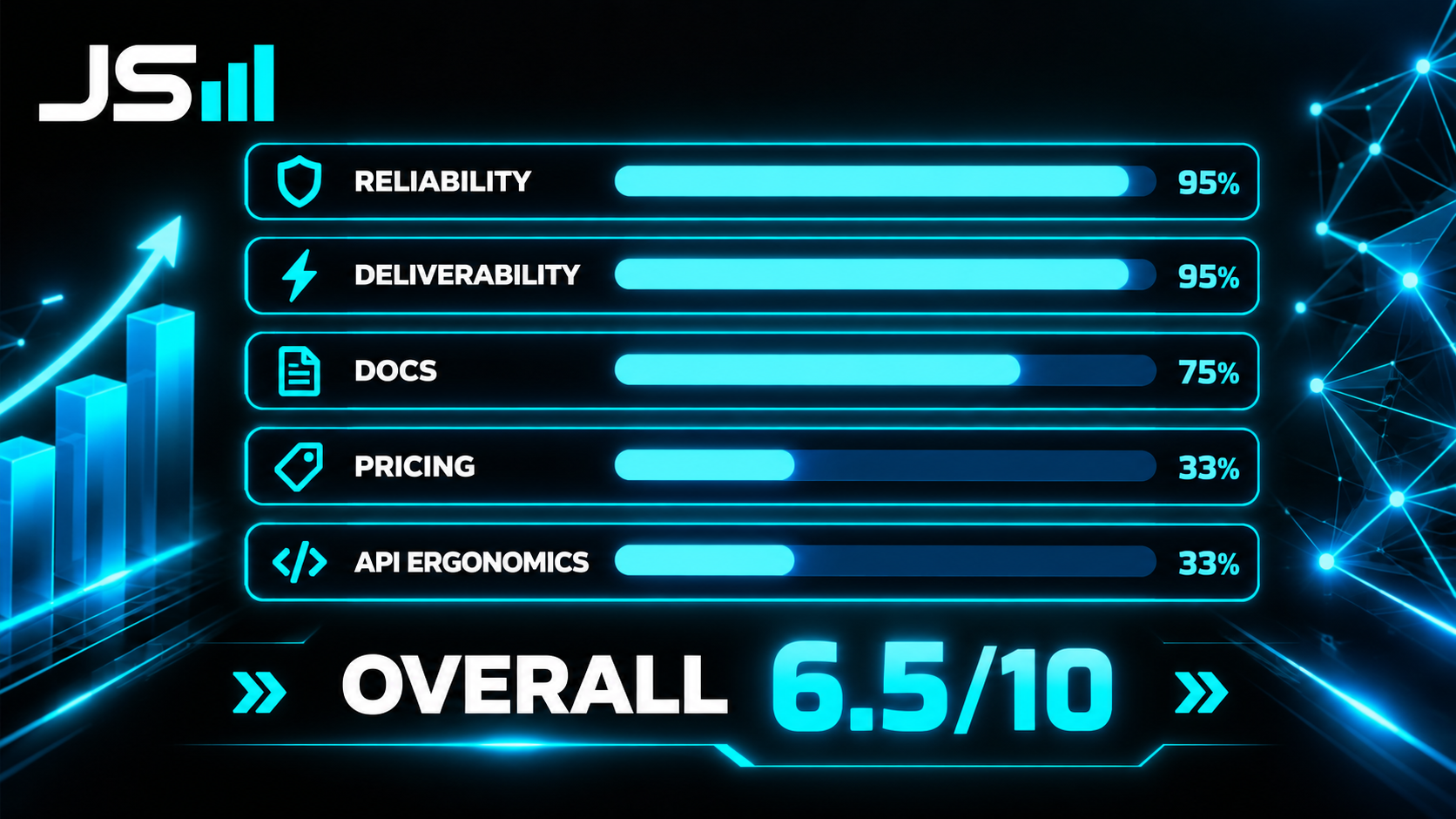
- It is reliable. Messages go out. They arrive. The uptime is real, and that's not nothing.
- Deliverability is strong. Their carrier relationships are a genuine asset, and the A2P compliance tooling, annoying as the process is, does keep you on the right side of the rules.
- The docs are extensive. Sprawling, sometimes dated, but you can almost always find an answer.
- It's the default for a reason. There's a huge ecosystem, every language has a library, and every developer you'll ever hire has touched it.
That's a lot of real value. It's why this is a 6.5 and not a 4.
What other people say
I'm not the only one with these two gripes. If you read what builders say about Twilio, the same themes keep coming up. The pricing climbs as you scale and the plan structure can feel like it's designed to be hard to compare. Support is widely described as slow unless you're paying for a higher tier. The A2P 10DLC registration process is a known pain point, with approvals that take longer than they should and rejections that aren't always explained. And a lot of people note what I noted: the product is excellent at the core job and increasingly cluttered everywhere around it, as more and more features get bolted onto a platform that was originally just a very good SMS pipe.
None of those are dealbreakers on their own. Together they're why nobody I know is in love with it. They use it. There's a difference.
Who should use it anyway
If you're building something where a dropped message is a disaster and you have the budget to not think about per-message cost, Twilio is a completely defensible choice. The reliability is worth paying for in those cases. If your team already knows it, that's real too. Switching has a cost.
If you're a SaaS founder watching your variable costs scale with your customer count, and you're the one writing the integration code, I'd shop. The alternative I found gets the same text to the same phone for a lot less and with a lot less ceremony. I'll write that review next.
Final score: 6.5 out of 10
A reliable, battle-tested product that charges a brand premium on a commodity and makes you work harder than necessary to integrate it. Those two things are exactly what keep it out of the top tier for me. Twilio is the Honda Accord of messaging: it'll never leave you stranded, and you'll never be excited about it. You'll just notice the bill.
Want to talk about what you're building?
Get in touch