Stop Relying on Discipline. Engineer the Consequence.
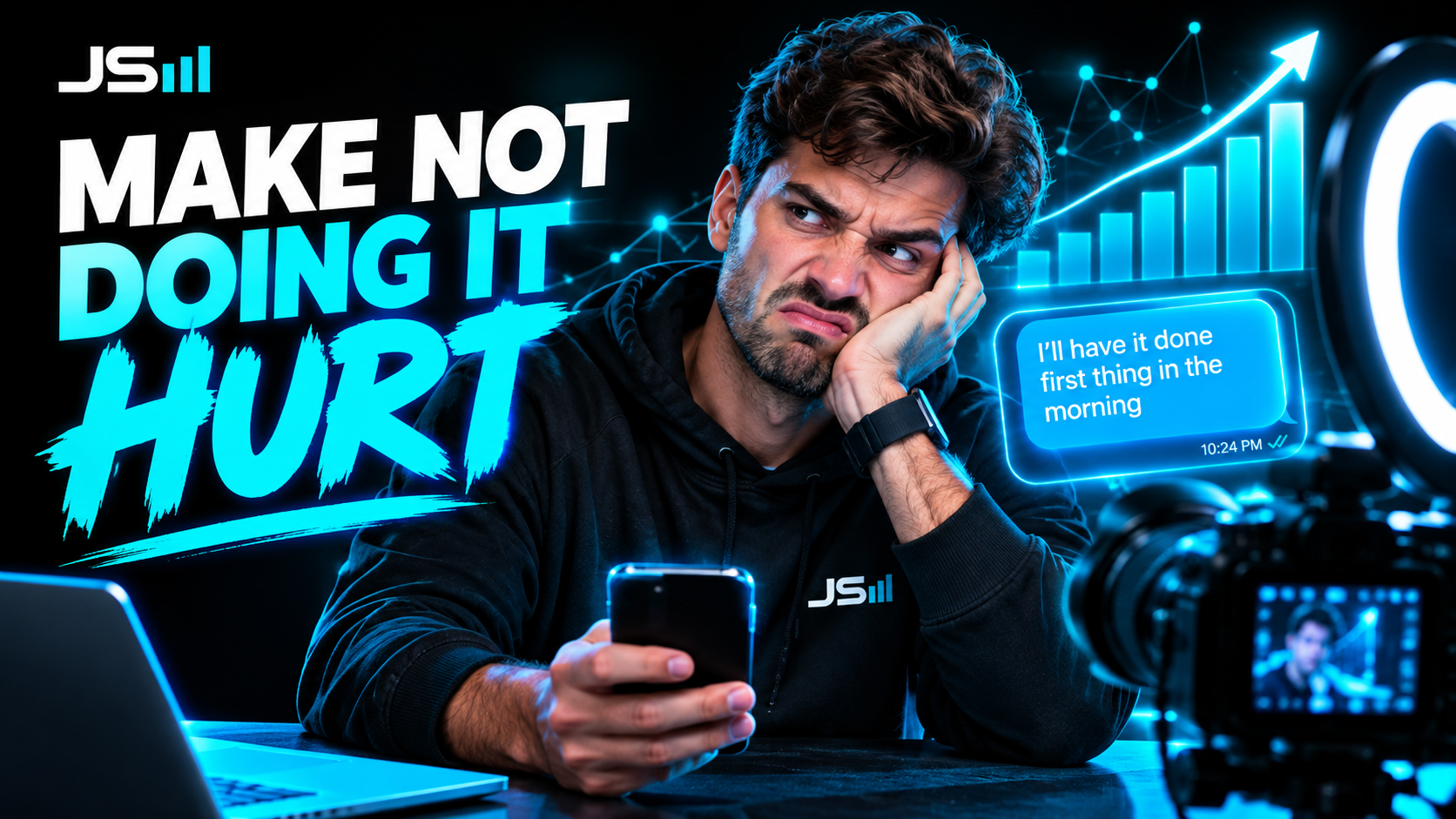
I had to film a video sales letter yesterday. I hate being on camera, so it sat on my list getting heavier. What finally moved it wasn't motivation. I texted my business partner that I'd have it done first thing in the morning, and suddenly not doing it cost something. That's the whole trick: if you don't want to do a thing, stop negotiating with yourself and go change the environment or the incentives until the math flips.
I hate being on camera. Genuinely. I'd rather debug a race condition at 2am than look into a lens and talk.
Which is a problem, because we're launching a new offer for cabinet companies and it needs a video sales letter. A real one. Me, talking, selling.
And no, my AI can't do it. I know, I'm the guy who automates everything. I tried it with my avatar. It's not there yet. It can produce a video, sure. It cannot produce a VSL that converts, and an unconverting VSL is just an expensive way to be ignored. So that one's still on me.
Here's what actually happened with that task, and the principle I pulled out of it.
The thing you don't have to do is the thing that eats you

I had plenty of other work. Real work, legitimately urgent. And that's exactly the trap, because a task with no hard deadline loses every single prioritization battle to a task with one. Forever. It never gets beaten, it just never gets picked.
So it sits. And the longer it sits, the bigger it gets in your head, until a forty-minute recording session feels like a whole day you can't spare. You've all experienced this. The thing nobody is waiting on is the thing that quietly follows you around for three weeks.
I could have waited for the day I woke up wanting to film it. That day was not coming. I've met myself.
What I did instead
I texted my business partner and said: I'll have it done first thing in the morning.
That's it. That's the whole intervention. Took four seconds.

And it worked, because I just changed the math. Before that text, not filming cost me nothing. A vague "I should do that soon" weighs nothing and can be deferred infinitely. After that text, not filming meant going to a person whose opinion I care about and explaining why my word doesn't mean much. That's a real cost. Small, but real, and crucially it was now bigger than the cost of just sitting down and filming the thing.
That's the mechanism. I didn't become more disciplined overnight. I made the avoidance more expensive than the action.
Full disclosure, since I'm preaching: it did not actually get done first thing in the morning. The microphone decided that was the day to have opinions, and I spent a while fighting my own setup, which is a special kind of humiliation for a guy who builds systems for a living. But it got done that day. The deadline didn't need to be perfect. It needed to exist.
The principle: don't negotiate, re-engineer
Here's the general form, and it's the only productivity advice I actually believe:
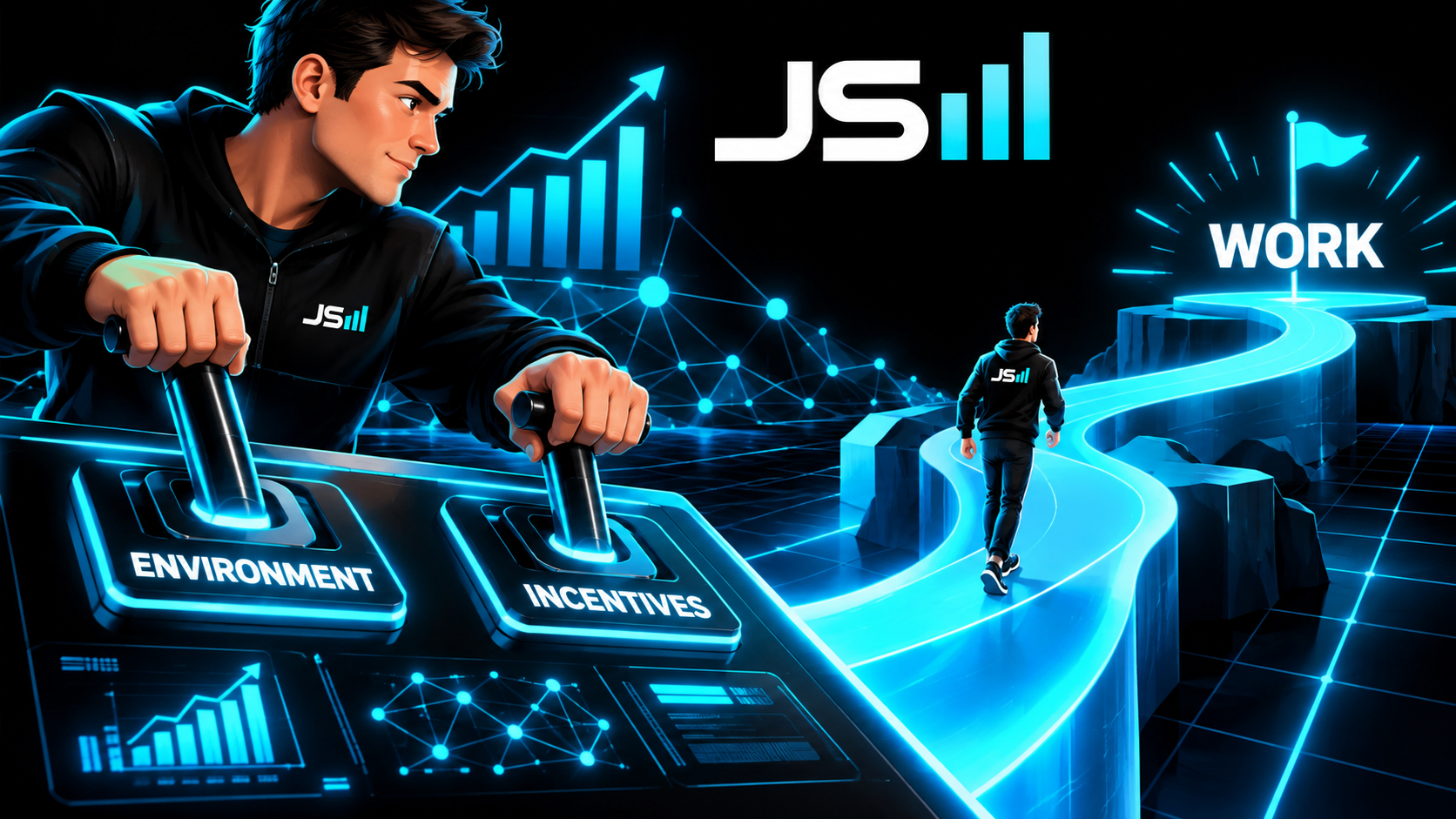
If you don't want to do something, stop trying to want it. Change the environment or change the incentives until doing it is the path of least resistance.
Willpower is a terrible system. It's unreliable, it's depletable, and it's the only variable in the whole equation you can't control. Everything around it, though? Completely editable. You're allowed to reach in and rewrite the conditions.
I think about this the same way I think about any system. When a system produces a bad output, you don't yell at the output. You find the input that's wrong and you change it. "I didn't film the video" is an output. The input was that nothing bad happened if I didn't.
Lever one: incentives
Put something real on the line. The cheapest and most effective version is your word, given to a specific person, with a specific time attached.
Note the specificity, because this is where most people blow it. "I'm gonna get to that this week" is not an incentive, it's a mood. "I'll have it done first thing in the morning," sent to someone who will notice, is an incentive. There's a clear moment where you either delivered or you didn't, and somebody else knows which.
Other versions that work:
Tell the client the deadline before you've done the work. Now it's not your preference, it's a commitment.
Put money on it. Pay a deposit, prepay the studio, buy the non-refundable thing. Loss aversion is free labor, use it.
Make it public. Announce the launch date. Nothing finishes a feature like a date you already told people.
Pair up with someone who'll actually hold you to it, not a friend who'll let you off. The people around you matter here. A partner who shrugs when you miss is not an accountability structure, he's a social call.
Lever two: environment

The other lever is physical, and it's underrated because it feels like it shouldn't matter that much. It matters that much.
Figure out honestly where you produce your best work, then engineer your calendar around that instead of around when meetings happen to fall. If you do deep work in silence, stop trying to be a coffee shop person because it looks good on Instagram. The ambient noise some people thrive in will cost you an entire afternoon of real output. Know which one you are and then build for it.
Same logic, pointed at friction:
Make the thing you want to do stupidly easy to start. My camera and light stay set up. Not because I'm organized, but because "set up the whole rig" is a twenty-minute excuse and I'm not giving myself the opening.
Make the thing you don't want to do annoying to reach. Log out. Delete the app off the phone. Put the distraction behind three steps.
Batch the work you hate so you only have to psych yourself up once instead of six times. If I'm filming, I'm filming everything that day.
Protect your good hours like they're billable, because they are. The two hours where your brain actually works are worth more than the other eight, and most people hand them straight to email.
This is the same logic I use on software
Quick note for the builders, because it's the same principle wearing different clothes.
When I build a system, I don't rely on a human remembering to do the right thing. I make the right thing the default and the wrong thing hard. Least privilege so you can't touch what you shouldn't. Guardrails so the dangerous path requires a deliberate override. Automation so the step happens whether anyone remembers it or not.
"Just remember to be careful" is not an architecture. Neither is "just be disciplined." Both are hope with extra steps.
And honestly, Joe 3.5 is the same idea. I built an assistant that pings me because I know exactly how much I trust myself to remember a follow-up. I didn't fix my memory. I routed around it.
The takeaway
The VSL got filmed. Late morning instead of first thing, thanks to a microphone with a personality, but filmed. Not because I found motivation, but because I'd spent four seconds the night before making the alternative worse.
So next time you catch yourself in week three of avoiding something: stop trying to become the kind of person who wants to do it. You're not going to win that argument with yourself, you never do.
Go change the conditions instead. Put your word on it. Put money on it. Move where you work. Make starting easy and quitting annoying. Then let the new math carry you.
Discipline is just a system you haven't built yet.
Want to talk about what you're building?
Get in touch