SaaS Is Not Dead
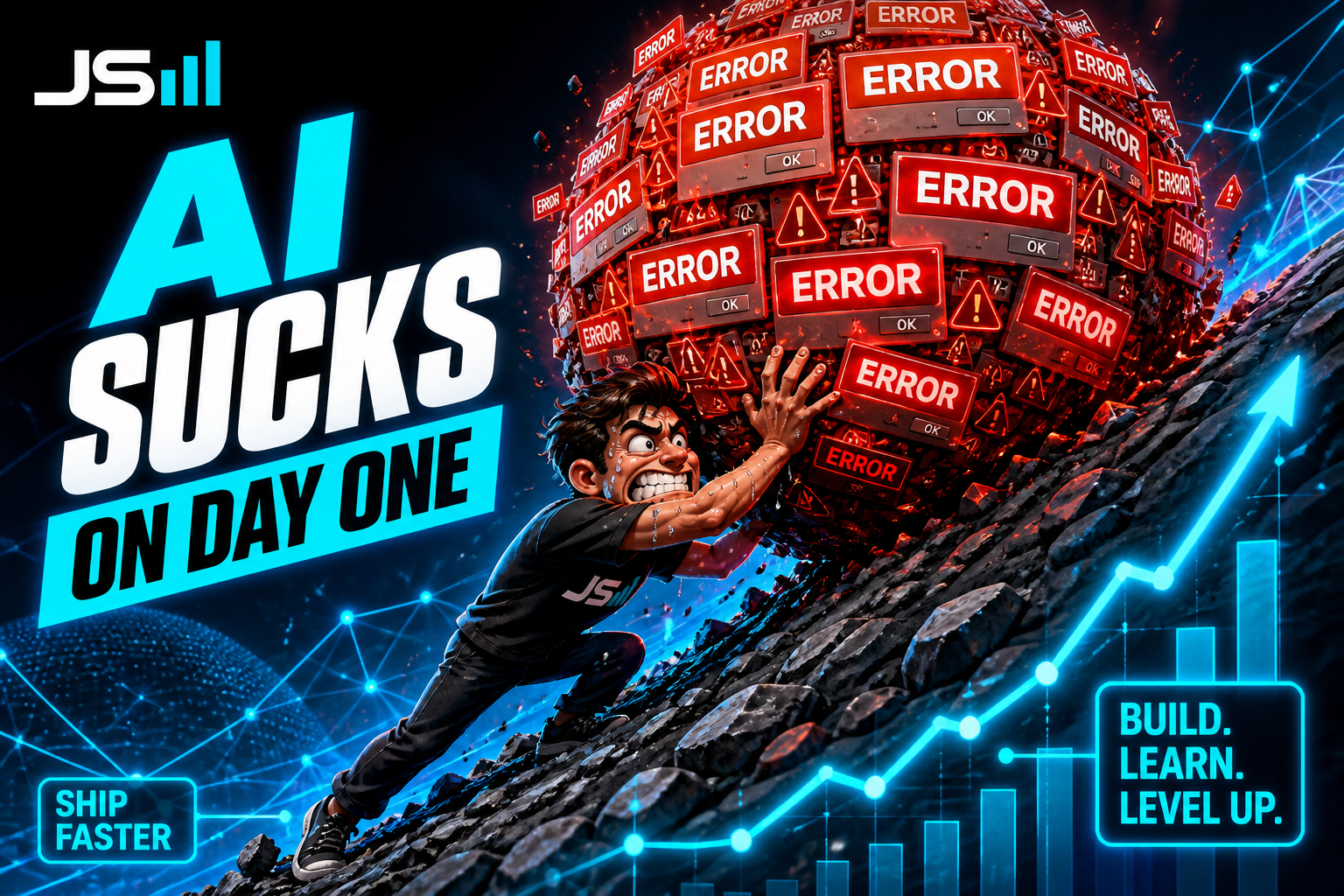
SaaS isn't dead, despite the vibe-coding crowd telling you to build a software empire this weekend with Claude Code or Codex. I use those tools daily and I'm bullish, but my own SaaS took two and a half months of 16-hour days and years of experience, a beginner is looking at a year or two before go-to-market. Skip architecture or a real backend (no, not Airtable) and it folds in production. SaaS is still a great model, just about to get a lot more competitive.
Let me say the quiet part out loud: SaaS is not dead. Not even close.
There's a whole crop of internet marketers out there right now telling you it is. Just "vibe code" your way to a software empire this weekend with Claude Code or Codex, they say. No developers, no cost, no problem.
Before anyone accuses me of being a hater, let me be crystal clear: I love these tools. I use Claude Code and Codex basically every day. I've built a serious amount of software infrastructure on top of them. I'm about as bullish as a person can get.
But bullish isn't the same as delusional. And a lot of what's being sold right now is pure delusion.
Where the weekend fantasy falls apart
Here's what the "build a SaaS in 48 hours" crowd conveniently leaves out.
First, architecture. That's just a fancy word for how all the pieces of your software fit together into one system that doesn't collapse the moment real people use it. Get that wrong and it doesn't matter how fast you generated the code, you've built a house of cards. AI will happily write you a thousand lines that look right and quietly don't hold together.
Second, the backend. Your backend is the engine room: the database and the server-side logic where your actual data lives and the real work happens. I watched an AI tool, asked to set up a backend, cheerfully suggest Airtable. If you're not technical, here's the translation: Airtable is a spreadsheet wearing a database costume. Fine for a to-do list. Absolutely not built to run a production SaaS that real businesses depend on. That's not a small mistake, that's a crack in the foundation.
Third, edge cases. AI almost never plans for the weird stuff, the odd input, the rare bug, the thing nobody saw coming. And it's usually those silly little edge cases that take a "working" app down the second it hits the real world.
You cannot build a multi-million dollar platform in a weekend
I built a real SaaS platform. Businesses actually run on it. It took me about two and a half months, and I want to be precise about what that number means: two and a half months of 14 to 16 hour days, using AI the entire way, backed by years of real technical experience. That's the honest version. Not "a weekend."
And even now, it still needs humans to fix bugs and ship new features. AI helps enormously, but it does not replace that.
So do the math. If it takes an experienced developer running 16-hour days two and a half months, what happens when a total beginner who's never written a line of code tries it? Realistically, you're looking at a year or two to build something real, and that's before you've sold a single seat or figured out go-to-market. "Growing pains" doesn't even cover it.
They'll get something that looks adorable in a demo. Clean screen, works once, big applause. Then it hits production, real users, real load, real edge cases, and it folds like a lawn chair.
It's a tool. Tools have users.
None of this is me knocking the tech. It's a tool, and tools cut both ways. One caveman with fire burns his hand off. Another cooks himself a great meal. Same fire. The only difference is the person holding it.
One more shift: SaaS just got variable costs
Here's a subtle one most people are missing. Classic SaaS had beautiful economics, it cost you almost nothing to serve one more user. Sure, you paid for a database, but that was small.
The moment you wire an LLM API into your product, that changes. Now every user and every action burns real money in tokens, and it scales up with usage. That's a genuine variable cost SaaS mostly didn't have before. It's not a dealbreaker, but if you're building today, you'd better price and architect for it, because "it's basically free to run" isn't automatically true anymore.
The real prediction: SaaS gets more competitive, and I love that
Make no mistake, SaaS is still a great business model, and I'm very bullish on it. I just think it's about to get a lot more competitive, because these tools let people innovate faster than ever. More competition, faster iteration. Bring it on.
Why am I so happy about more competition? Because most software out there is bloated, stagnant, and coasting. A huge chunk of these companies stopped trying years ago. They think they've got a moat. They don't. They've got inertia and a logo.
That's exactly why my company keeps winning. I get to dunk on competitors who aren't even in the gym anymore. When the other guys are lazy, and I mean genuinely lazy, just showing up and actually building becomes an unfair advantage.
So no, SaaS isn't dead. The lazy, bloated version of it might be, and good riddance. What's coming is faster, meaner, and better for anyone who actually cares about the craft. The tools are incredible. Just remember there's still a human on the other end who has to know what they're doing.
Want SaaS built by someone who knows the craft?
Real architecture, a real backend, built to survive production. That's what we do at HyppoAI.
Want to talk about what you're building?
Get in touch