My Best Salesperson Has No Pulse
My best salesperson never sleeps, never takes commission, and closed a five thousand dollar deal while I was in line for coffee. She's a website. Here's the leverage, and the part the ten-minute-launch crowd skips.
My best salesperson doesn't sleep, doesn't take commission, and never once asked me for a raise. Last month she closed a five thousand dollar deal while I was standing in line for coffee.
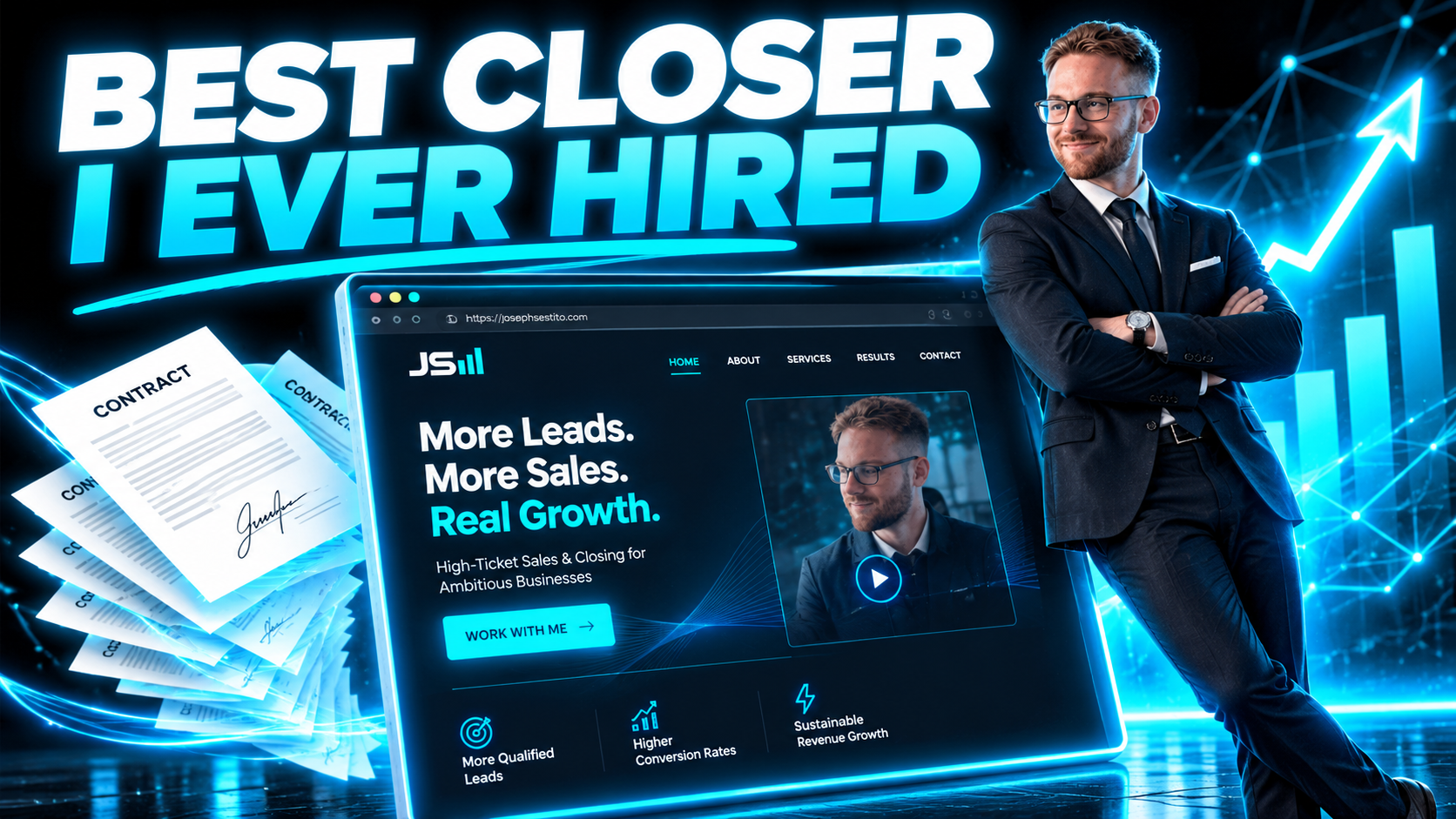
She's a website. Mine. The one you're reading right now.
I'm going to make the case that a personal website is the highest leverage asset a founder owns, and then I'm going to tell you the part the "launch your site in ten minutes" crowd leaves out. Both halves matter, and the second half is where people get hurt.
This used to be hard. It isn't anymore.
Ten years ago, putting your name on the internet meant a hosting account, an FTP client, a theme you fought with all weekend, and a developer on retainer to make the header stop jumping. The technical barrier that kept most people off the web is gone now. Standing one up is an afternoon.
Which means the people who still don't have one are making a choice. And that choice reads a certain way to anyone looking.
It signals you have an operation
Here's the quiet thing a site does before anyone reads a word on it. It tells a buyer there's a real company behind you. Nobody with their own domain, their own design, and a blog that actually updates gets mistaken for a guy running a side hustle out of his car.
A LinkedIn profile is rented space with somebody else's logo in the corner. A website is owned. Buyers feel that difference even when they can't name it, and it moves them before you've spoken.
It pre-sells while you sleep
Every serious buyer researches you before they call. That's not a maybe. The only question is what they find when they do.

With no site, they find a Google guess. A stale directory listing, a review from 2021, some other guy with your name. With a site, they land inside your narrative. Who you are, what you believe, what you've built, in your words and your brand. Mine is blue and black and a little loud on purpose, and by the time somebody's read three articles they already know whether they want to work with me.
Most of my calls now open with "I read your thing about..." That isn't a cold call. That's a closing call somebody else warmed up for me.
It closes. Real deals, real money.
Two from the last stretch. Both real, both anonymized.

A prospect was weighing us against a platform I'd already written a product review of. I didn't pitch and I didn't argue. I sent the article. The writing did the convincing, and it became roughly a five thousand dollar deal, likely more by the time it's finished. A piece I wrote on a Tuesday closed something that normally costs me three calls and two weeks.
Second one. I met a business owner in person. Normal conversation, no selling, I wasn't working. They went home, looked me up, read around the site, and came back asking me to build theirs. I never asked for the business. The website asked for me.
That's the leverage. Write the thing once, and it keeps selling at full price, in every time zone, forever, whether or not you're awake.
And I write it on coffee runs
Here's what makes the leverage absurd instead of just good. The site isn't a project anymore. It's a byproduct.
I'll have a thought in the car and dictate it. My assistant, Joe 3.5, drafts it in my voice, generates the images in my brand, stages it, and texts me a preview. I read it in line at the coffee shop, reply approve, and it's live on the blog and on LinkedIn before my order is up. Meanwhile the real work, the code and the client builds, is also running without me.
Which is exactly the sawdust principle. A sawmill's product is planks. The sawdust piles up for free, and the smart owners bag it and sell it instead of sweeping it out the door. Your opinions are sawdust. The thing you explain to every client on every call, the honest review of the tool you hate, the lesson you learned the expensive way. You're producing all of it already. A website is where you sell it twice.
Now the part nobody tells you
Standing up a site is easy. Having one that works is not, and the gap between those two is where most people lose money instead of making it.

I wrote a whole piece on this called AI Websites Suck, and the short version is that pretty is the easy ten percent. The thing still has to convert, which means the layout moves a human toward one specific action. The animations have to be fast, not cute. It has to be hosted somewhere that doesn't fall over, maintained so it doesn't quietly rot, secured so it doesn't get hijacked, and the contact form has to actually deliver the message to a place a person will read it.
I have personally seen beautiful sites where the form submitted into the void and the call button dialed a fake 888 number. That's not a salesperson. That's a billboard in a forest.
The math
- What it costs: an afternoon, a domain, and the opinions you were going to have anyway.
- What it returns: you read as a real operation, buyers sell themselves on your story before the call, and one well-timed link closes what used to take a month of chasing.
- The catch: it has to actually work. Conversion, speed, hosting, maintenance, security, and a form that lands in your inbox.
Build the site. Then go back and read the part about the contact form one more time.
Want to talk about what you're building?
Get in touch