
Your AI Doesn't Need a Bigger Plan. It Needs an Org Chart.
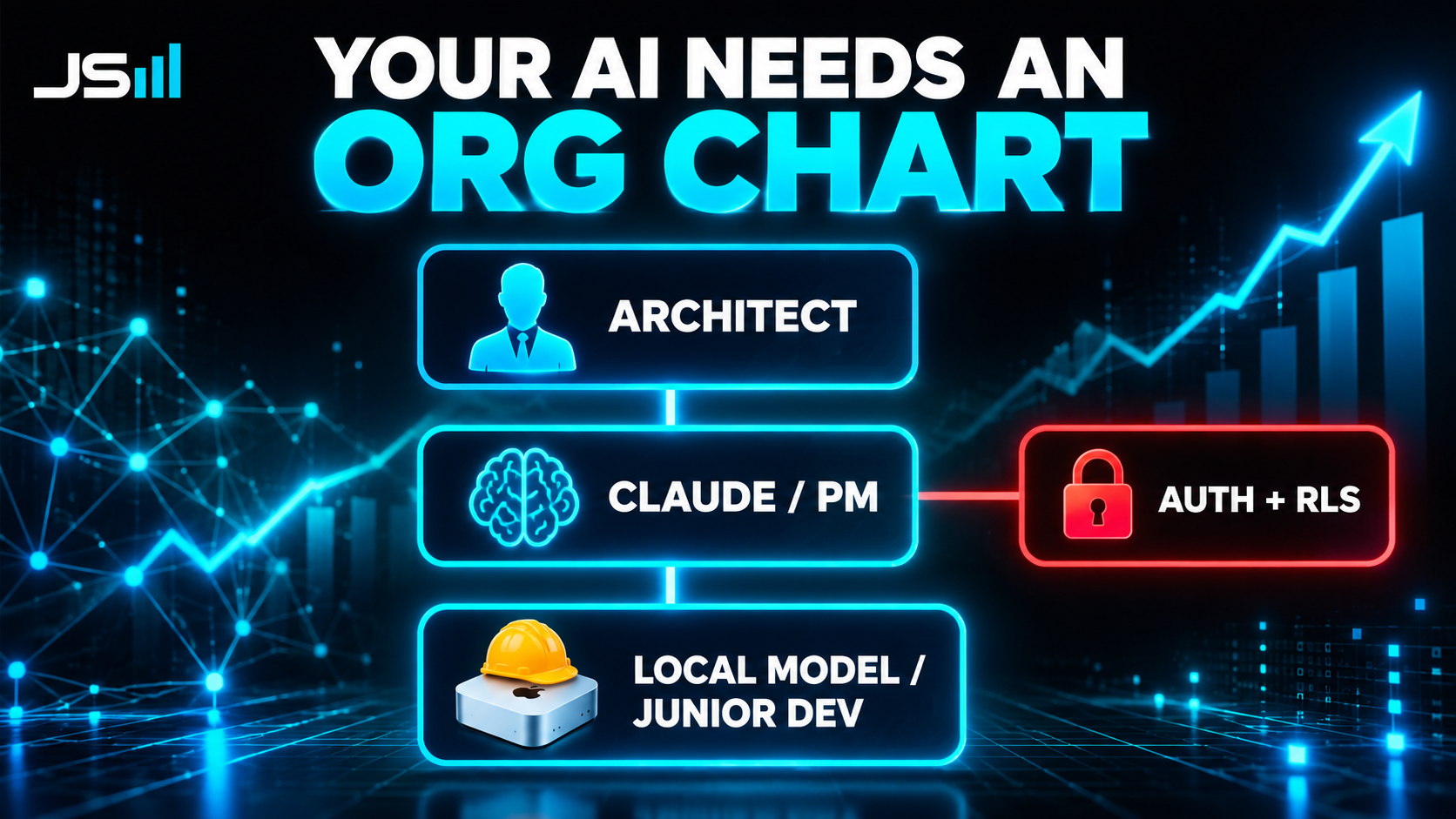
I pay $200 a month for Claude and still hit the weekly limit by Wednesday. The obvious move was to buy more. The correct move was to give it a team. Claude is the project manager, a local model on a Mac mini is the junior developer, and the junior never touches auth or RLS. Usage went from a 50% pace to 32% with more shipped.
I pay Anthropic $200 a month for the top Claude plan and I still hit the weekly limit. Not occasionally. Reliably, usually by Wednesday. That's what happens when an AI writes most of your code, tests your apps, and runs half your company. The ceiling shows up fast.
The obvious move is to buy more. The correct move was to stop treating my most expensive engineer like a code monkey and give it a team.
Claude is now the project manager. A local model running on a Mac mini in my office is the junior developer. Claude writes the spec, the junior does the grunt work, Claude reviews it. My usage went from a pace of about 50% of the weekly limit to 32%, mid-proof, and the output went up.
Here's the architecture and the reasoning, because the reasoning is the part that transfers.
Theory of constraints, applied to a token budget
Goldratt's theory of constraints fits on an index card. Every system has exactly one bottleneck at a time. The throughput of the whole system equals the throughput of that bottleneck, so improving anything else is wasted motion. Find the constraint, get the most out of it, subordinate everything else to it, then elevate it. Repeat.
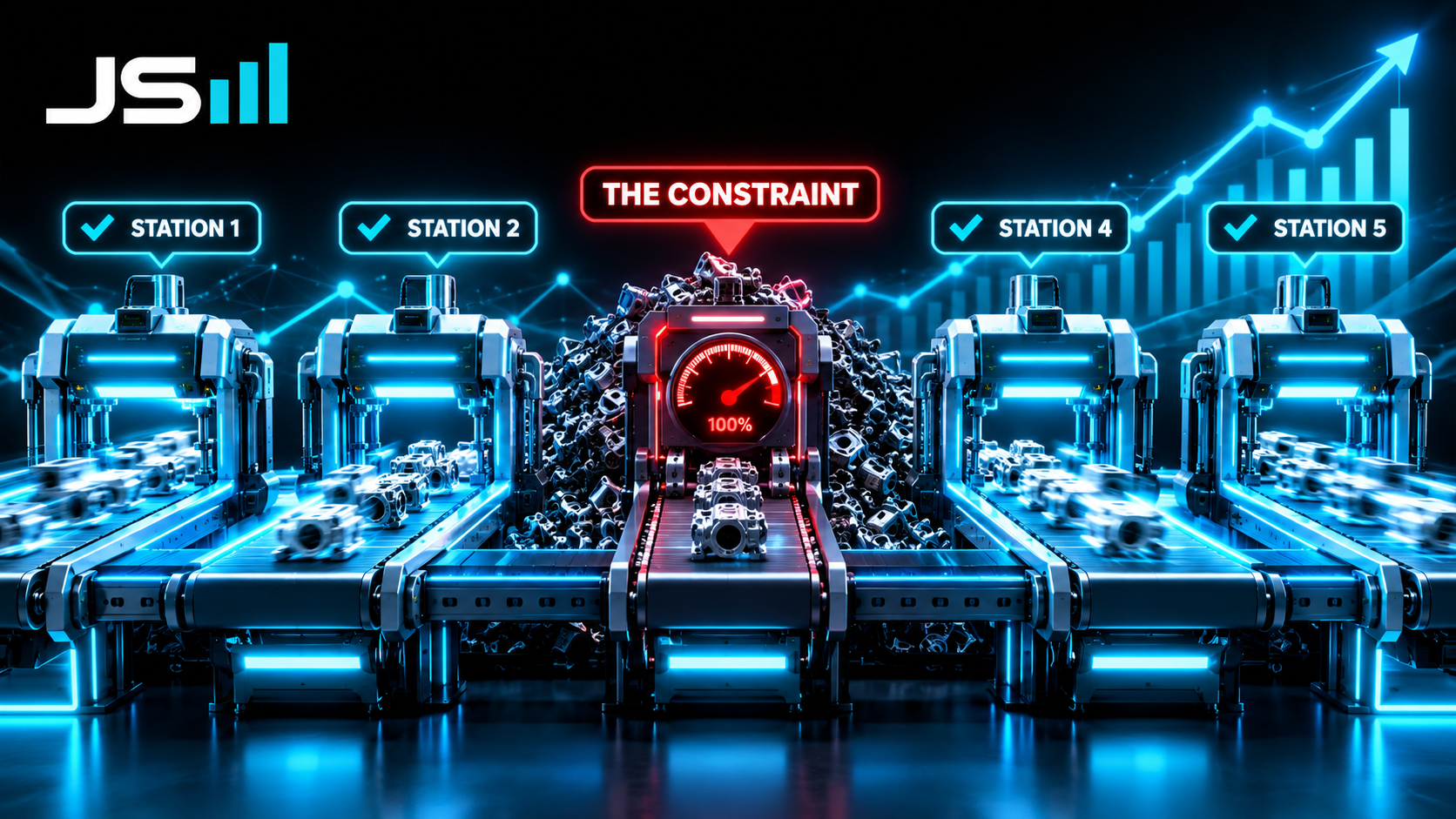
My constraint was Claude's weekly token budget. Not my ideas, not my time, not the Mac mini's compute. The expensive, rate-limited thing in the middle. And I was spending it on the dumbest possible work: boilerplate, repetitive test scaffolding, the fortieth variation of a form component, the migration identical to the last six. Senior-level tokens on junior-level work.
In a real company you'd never let your most expensive engineer spend Tuesday writing CRUD endpoints. You'd give her a junior and have her review the pull request. That's the entire idea here. I just applied it to models instead of people, which is why the answer looks like an org chart.
The org chart
Three seats. Mine, Claude's, and the junior's.
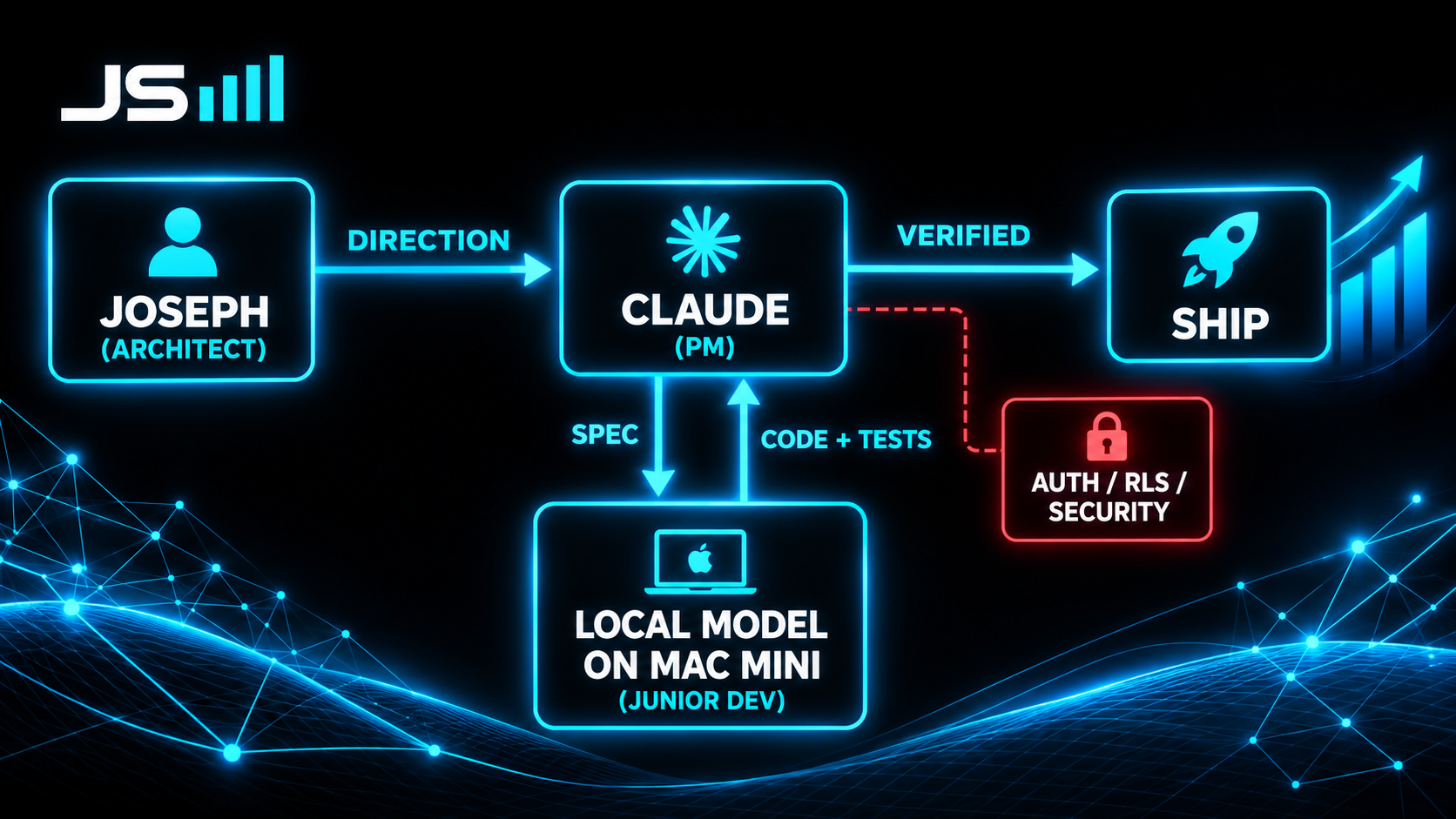
Me, the architect. I decide what gets built and how the system is shaped. Data model, boundaries, what "done" means. That's the seat I've written about keeping, and nothing here changes it.
Claude, the project manager. It takes my direction and turns it into specs: precise, scoped, with acceptance criteria. Then it decides what it does itself and what it delegates. Judgment-heavy pieces it keeps. Grunt work it writes up as a task and hands down. When the work comes back, Claude reviews it, runs the tests, and either ships it or sends it back with notes. It was already my tester. Now it's the lead too.
The local model, the junior developer. An open-weight model on a Mac mini in my office. It costs electricity. It has no weekly limit. It is noticeably dumber than Claude, and that's fine, because it's never asked to be smart. It gets a spec that says "build this component, here's the pattern, here are the tests it must pass," and it builds it. Stuck, it says so and Claude picks it up. Garbage, Claude catches it in review. Same as a human junior.
The flow is the one every decent engineering team already runs. I just didn't have to hire anyone.
What it did to the numbers
Before this, my usage was on pace to burn half the weekly budget by midweek and all of it before the week was out, which meant two or three dead days of waiting or paying overage.
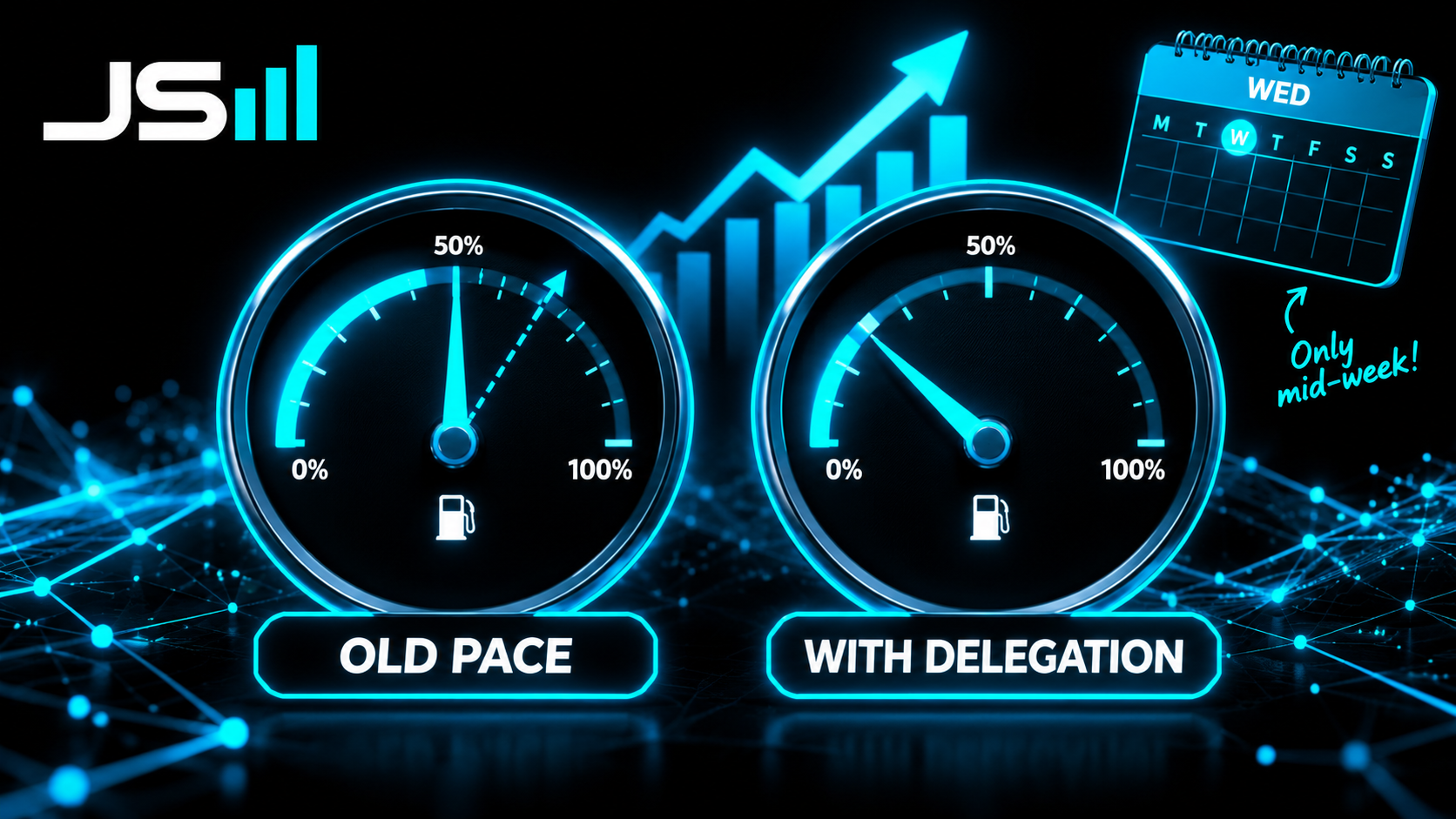
Right now, same point in the week, same volume of work, I'm at 32%. That's the proof run, not a finished benchmark, so take it as directional. But the shape is obvious: the expensive model only spends tokens on spec writing and review, which are short, and the junior absorbs the long repetitive generation that was eating the budget.
The productivity gain is bigger than the token math suggests, because the two models run in parallel. Claude writes the next spec while the junior builds the last one. I'm no longer serialized behind one rate-limited brain.
The fence
Here's the part that matters most. The junior does not touch anything security-sensitive. Not authentication. Not row level security. Not session handling, API keys, permissions, or anything that decides who can see what.

That's not a vibe, it's a hard boundary in the spec routing. Anything touching those areas never gets delegated. Claude does it, I review it, and both of us treat it as work where a silent mistake is the worst kind. A junior who botches a form component costs me ten minutes. A junior who botches an RLS policy exposes every tenant's data to every other tenant, and nobody finds out until a customer does.
Everything I've said about models confidently walking you off a cliff is doubly true for a smaller model. So you give it the work where cliffs don't exist. Walls, floors, fixtures. Not the locks.
Why this needs an architect
I want to be blunt, because the "just run a local model" crowd will read this and miss the point.
None of this works without someone who understands architecture. Deciding what's safe to delegate is an architecture decision. Writing a spec tight enough that a weaker model can execute it is an architecture skill. Knowing the constraint was tokens and not compute, and that the fix was routing rather than a bigger plan, is the whole job. A prompt guy with a Mac mini gets a fast way to generate bugs. An architect with a Mac mini gets a second engineer.
This is exactly why the CTO seat is the most valuable one in the building right now. Not because the CTO writes the most code. Because the CTO is the one who can look at a constraint, design the system around it, draw the fence in the right place, and then step back and let the machines run. Building with AI is a systems design problem. You need the person who does systems design.
The takeaway
If you're hitting the ceiling on your AI plan, don't push harder on the ceiling and don't just buy a bigger one. Find the constraint, which is the expensive model's budget, and stop spending it on cheap work. Promote the expensive model to manager: specs and review only. Give the grunt work to a local model that costs nothing and never runs out. Fence off auth, RLS, and anything security-sensitive so the junior can't get near it.
Fifty percent down to thirty-two, more shipped, no dead days. Theory of constraints is fifty years old. Turns out it works on tokens, and the answer looks exactly like the thing every company already has: an org chart.
Want this kind of system built for you?
Architecture, delegation, and the fence in the right place. That's HyppoAI.
Want to talk about what you're building?
Get in touch