
Windhandel: Most of What's Being Sold About AI Is Air

In 1637 a single tulip bulb cost more than an Amsterdam canal house, and then one morning nobody bid and it was worth an onion. The flower was never fake, the paper was. Here's the same split running through AI right now, and how not to get caught holding bulbs.
In February 1637, a single tulip bulb in Haarlem was worth more than a house on a canal in Amsterdam. Not a field of tulips. Not a flower farm. One bulb, still in the dirt, that nobody had seen bloom.

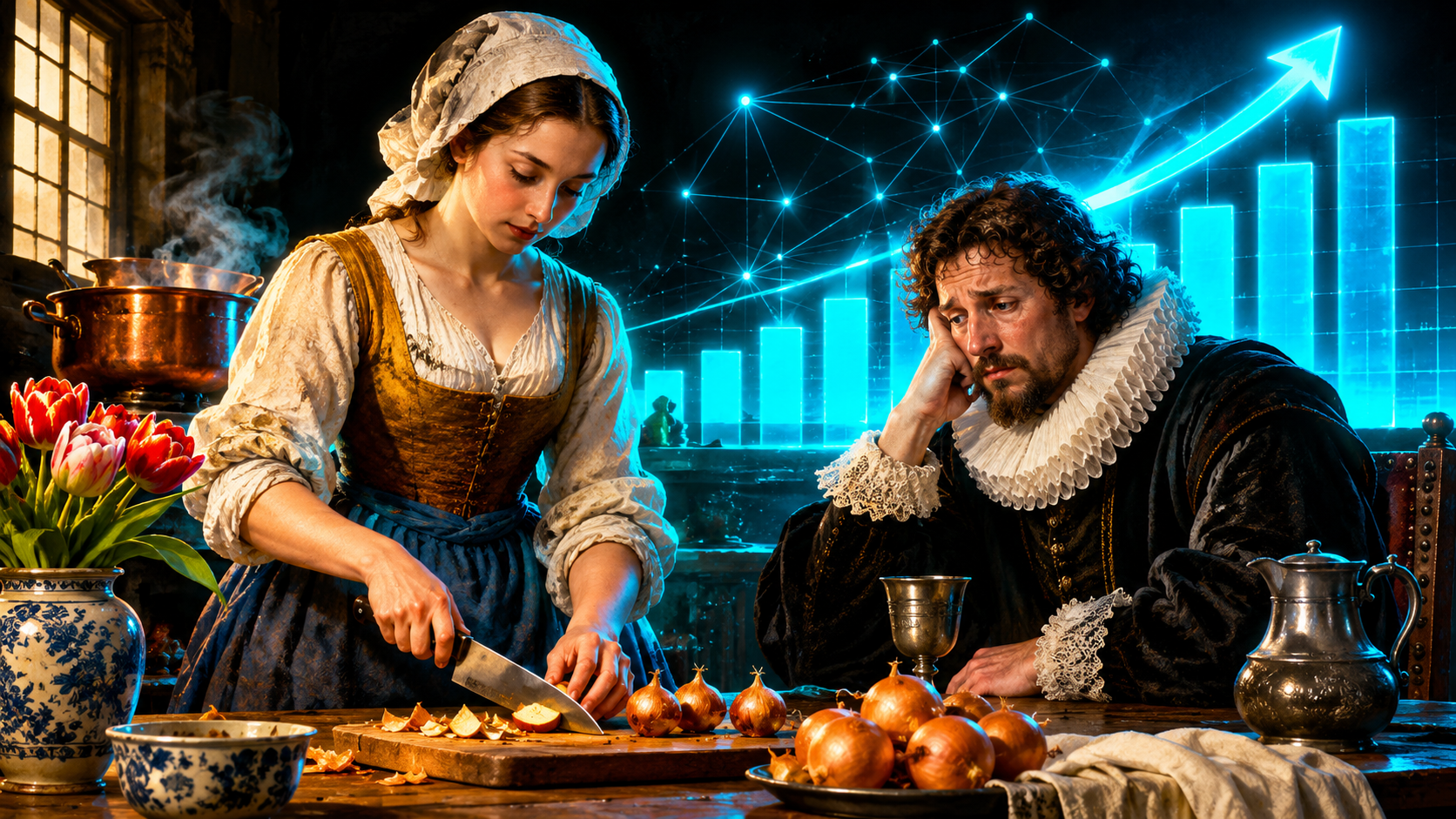
Then one morning there were no buyers, and by afternoon the same bulb was worth about what an onion is worth. Nothing had changed about the bulb.
I want to be clear where I stand before I start, because this is going to read like a bear case and it isn't one. I build with AI every day. It runs most of my company. It is the biggest leverage shift of my working life and I would bet everything I own on that. What I'm against is the tulip trade that's grown up around it, and I think the people selling bulbs are about to cost a lot of business owners a lot of money.

The Dutch Republic was the best place on earth to make money
Set the stage, because the froth didn't come from nowhere. The Dutch Republic in the 1630s was the most sophisticated economy in the world. Amsterdam was the hub of global trade, with warehouses full of spices, timber, grain and silver moving through the port. It was also unusually tolerant for the century, which mattered commercially: Sephardic Jews, Huguenots and dissenters who'd been pushed out of Spain, Portugal and France landed in Amsterdam and brought their capital and their trading networks with them.

They'd also invented modern finance. The Dutch East India Company was the first company with publicly traded shares. The Amsterdam exchange had a secondary market, short selling, options and forward contracts a century before most of Europe. The Bank of Amsterdam made the currency reliable. A rising merchant class had surplus cash and an appetite for anything that moved.
So: real wealth, real financial instruments, lots of new money looking for a return. Sound like any room you've been in lately?

Why a flower
Tulips came from the Ottoman empire. The botanist Carolus Clusius planted the first serious collection at Leiden in the 1590s, and the flower was genuinely new to Europe, genuinely beautiful, and genuinely hard to produce. That last part matters most.
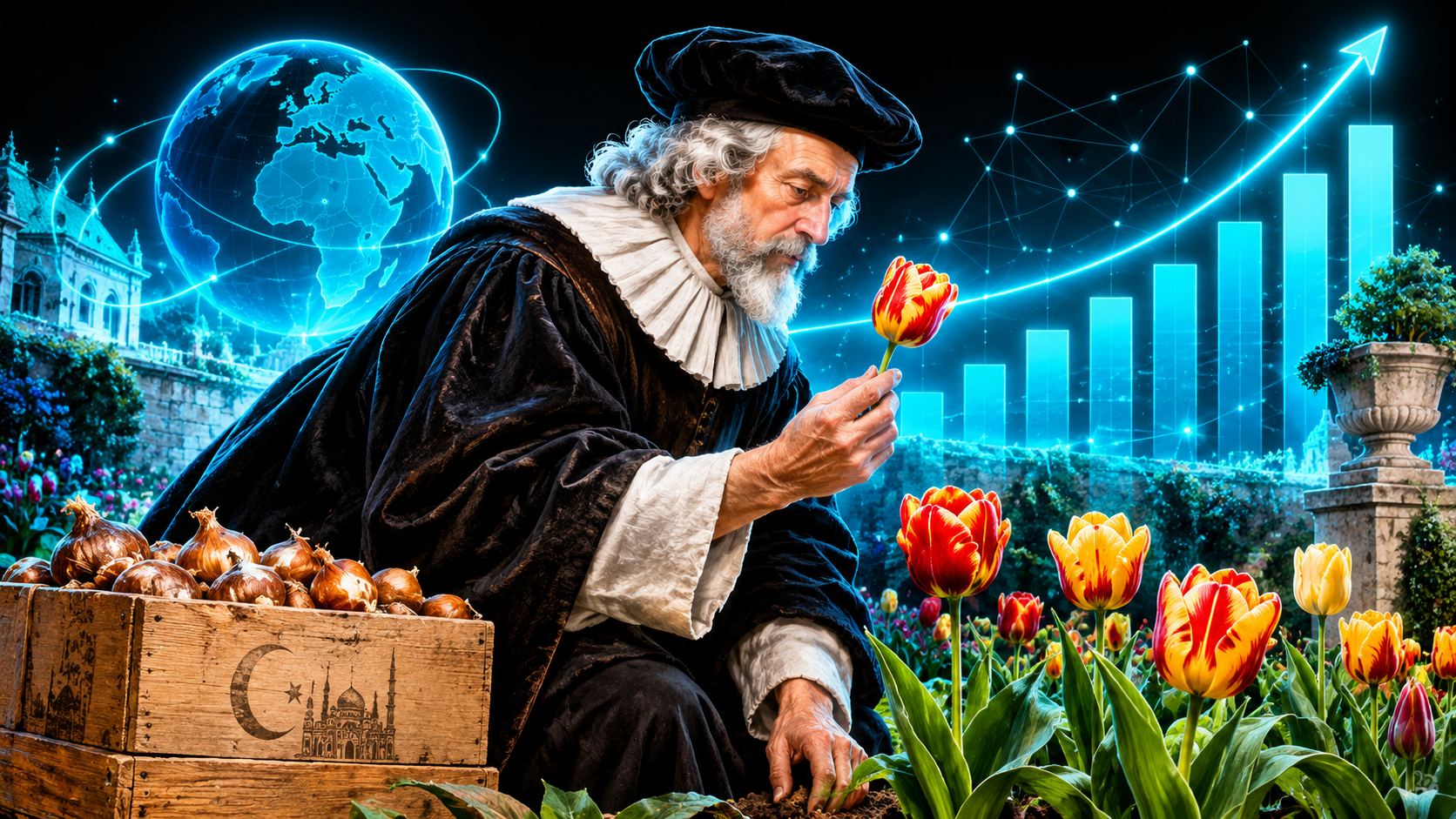
The prized tulips were the broken ones: white or yellow petals slashed with flames of crimson or purple. Semper Augustus, the most famous, had maybe a dozen bulbs in existence. Nobody at the time knew why the stripes happened. We now know it was a virus carried by aphids, which is a beautiful detail: the most valuable asset in Europe was a sick plant.

And you couldn't make more on demand. A bulb takes years to grow from seed and only produces a couple of offsets a season. Fixed, tiny supply, surging demand, and no way for anyone to verify what a bulb would actually produce until it flowered months later. That's a perfect speculation machine.
The frenzy
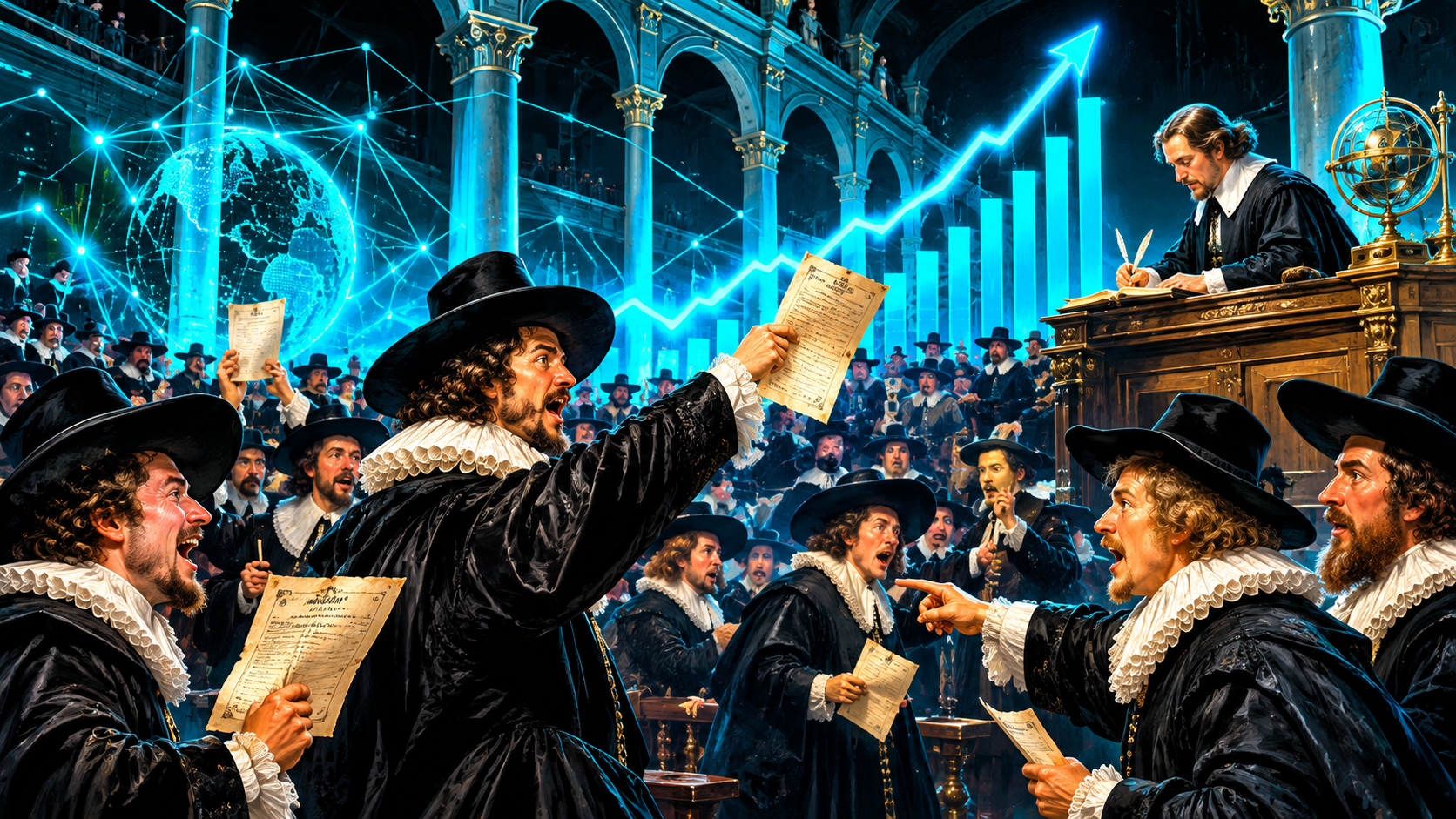
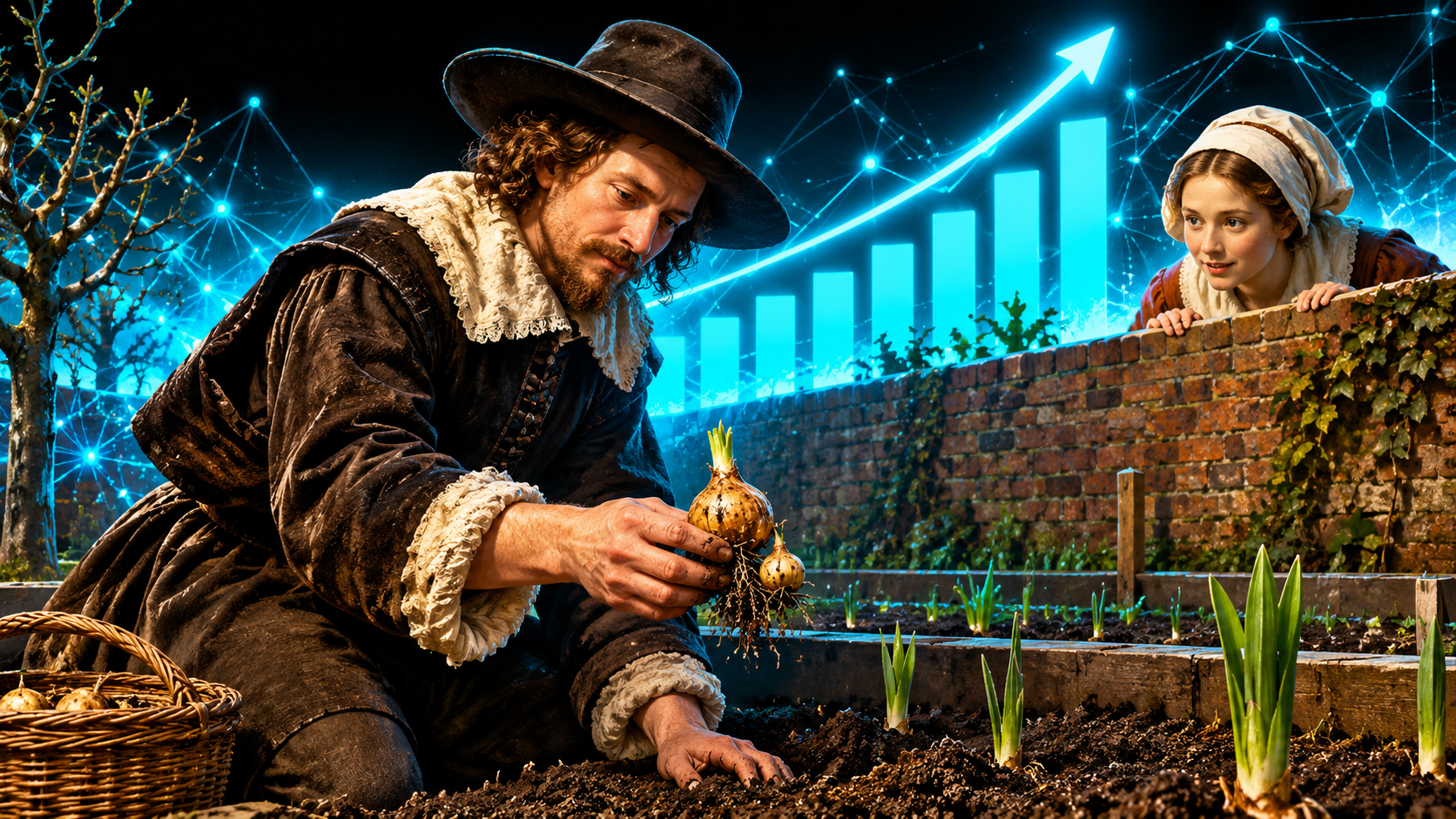
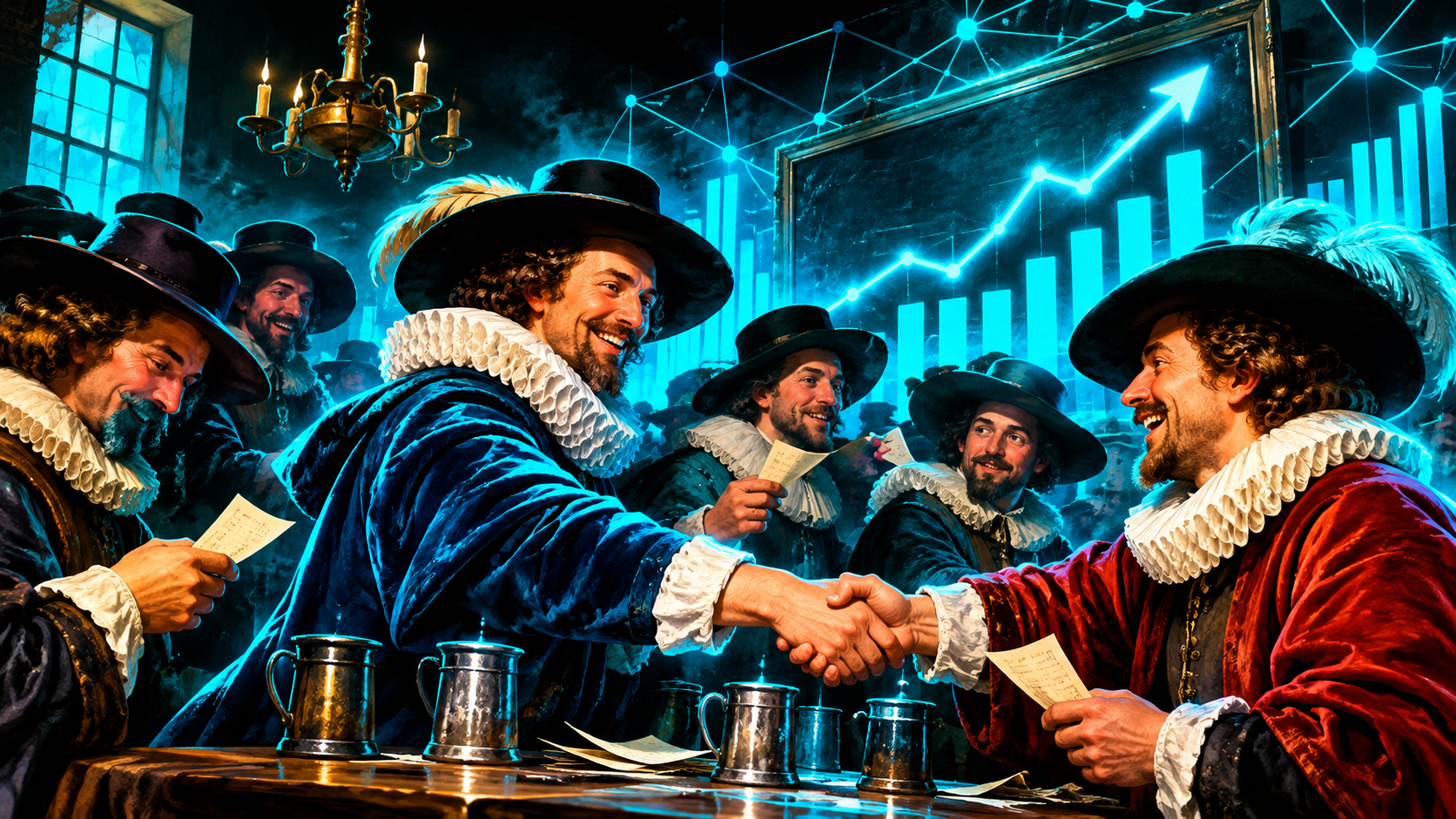
By 1636 the trade had moved out of the gardens and into the taverns. Here's the part people miss: almost nobody in the mania ever touched a flower. Bulbs are in the ground from roughly October to June, so traders were buying and selling paper promises on bulbs they couldn't see, to be delivered after the next lifting. Forward contracts, settled in a back room, with beer involved. They called it the windhandel. The wind trade.
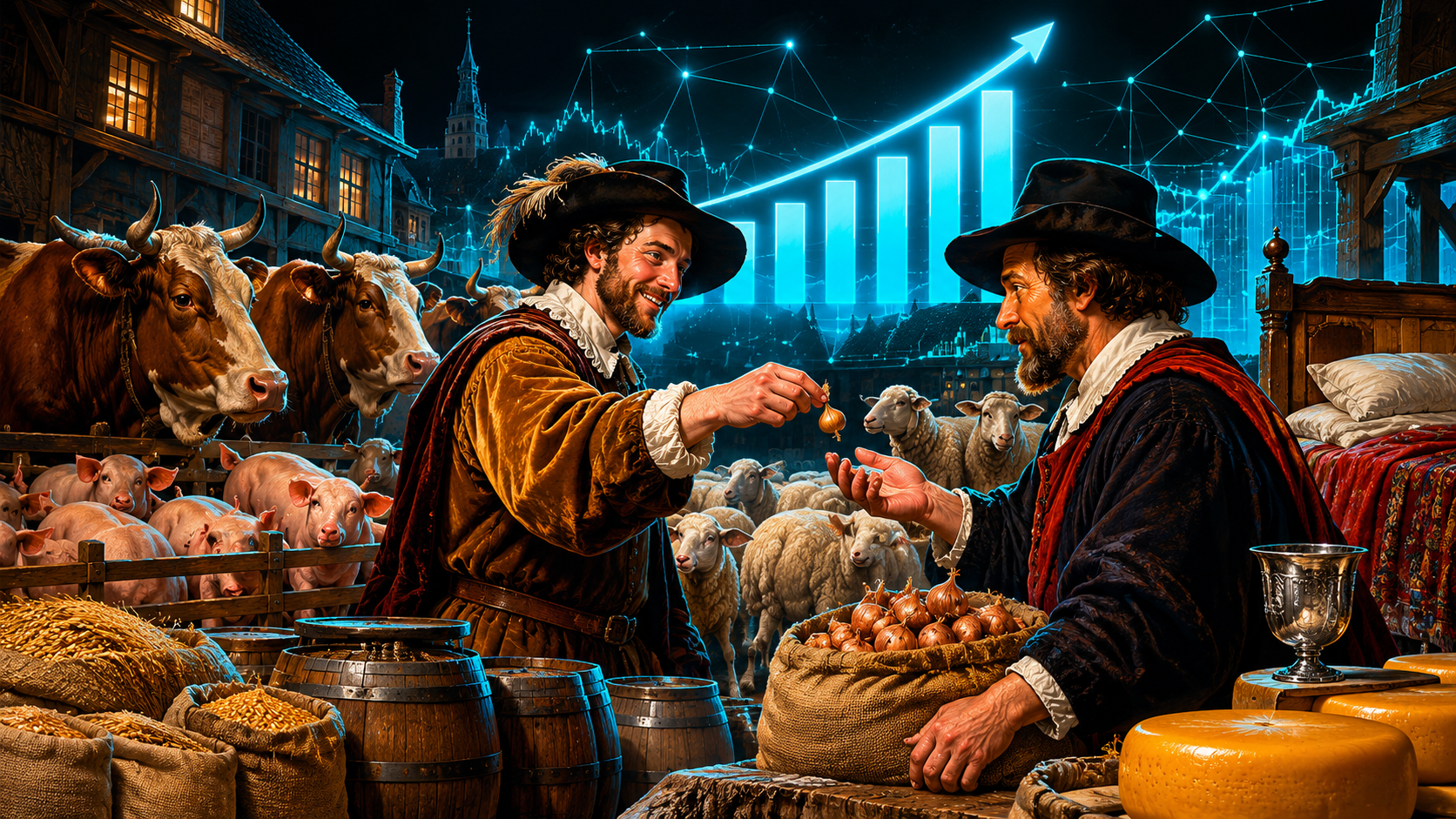
The numbers got absurd, and we have the receipts because the Dutch wrote everything down. A single Viceroy bulb sold for a documented basket of goods: wheat, rye, four oxen, eight pigs, twelve sheep, wine, beer, butter, cheese, a bed, clothes and a silver cup, totaling around 2,500 guilders. A skilled craftsman earned maybe 300 guilders a year. Semper Augustus was reportedly offered at 10,000 guilders, roughly the price of a fine Amsterdam canal house with a coach house and garden.
Prices went vertical in the winter of 1636 to 1637, with some bulbs reportedly changing hands several times in a day. New entrants poured in, people with no horticultural knowledge whatsoever, because the only thing they needed to know was that the number went up last week.

February 1637
On the third of February, at a routine bulb auction in Haarlem, nobody bid. That's it. That's the whole mechanism. There was no news, no edict, no crop failure. The marginal buyer simply didn't show up, and the moment a market like that pauses, everyone realizes at once that they were holding paper whose only value was the next guy's enthusiasm.

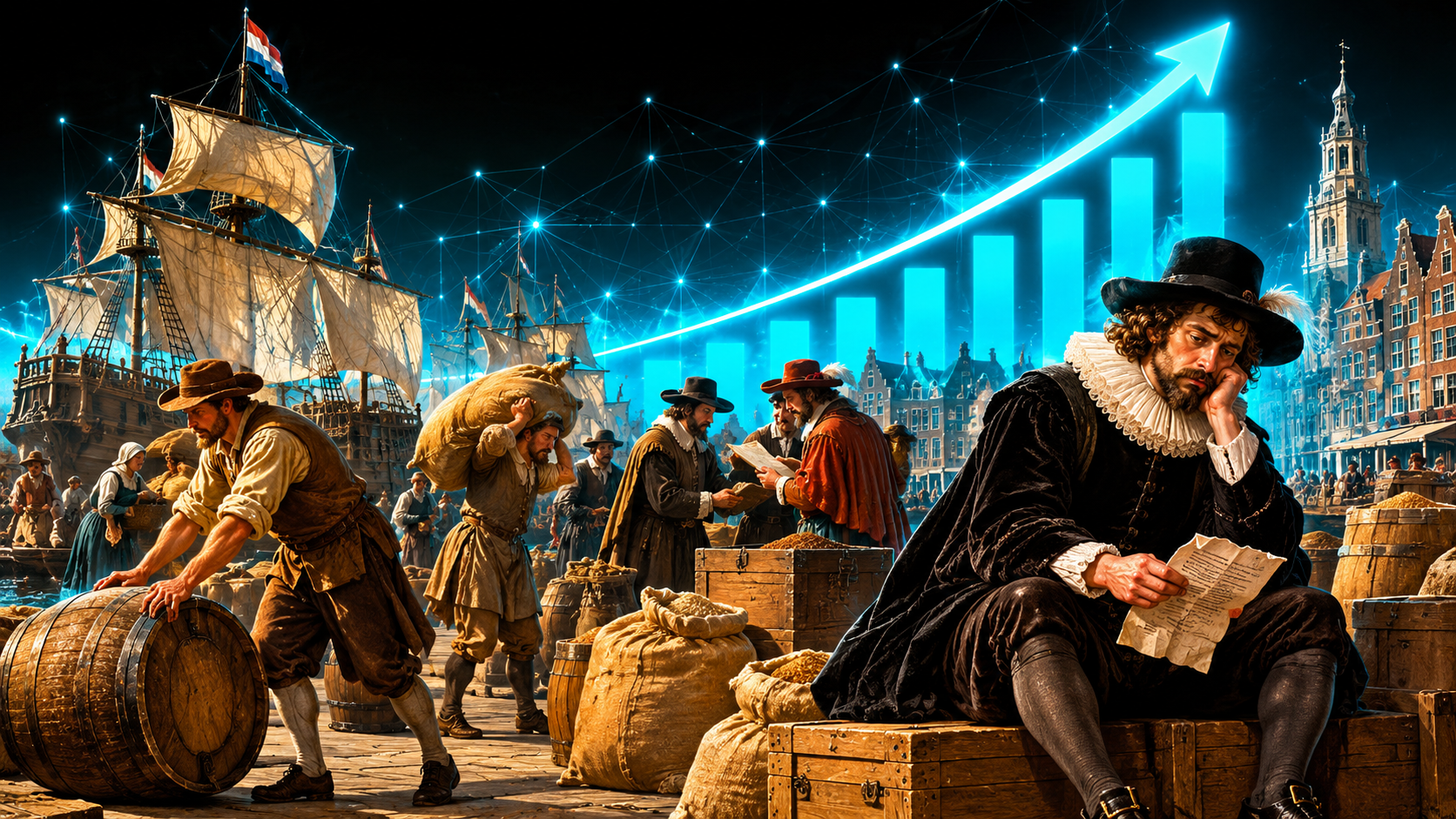
Within weeks prices were down by something like 90 to 99 percent. And then the aftermath, which is the most useful part of the story. The courts in Haarlem essentially threw up their hands and refused to enforce the forward contracts, treating them as gambling debts rather than real commercial obligations. Buyers were eventually let off for a few percent of what they'd promised. The paper evaporated because the paper was never real.

Here's the twist that nobody tells you, and it's the whole point of this post. The Dutch economy barely flinched. The Republic stayed the richest country in Europe for another half century. The mania was concentrated in a relatively small speculative crowd, and the real economy of ships and spices and grain rolled on.
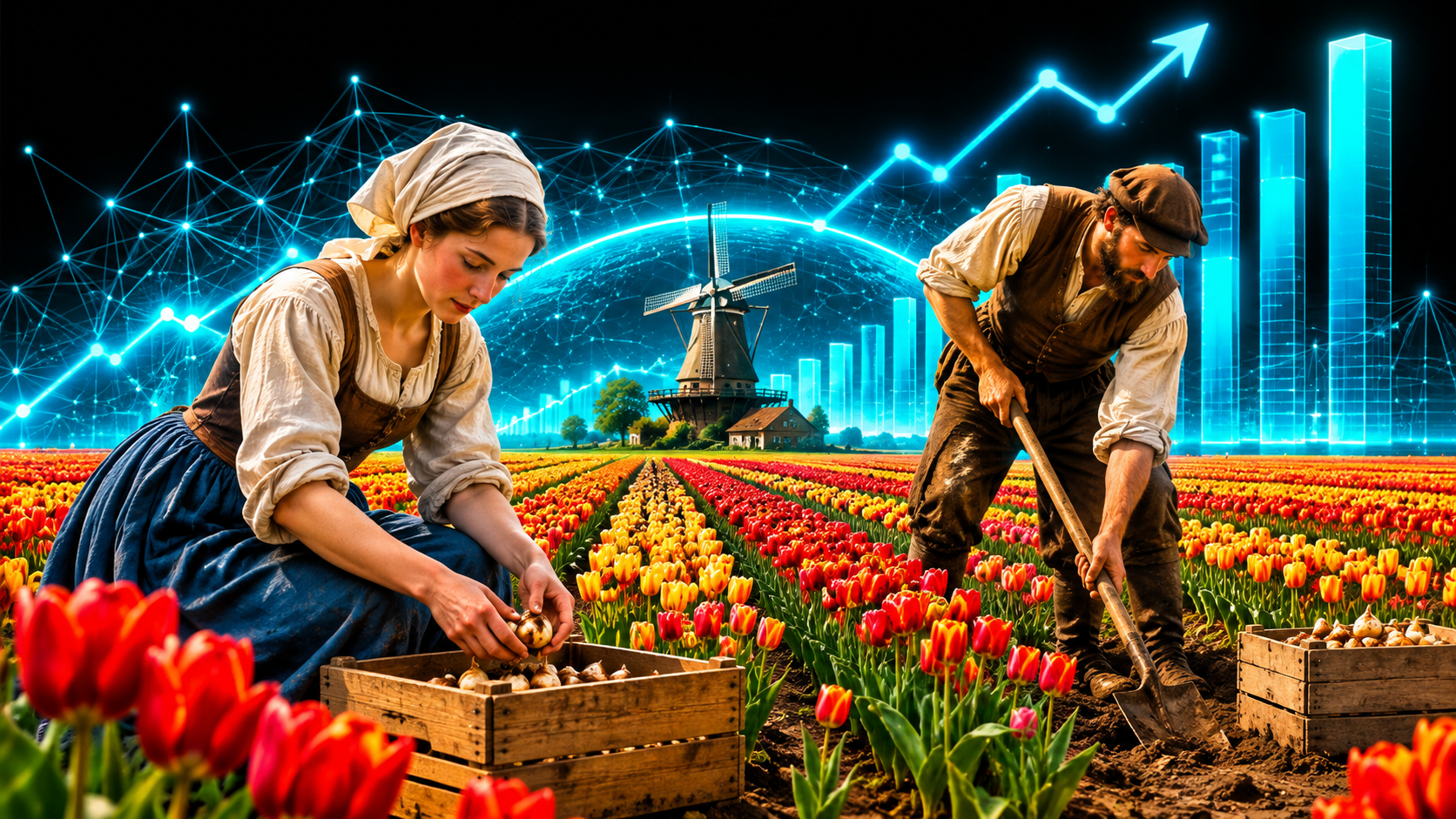
And the tulip business? It's still here. The Netherlands exports billions of euros of flowers and bulbs a year and has dominated that trade for four hundred years. The flower was never fake. The paper was fake.
Now look at your feed
I am not telling you AI is a bubble. I'm telling you there are two markets running at the same time, exactly like 1637, and you need to know which one you're standing in.
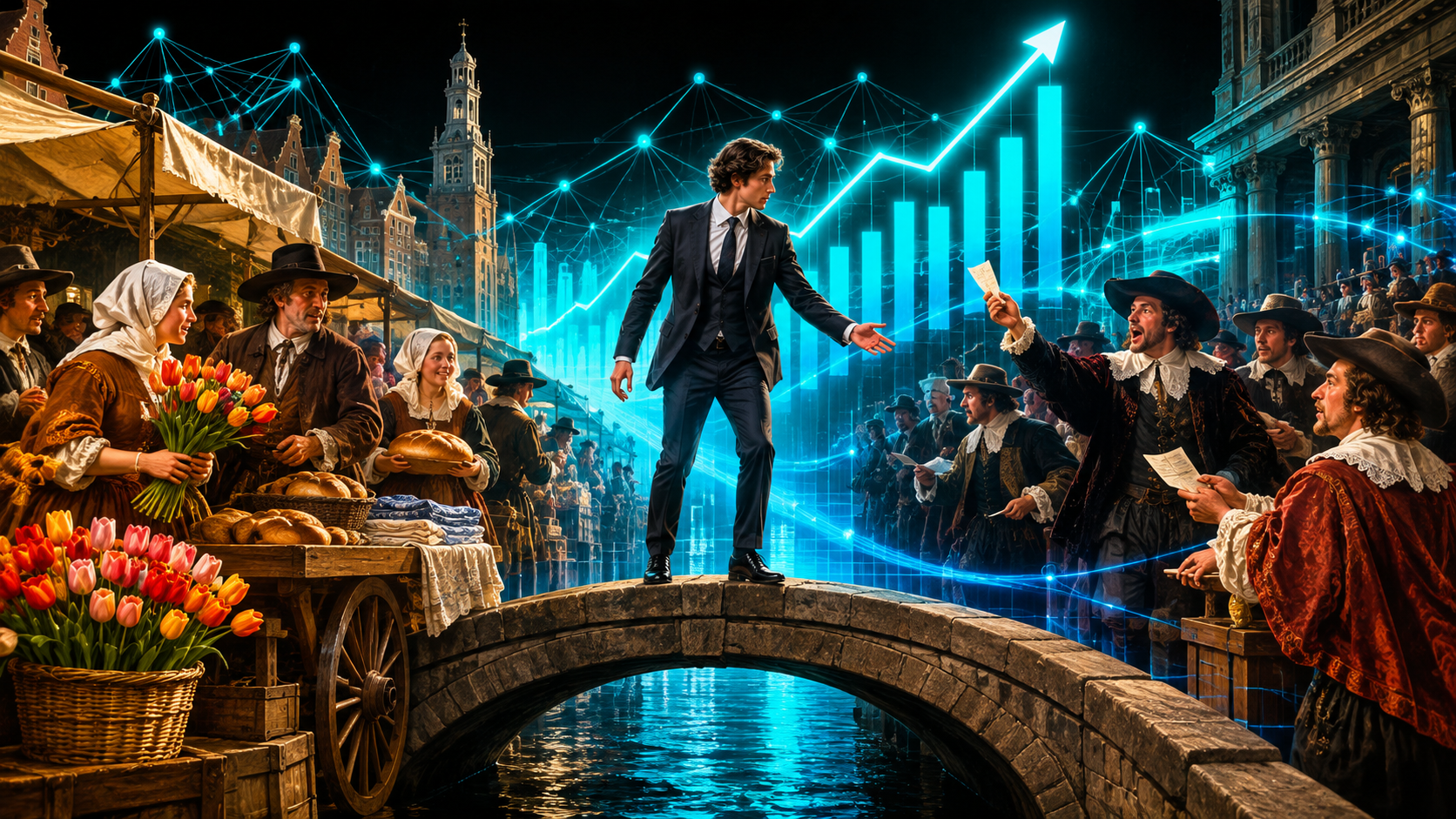
Market one is the actual technology. Real, enormous, already changing how work gets done. Market two is the windhandel: paper being traded on promises nobody has seen bloom.

You know the tells. Everything is AGI now. Every wrapper is "fully autonomous." Every chatbot is an "employee." People talk about these models the way the Dutch talked about a bulb they'd never seen, with a kind of reverence that has nothing to do with the thing's actual behavior. I've watched people treat a language model like an oracle and then act shocked when it confidently invents a phone number.
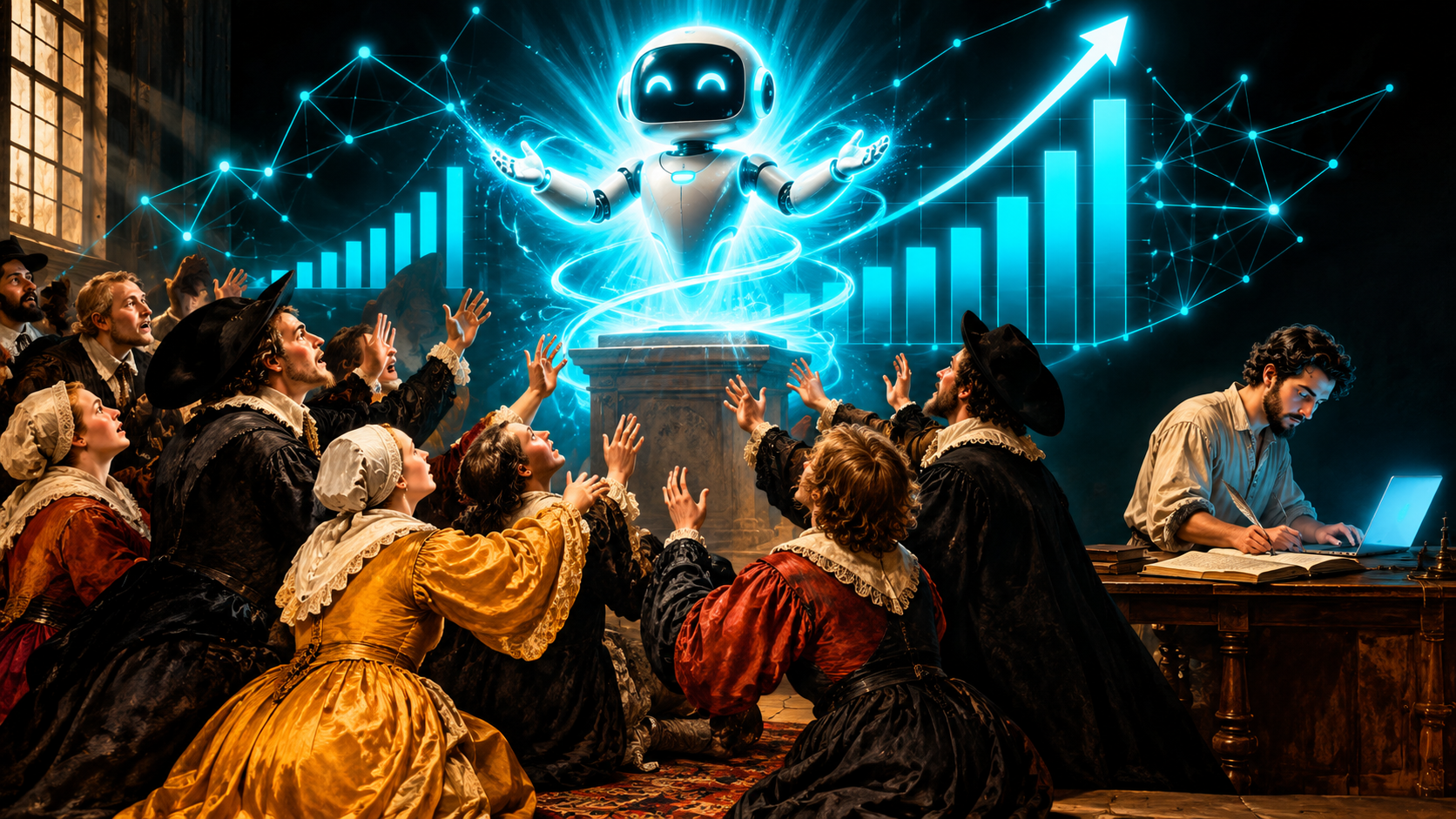
Here's my honest read on what these tools are. They are the best leverage I have ever been handed. They are not magic and they have no judgment. They'll write me a thousand lines of working code and then make a decision no sane engineer would make, with total confidence, because confidence is free. The value isn't in the model. It's in the person who knows what to point it at, what good output looks like, and when it's lying. Context, taste and judgment are the scarce inputs now, and the hype economy is selling you a world where none of those are required. That's the bulb nobody has seen bloom.

Grow flowers, don't trade paper
So what does the non-tulip version look like? Boring. Deeply, profitably boring.

Every phone call to the business gets answered, including the one at 7:40pm on a Saturday, because a missed call is a lost job and that's a problem with a dollar figure attached. Ad spend managed daily instead of monthly, with the copy variants written in minutes instead of weeks. Leads followed up in sixty seconds instead of two days. Invoices going out without anyone retyping anything. One system that owns the data instead of nine products that don't know about each other.

None of that is sexy. All of it is measurable, which is the actual difference between the two markets. The flower people could tell you what a bulb yielded. The paper people could only tell you what the last guy paid.

How to not get caught holding bulbs
- Ask what it does, not what it is. "AI-powered" tells you nothing. "Answers every call and books the appointment" tells you everything. If a pitch can't survive that translation, it's paper.
- Demand the number. Calls answered, response time, cost per booked job. Tulip sellers quote valuations. Flower growers quote yields.
- Be suspicious of autonomy claims. The honest version is a long leash with a human on the judgment calls. Anybody promising no human in the loop is either lying or hasn't shipped it yet.
- Build infrastructure, not demos. A demo impresses a room. Infrastructure keeps working on a Tuesday in March when nobody's watching.
- Own the system. The Dutch courts voided the paper and the holders ate it. If your whole operation runs on someone else's platform and their terms, you're holding a contract, not an asset.
- Judgment is the moat. Learn what good output looks like in your own business. The tools get cheaper every quarter. Knowing what to do with them does not.
The mania ended in a single morning when one buyer didn't show up. The flower industry is still here four hundred years later, quietly shipping billions of stems.
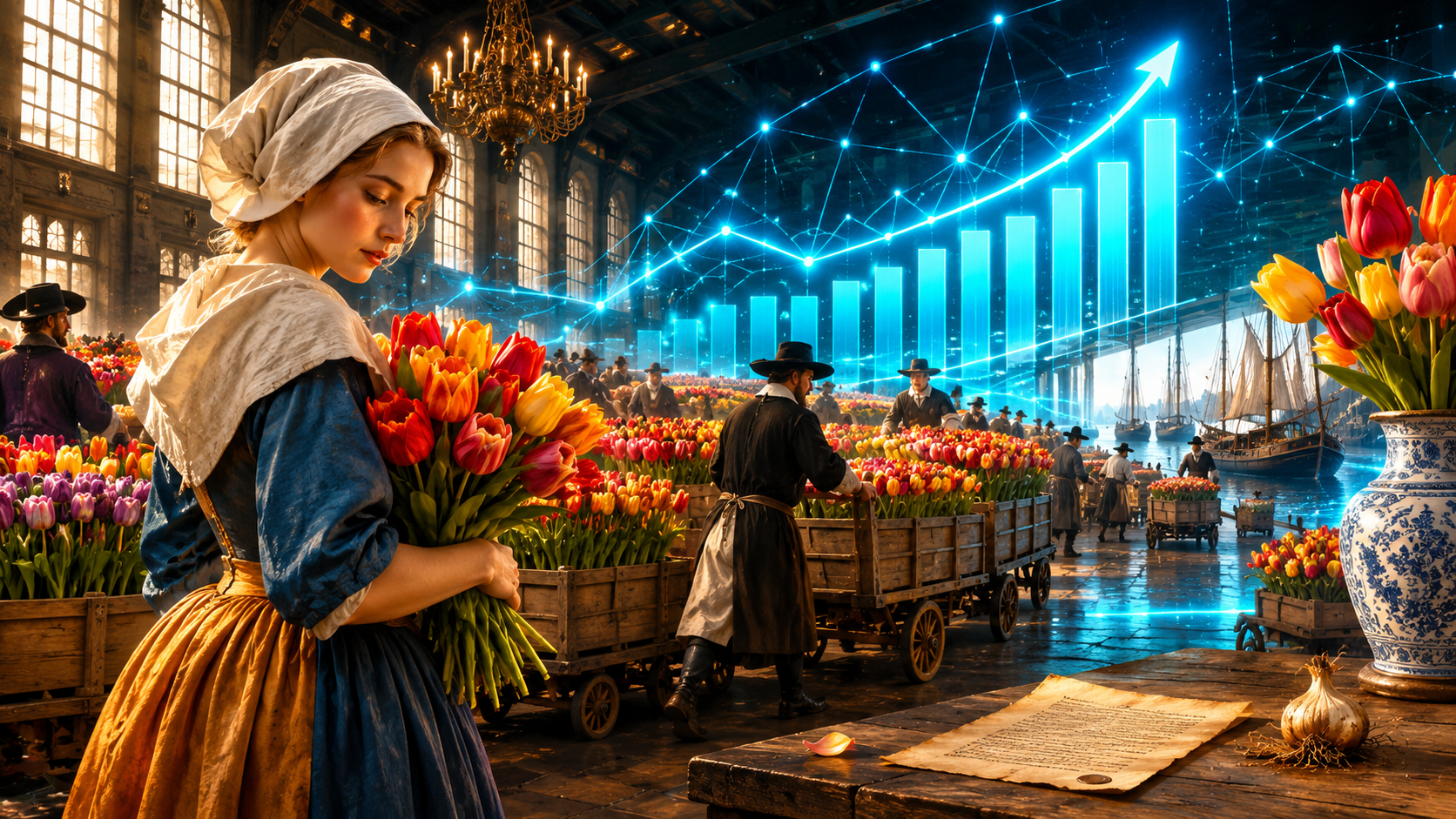
AI is the flower. The windhandel is everything being sold about it right now. Go grow something.
Want to talk about what you're building?
Get in touch