
Pick the Right Partner or Lose Your Conquests

Justinian had the best general of his century and an achievable vision. He also had Theodora, who saw every capable man as a threat to the throne, and Italy was gone three years after he died. Napoleon was a broke nobody until Josephine opened the door, and he was finished within five years of letting her go.
Justinian spent thirty years and an ocean of gold trying to put the Western Roman Empire back together. He had the best general of the century, a finance minister who could squeeze money out of a stone, and a vision that was actually achievable. He also had Theodora. Three years after he died, Italy was gone.
Nobody builds anything alone, and the person closest to you is either a multiplier or a tax. Not neutral. There is no neutral. They're either pulling with you or they're holding an oar flat in the water, and you can tell which by whether the boat goes straight.

The vision
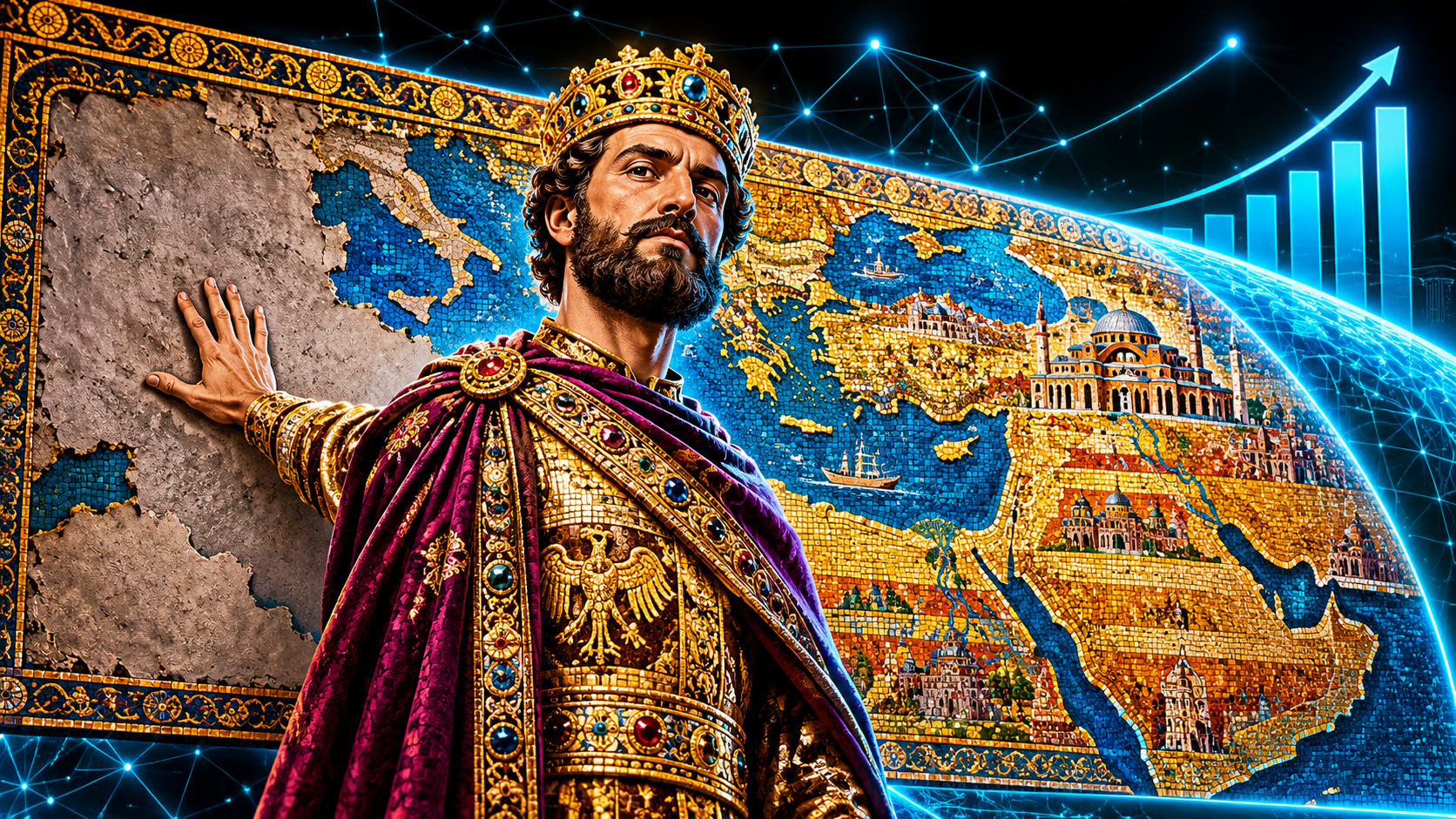
By 527, when Justinian took the throne in Constantinople, the western half of the Roman world had been gone for fifty years. Vandals held North Africa. Ostrogoths held Italy, including Rome itself. Visigoths held Spain. Justinian looked at that map and decided it was unacceptable. He was going to take it back. Not symbolically. Actually reconquer it, province by province, and make the Mediterranean a Roman lake again.
Theodora, and the credit she's owed
Theodora came up from nothing. Daughter of a bear keeper, an actress, which in Constantinople meant something close to a courtesan, and then empress, because Justinian changed the law to marry her. In 532, during the Nika riots, with half the city burning and the court packing to flee, she gave the speech that held the throne. The purple makes a fine burial shroud, she said. Justinian stayed. The riots were crushed. She saved his reign, and I'm not going to pretend otherwise.

Belisarius
Then there's the man who did the actual conquering. In 533 Justinian sent Belisarius to North Africa with maybe fifteen thousand men to take on a Vandal kingdom that had humiliated the last Roman expedition. He landed, won two battles, and was riding into Carthage within months. The Vandal king surrendered the following spring. A hundred years of lost territory, back in under a year, with a force most people thought was too small to try.
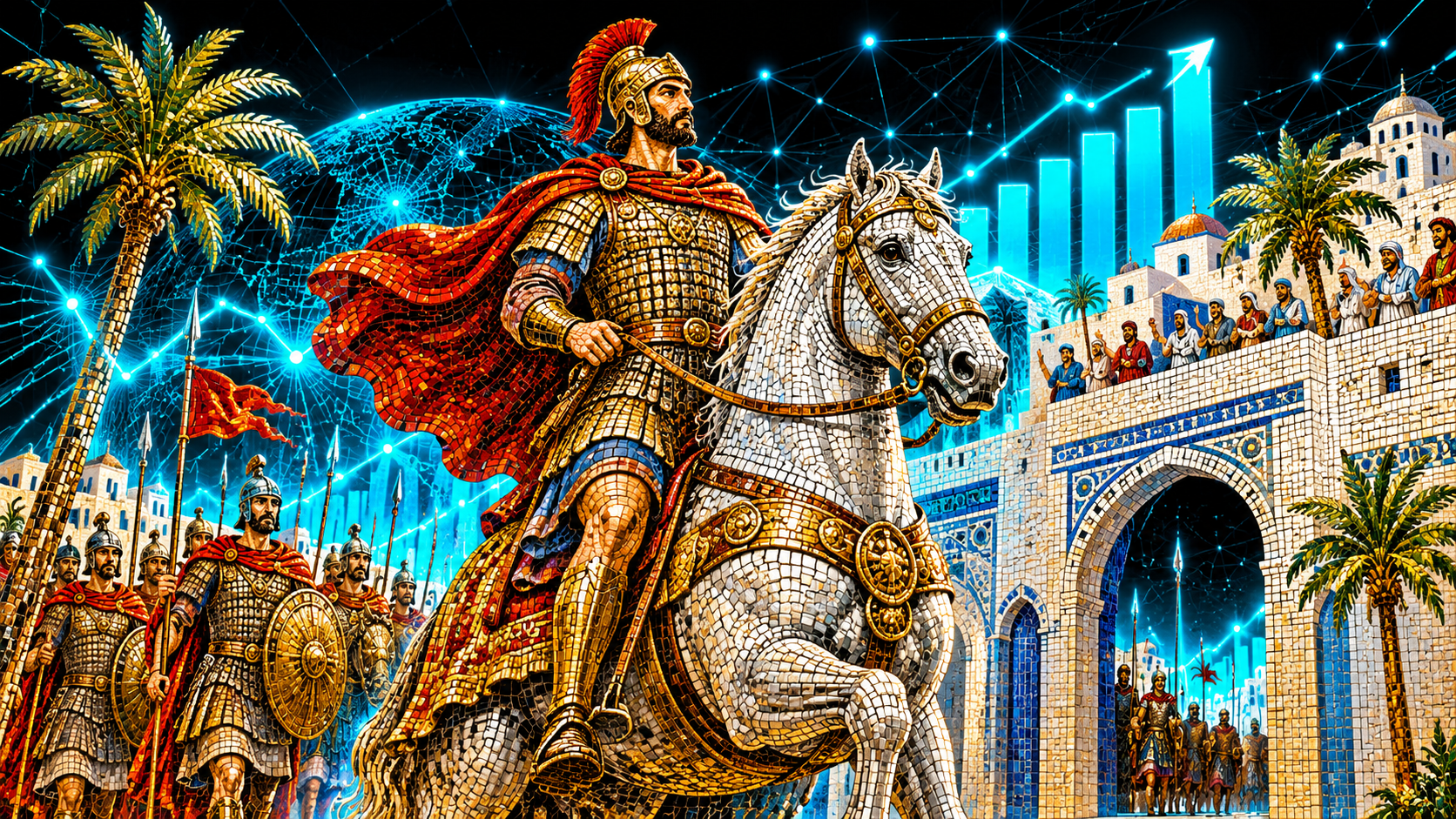
Italy was harder. He took Sicily, then Naples, then walked into Rome in December 536. The Goths came back and besieged him there for a year with a far larger army, and he held the city. In 540 he reached Ravenna, the Gothic capital, and the Goths made him an offer: take the western crown yourself, be our emperor, and we'll open the gates. Belisarius pretended to accept, walked in, and handed Ravenna to Justinian instead. He was offered an empire and gave it back to his boss.

Where the paranoia starts
You'd think that would settle the loyalty question forever. It did the opposite. A general that popular, that successful, who'd just been offered a throne, was exactly the kind of man an insecure court sees as a threat. Justinian recalled him from Italy before the job was finished. And Theodora, who understood power as a thing you survive rather than a thing you build, never let it go. From that point, Belisarius was watched.

The man who paid for all of it
Wars run on money, and the man raising it was John the Cappadocian, the praetorian prefect. He was ruthless, probably corrupt, and widely hated, and he was also the most effective finance minister the empire had. He streamlined the bureaucracy, squeezed the provinces, and funded the Vandal war, the Gothic war, and the Hagia Sophia at the same time. You don't have to like the guy. Justinian's vision does not exist without him.

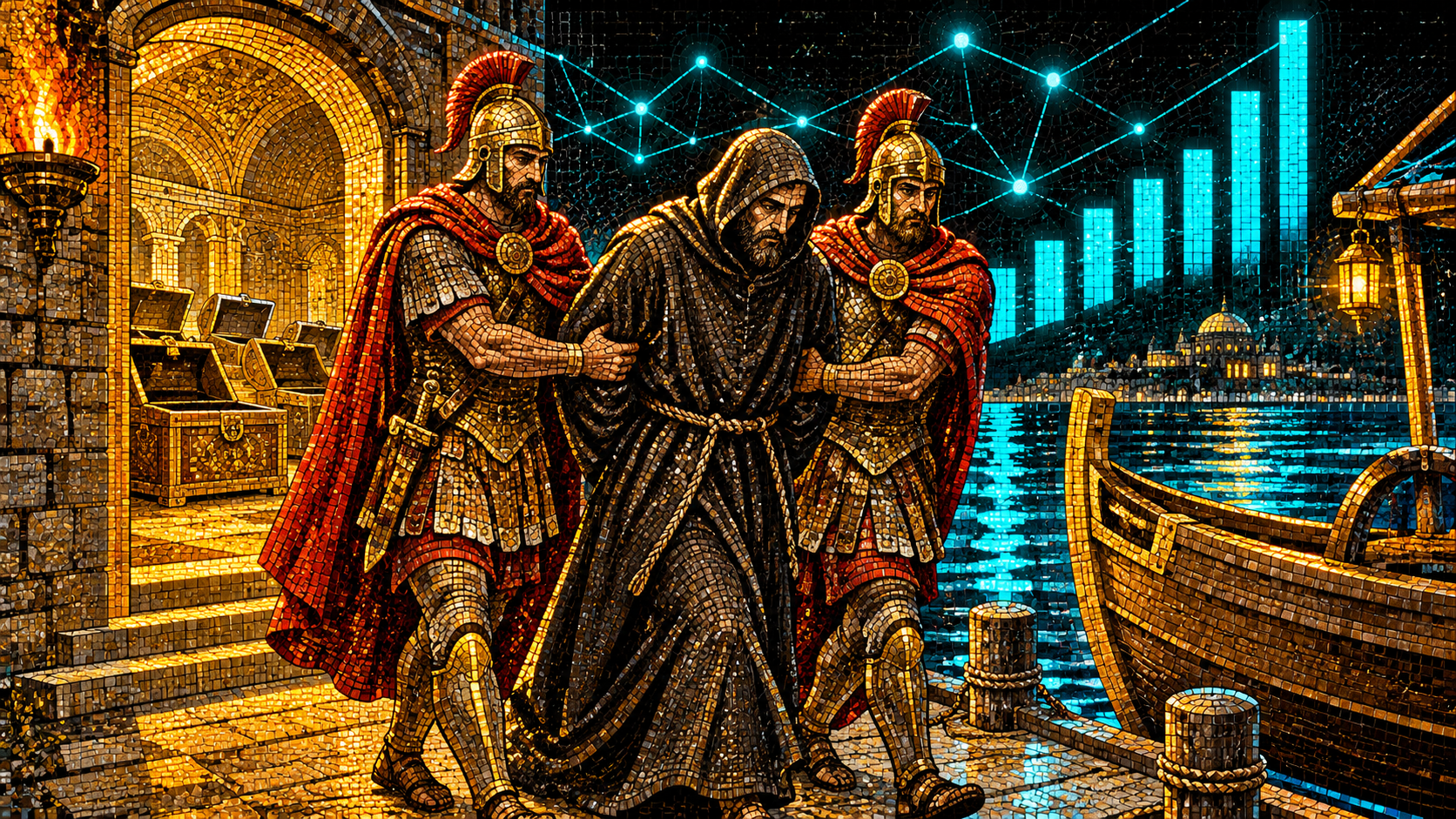
Theodora despised him, partly because he'd been openly contemptuous of her and partly because he had Justinian's ear. In 541 she and her close friend Antonina set a trap. Antonina lured John into a meeting where he appeared to be discussing a plot against the emperor, with witnesses planted. John was stripped of office, forcibly ordained as a priest so he could never hold power again, and exiled. His property was seized. The man financing the reconquest was gone, and nobody as capable replaced him.
Then the plague, and the knife
The same year, the plague arrived. It killed a staggering share of the empire's population through 541 and 542, gutted the tax base, and emptied the recruiting pools. Justinian himself got it and nearly died. While he was sick, some officers in the east were heard discussing who they'd accept as the next emperor, and Belisarius's name came up. That was all Theodora needed. When Justinian recovered, Belisarius was recalled in disgrace, his personal guard disbanded, his wealth confiscated, his household dismissed. The greatest general alive, sidelined by a rumor and an empress who'd been waiting for one.

He was eventually restored, in the way you restore someone you want to keep useful but small. In 544 he was sent back to Italy, where the Goths had retaken almost everything, with a fraction of the men and almost no money. He spent five years holding on with scraps, losing Rome and retaking it, writing letters to Justinian that still survive, begging for troops and funds that never came. In 548 he asked to be relieved. He'd been handed a war and denied the means to win it, twice.

Here's the part that proves the point. After Theodora died in 548, Justinian finally sent a real army. Narses, a seventy-something court eunuch, went to Italy in 552 with something like thirty thousand men and a full war chest, and he ended the Gothic War in two years. The job was always doable. It needed exactly the resources that Theodora's court had spent a decade making sure Belisarius didn't get.

A side note on Belisarius's own partner
And just to twist the knife: Belisarius had a partner problem of his own. His wife Antonina was Theodora's closest friend and instrument, the same woman who set the trap for John. Procopius, who served on Belisarius's staff and loathed her, claims she carried on an affair with the general's adopted son and that Belisarius forgave her repeatedly because he couldn't do otherwise. Take Procopius with salt. But the man who conquered Africa and Italy was, by every account, outmaneuvered in his own house.

What it cost
Justinian died in 565. In 568 the Lombards walked into Italy and took most of the north inside three years. The Byzantine foothold in Spain was gone by 624. North Africa held out until the Arabs took it in 698. Thirty years of war, a generation of soldiers, and a treasury that never recovered, and the western map went grey again within a lifetime. Not because the vision was wrong. Because the people who could have made it permanent were treated as threats by the person sleeping next to the emperor.

Here's the fair read on Theodora. She was brilliant, she was brave, and she kept Justinian alive in a court full of knives. But her definition of the mission was the throne, and his was the empire. Every person capable of delivering the empire looked, to her, like a danger to the throne. So she neutralized them one by one, and she was very good at it. That's the failure mode. Not a weak partner. A strong partner pulling toward a different goal.

The other kind of partner: Napoleon and Josephine
Now the contrast, and it deserves the same space, because it runs the same experiment in reverse.
Paris, 1795. Napoleon Bonaparte is twenty-six, Corsican, broke, badly dressed, and socially radioactive. He talks too fast with an accent the salons find funny. He has no connections and no money. What he does have is the whiff of grapeshot: in October he turned cannon on a royalist mob in the streets of Paris and saved the Directory, which earned him the gratitude of Paul Barras and command of the army of the interior. Useful, but he's still a tool the regime picks up and puts down.

Josephine, meanwhile, had already survived worse than anything he'd seen. Born Marie-Josèphe-Rose on a sugar plantation in Martinique, married off at sixteen to Alexandre de Beauharnais, who treated her badly and was guillotined in 1794. She was in the Carmes prison waiting for the same blade when Robespierre fell and the Terror ended. She walked out with two children, Eugène and Hortense, a mountain of debt, no husband, and the most valuable asset in post-Terror Paris: she knew everyone who mattered, and they liked her.

They married in March 1796. Two days later he got the command of the Army of Italy. People have argued ever since about how much of that was Josephine's relationship with Barras and how much was Napoleon's own record, and the honest answer is both: the Directory wanted a commander who was competent and who they felt they had a hold on. The point stands either way. She put him in the rooms where commands get handed out, and she made him legible to a class of people who had been laughing at him a year earlier.

Then Italy, and he's gone from promising to immortal in eighteen months. And the letters he sends her from that campaign are something else. Obsessive, desperate, borderline unhinged for a man winning battles. "I wake filled with thoughts of you." "Not a day goes by that I do not love you." He is running a war and writing like a teenager.

She barely wrote back. She stayed in Paris and took a lover, a cavalry officer named Hippolyte Charles, and the whole city knew before Napoleon did. He found out in Egypt in 1798 and it nearly broke him. And then the strangest and most important turn in the whole story: when he came back, they reconciled, and the polarity flipped. He cooled and took mistresses. She became genuinely devoted, and stayed that way. From 1799 on, she was the one holding the thing together.
You can see it immediately. In November 1799, during the coup of 18 Brumaire that made him First Consul, the plot nearly came apart. Josephine spent that night and the days around it working the people who could have stopped it, keeping Gohier and the nervous officials calm and friendly, smoothing a conspiracy that Napoleon's own brothers were botching in front of a hostile assembly. She was not decorative in that operation. She was operational.

Then the part she was uniquely built for. Napoleon could win a battle in his sleep and could not host a dinner to save his life. He was abrupt, impatient, and had a habit of insulting ambassadors he needed. France after the Revolution was a country where half the old aristocracy was in exile and the other half was hiding in the countryside, and someone had to make the new regime feel legitimate rather than like a military occupation with better uniforms. That was Josephine. She built the court at the Tuileries and Malmaison, she brought the émigrés back in, she charmed the royalists, she remembered everyone's children's names. She read every room he walked into and told him afterward what he'd missed.

At the coronation in December 1804, he crowned himself and then crowned her. Think about the staging of that. The whole ceremony was designed to tell Europe this was a legitimate dynasty, not a usurpation, and he put her at the center of it on purpose. Her children became part of the machine too: Eugène ran Italy as viceroy and was a genuinely capable administrator, and Hortense married his brother Louis. Her grandson would eventually rule France as Napoleon III. She came with a family that turned into an asset.

And she could tell him no. That's the part founders underrate. She argued against the execution of the Duc d'Enghien and she pushed back on the people around him who told him only what he wanted to hear. She'd survived a prison cell under the Terror, so a man in a bad mood did not frighten her. Everyone else in that palace had an incentive to agree with him. She didn't.
In December 1809 he divorced her. No heir, and he wanted a dynasty, so he married Marie Louise of Austria, nineteen years old, raised to obey, who gave him a son in 1811. By the accounts of the ceremony he could barely get through reading the divorce decree. He kept her at Malmaison with her title, her allowance and her debts paid, and he kept visiting.

Now look at the timeline, because it is almost too neat. Divorce, December 1809. Spain already bleeding him. Russia, June 1812, and six hundred thousand men go east and roughly a tenth come back. Leipzig, 1813. Abdication, April 1814. In four and a half years the most capable military mind in Europe made the three worst strategic decisions of his life, back to back, with nobody in the house to say wait.

Josephine died at Malmaison in May 1814, a few weeks after his abdication, of pneumonia caught walking in the garden with the Tsar. Napoleon got the news on Elba and reportedly shut himself in his room for two days and refused to see anyone. The traditional account of his last words at Saint Helena is France, the army, the head of the army, Josephine.

He said more than once that his luck left with her, and I don't think it was luck. I think the thing he actually lost was the only person in his life whose position didn't depend on his approval. Marie Louise was a teenager who'd been raised to agree. The marshals wanted their estates. The ministers wanted to keep their jobs. Josephine wanted him to be all right, which is a completely different incentive, and it's the one that produces useful advice. Invading Russia in winter is not a decision you make with that person still in the house.
Or the quiet version
If you'd rather have a model that doesn't involve anyone getting divorced or exiled, take Augustus and Livia. Married fifty-one years. He consulted her on matters of state, sometimes drafting his notes in advance so he'd get the conversation exactly right, and she was his closest advisor for the length of his reign. Rome got four decades of stability out of it, the longest peace it would ever see. No palace knives, no dramatic reversals, two people pulling the same direction for half a century. Boring, and it built the longest-lasting thing on this page.

The business version
Whether it's a spouse or a co-founder, the person next to you has to understand what building a company actually costs, has to want the mission you're on, and has to never work against it from the inside. Those are three separate tests and a lot of partnerships fail the second one quietly. They're supportive in the abstract and threatened by every specific thing success requires. I wrote in Orbis Non Sufficit that you have to figure out what your sea is before you set out. Your partner has to want the same sea. If you're rowing toward a farm and they're rowing toward a throne, or the other way around, you're Justinian and Theodora, and it doesn't matter how good your general is.

What I'd actually check for, before the ring or the cap table:
- Do they understand the sacrifice, specifically? Not "I support you." The actual sixteen hour stretches, the money that goes back into the business instead of the vacation, the years where it looks like it isn't working. Say it out loud and watch the face.
- Is their goal your goal, or just compatible with it? Theodora's goal was compatible with Justinian's right up until it wasn't. Compatible is not the same as shared.
- How do they treat the people who make you stronger? A partner who sees your best general as a rival will find a way to starve him. Watch how they talk about your key people when they think it doesn't matter.
- Can they tell you no? Josephine could, because her standing didn't depend on his approval. The quality of the no you get at home shows up in the quality of the decisions you make at work.
- Do they open doors or guard them? Josephine put him in rooms he couldn't get into. Theodora removed people from rooms he needed.
- When it's hard, do they pull or do they brake? Everyone pulls when it's going well. The oar flat in the water only shows up in the storm.

Justinian had the vision, the general and the money, and he lost Italy because the person he trusted most saw all three as threats. Napoleon was nobody until Josephine opened the door, unstoppable while she was beside him, and finished within five years of letting her go. Augustus picked once, picked right, and got fifty years of peace out of it.
Pick the right partner. It's the only decision that touches every other one you'll ever make.
Want to talk about what you're building?
Get in touch