
Orbis Non Sufficit: Why Most Business Owners Need to Know When to Stop

Alexander conquered the world and died in Babylon at thirty-two, still planning the next campaign. Xenophon marched ten thousand men home, settled on a farm, and rode horses for forty years. Before you build the business, decide which one you're trying to be.
Two Greeks walked into the Persian Empire a couple of generations apart. Both were young. Both did something that should have been impossible. One came home and lived another forty years. The other died in Babylon at thirty-two, and we still argue about who killed him.
The difference between them is the most useful thing I know about building a business.

Alexander: the world is not enough
Alexander inherits Macedon from his father Philip II, locks down Greece, and then marches into the Achaemenid Persian Empire, the largest superpower on earth, in his early twenties. He beats the Persians in three decisive battles. He hunts down Bessus, the usurper who murdered Darius, and executes him. Most of the Persian aristocracy and bureaucracy fall in line. In Egypt they call him a liberator.

Stop and look at that. He has the richest empire in the world, it runs, and the people inside it mostly want him there. That's the finish line. That's past the finish line.

So what does he do? He goes conquering again. East, into brutal terrain, against nomads nobody had ever subdued. And give him this much: he actually pulled it off. At the Jaxartes river he put his army across on rafts and stuffed hides under covering fire from catapults on the near bank, then ran down the Scythian horse archers who had made that frontier unholdable for two centuries. Cyrus the Great died trying to handle those people. Darius I marched north after them and came back with nothing. Alexander did it in an afternoon.
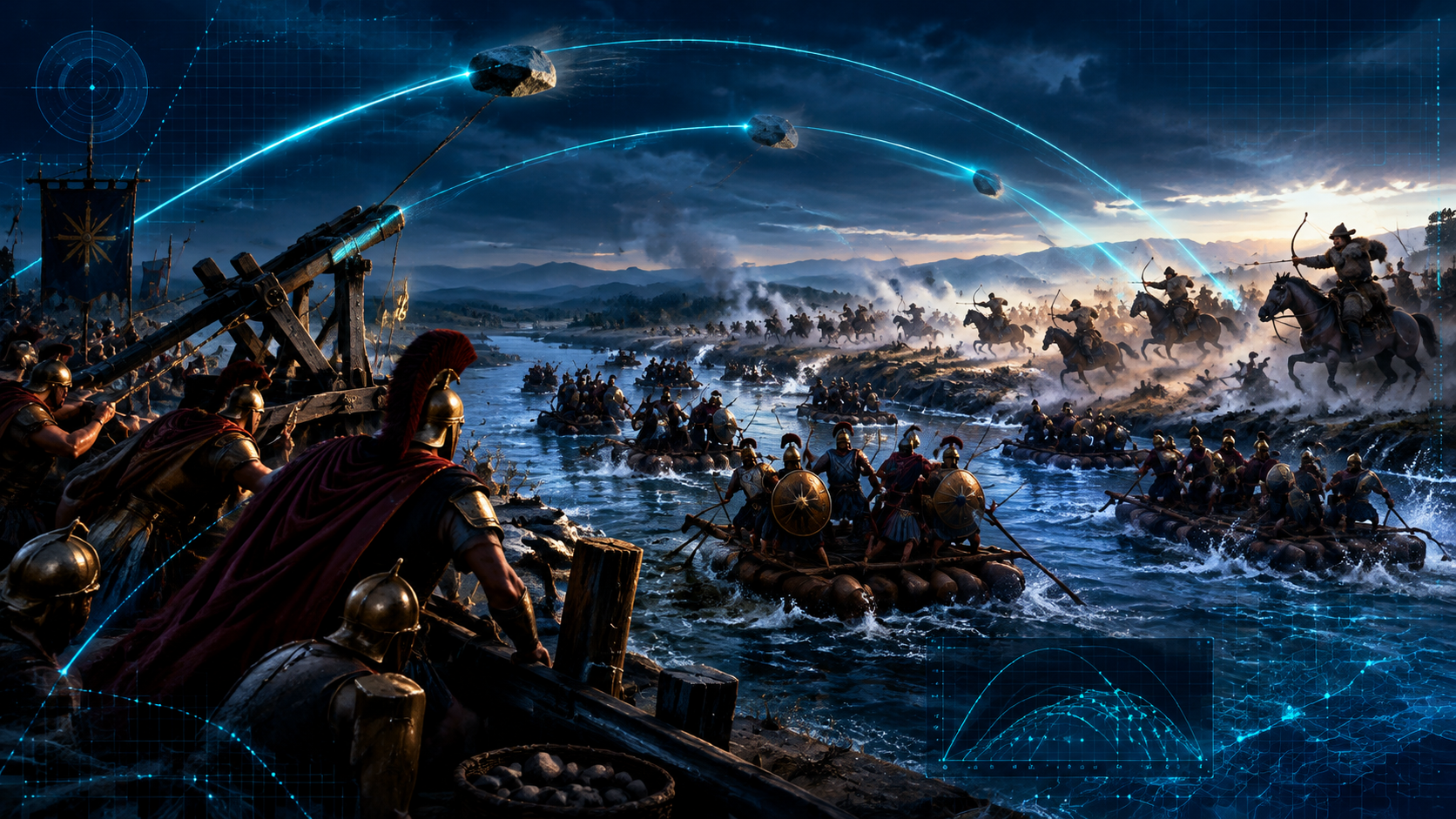
Then into India, beating local kings. He wanted the entire subcontinent, and the only thing that stopped him was his own exhausted soldiers refusing to take another step. So he marched back and started planning the next one. Arabia, probably. Historians argue.

He never got there. He died in Babylon at thirty-two. Fever, or poison, or his own generals, depending on which ancient source you trust.

The phrase that got attached to him later was orbis non sufficit. The world is not enough. Read that as a business plan and tell me it doesn't sound like half the founders you follow.

Xenophon: reach the sea
Rewind about seventy years. Xenophon is a young Athenian who signs on with ten thousand Greek mercenaries to help Cyrus the Younger take the Persian throne from his brother. They march deep into the empire and fight a battle at Cunaxa. The Greeks win their part of the field. Cyrus gets himself killed anyway. Now you have ten thousand foreigners a thousand miles inside hostile territory with no employer and no reason to exist.

The Persians invite the Greek generals to a parley to sort it out, and then execute all of them.
Leaderless, surrounded, winter coming, Xenophon steps up. What follows is a real-life odyssey: fighting off Persian cavalry, climbing through mountain country held by the Carduchians, who even the Persians couldn't beat, marching through snow with men dying of frostbite.

And then one day the front ranks crest a ridge and start screaming. Thalatta. Thalatta. The sea. The sea. They'd made it to the Black Sea, and from the sea you can get home.

Most of them did get home. And here's the part that matters. Athens had exiled Xenophon, so Sparta gave him an estate in the countryside. And what does the man who led ten thousand soldiers out of Persia do with the rest of his life?

He raises his sons. He hunts. He rides. He writes the book. He does not go back. Other Greek commanders were putting together new expeditions and he passed on every one of them. He'd had an objective, reach the sea, and once he reached it he was done. He lived into his seventies.
Figure out what your sea is
That's the whole post. Before you build the thing, decide what reaching the sea looks like for you. Not for your investors, not for the guy on Instagram with the rented jet, not for the version of you that's afraid of being called small. For you.

For most people, the sea is not a billion dollar company. Let me be clearer. For most people, a billion dollar company would be a bad outcome. I know business owners running very successful companies who are miserable. No time for their kids, no time for anything, racked with stress, and no plan for when it ends because the plan was always just more.

I admire Elon Musk as a builder. I mean that. Read how he started SpaceX and Tesla, throwing his own money in with the clock running down to the last twelve hours. That took real guts. But listen to how he describes it. Brutal. Isolating. Constant anxiety. That's the price of orbis non sufficit, and he says so out loud. Most people should not pay it. Not because they can't. Because it's a bad trade for the life they actually want.

At the top, it's just the Persian court
Here's the part nobody warns you about the top levels. They are not a reward. They're a court. Everybody up there has an agenda, and none of them are yours.

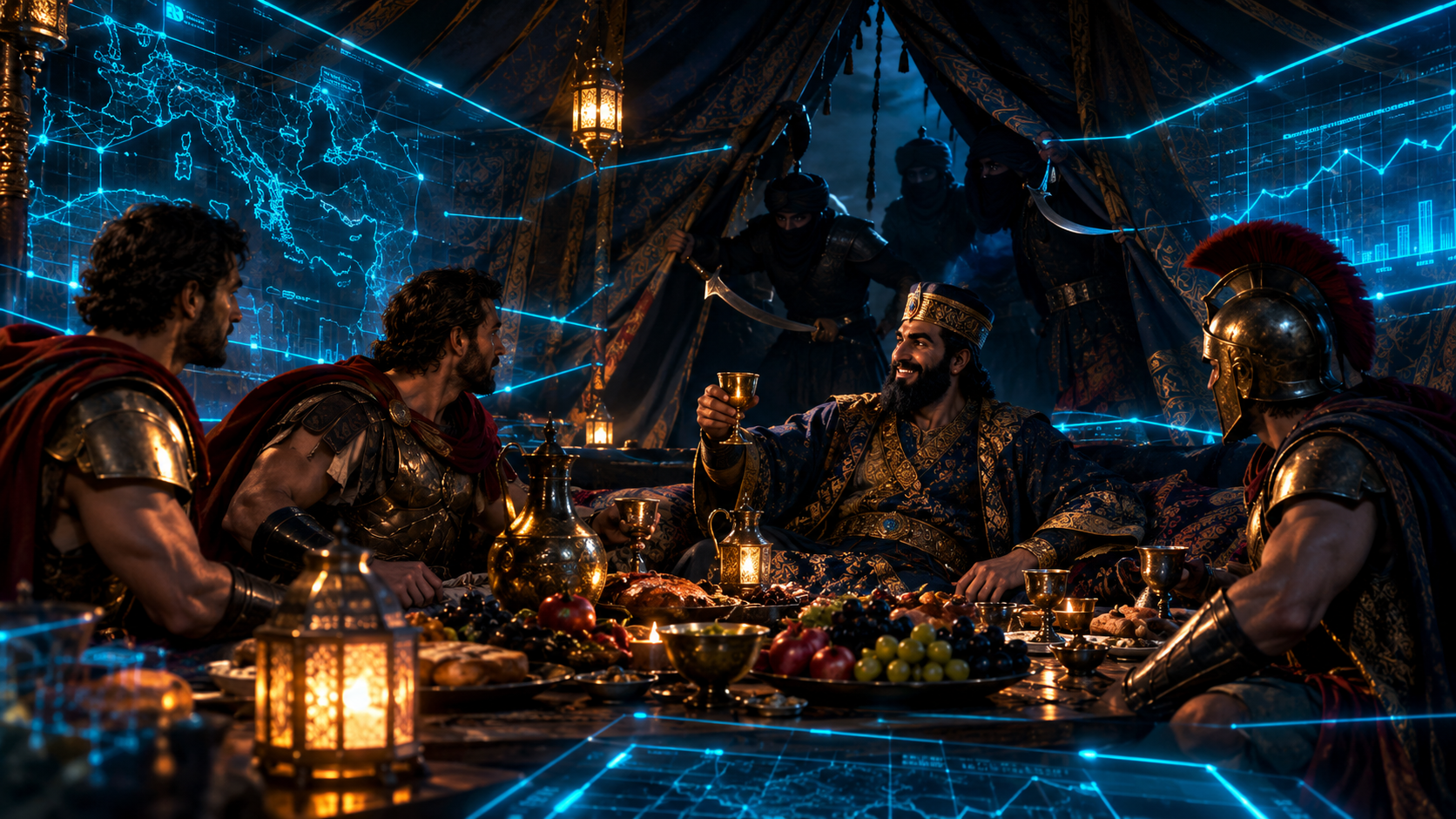
Look at who was actually standing around the Persian throne in those years. Bagoas was the vizier, and he poisoned Artaxerxes III along with most of his sons, put a puppet named Arses on the throne, then poisoned him too when the puppet started having opinions. He went to do it a third time to Darius III, who saw it coming and made him drink his own cup. Tissaphernes was a satrap, and he's the one who invited Xenophon's commanding officers to dinner to negotiate safe passage and had every one of them seized and beheaded. And Bessus you've already met: Darius's own kinsman and general, riding beside him in the retreat, who put a knife in his king and declared himself the next one.

So picture the room. Bagoas pouring the wine. Tissaphernes hosting the feast. Bessus in the corner, doing math on how long you've got. All of them smiling at you. That's the top.

And it got Alexander too. He won, and then the thing he conquered conquered him. He started wearing Persian court dress and expecting Macedonians to prostrate themselves in front of him like a god-king. He had Philotas tortured and executed, then had Philotas's father Parmenion, his own father's oldest general, murdered before the news could travel. At a drunken banquet he picked up a spear and ran Cleitus through, the man who had saved his life at the Granicus. He killed Callisthenes for refusing to bow. By the end, he was the Persian court.

Xenophon got out. The moment Tissaphernes murdered his generals under a flag of truce, he understood exactly what world he was standing in, and his entire plan from that day forward was to leave it. Other commanders kept coming to him with new expeditions and he turned down every single one. He had seen the room. He didn't want a seat at that table. He wanted a farm.

That's the thing about the summit. It isn't a view, it's a room, and the price of keeping your seat in it is slowly becoming someone who belongs there. A lot of it is just not worth what it costs.
"Lifestyle business" is not an insult
In VC circles, lifestyle business is a slur. It's the thing they call your company when it makes good money, runs without you, and will never 100x. I'd like to decode that for you, because once you see the incentive the insult stops landing.

Venture capital works on a handful of enormous outcomes paying for a pile of dead companies. That's not a criticism, it's the model. For that model to work, every company in the portfolio has to at least have a shot at being the enormous one. A predictable, boring business that quietly feeds your family for thirty years is, to them, worth nothing. Not because it's bad. Because it doesn't fit the math. It can't return the fund.

So when someone with a fund tells you your business is "just a lifestyle business," understand that they are describing their spreadsheet, not your company. The best possible outcome for you can be a rounding error for them. Those two things are both true at once. And, frankly, a lot of them are soulless about it, which is their problem and not yours.

And when it finally sells, look at who is standing in the room dividing it. Alexander's generals did not wait for the body to get cold. They carved the empire into pieces and then spent forty years fighting each other over the slices. That is a cap table at exit. Everybody who never marched a single mile with you, leaning over the thing you built, arguing about their percentage. The difference is the Diadochi wore armor. Yours wear quarter-zips.

Yes, you have to be a savage first
Don't misread me. I'm a four-time founder. In the early stage there is no substitute for being an animal. Sixteen hour days, eating at the desk, weekends that don't exist. I've done it. It sucks. It's also necessary, and I won't pretend otherwise.

But it's temporary, and the entire point of it is so you never have to do it again. Xenophon's men didn't march through the Carduchian mountains because they loved mountains. They did it to reach the sea and stop marching. If your sixteen hour days have no end state, if the plan is just "more" forever, you are not building a business. You are Alexander in Babylon, planning Arabia, and you know how that ended.
Design the business around the life
Here's the rule. The business is supposed to serve the life. Not consume it.

- Decide what your sea is before you start. Income, hours, freedom, who you want to be at dinner. Write it down.
- Build toward that, not toward the next milestone somebody else told you was mandatory. A hundred million in revenue is not a requirement for being a real entrepreneur. It's a requirement for being a real fund return.
- Grind hard early, on purpose, with an end state. Then actually stop grinding when you get there. The hard part isn't the march. It's recognizing the sea when you see it.
- Look hard at the room you're climbing into. If the people at that level are Bagoas, Tissaphernes and Bessus, the promotion is not a prize.
- If a business runs well without you, you enjoy the work, and it gives you time for the things you love, you have won. Anyone who calls that small is telling you about their math, not your life.
Alexander conquered the known world and died in a palace at thirty-two, surrounded by generals already dividing it. Xenophon got his men home, settled on a farm, and spent forty years riding horses and writing it all down. One of those is the story people tell. The other is the one you actually want.

Figure out what your sea is. Then go reach it, and have the sense to stop.
Want to talk about what you're building?
Get in touch