GoDaddy Treats Its Customers Like Hostages

GoDaddy got there first and has a marketing machine that never sleeps. That's the compliment. The product is a clunky builder, an AI builder that's somehow worse, support you'll wait hours for, a markup on a commodity, and three separate text messages to change one DNS record. A 3 out of 10, and I've got the client story to back it up.
Oh boy. I have opinions on this one. Let me start with the compliment so nobody accuses me of being unfair.
Credit where it's due
GoDaddy is still in business for two reasons. One, they had a massive first-mover advantage in domains and websites back when nobody else had figured out that normal people would want a website. Two, they have a genuinely great marketing team. The Super Bowl ads, the brand recall, the fact that your uncle who's never built anything still knows the name. That's real.
And I respect it more than I'd like to, because I just wrote a whole piece about how distribution is the real bottleneck in this business. Building the thing is easy now. Getting it in front of people is the hard part. GoDaddy solved distribution twenty years ago and has been coasting on it ever since.
Side note: the moment I can hire somebody to take the distribution work off my plate, I'm doing it. I hate that part and I've been honest about it. If that's you, reach out. We'll get something set up. Until then, I'm the guy doing it, which is why I spend so much time looking at how other companies handle their customers. And that brings me to the rest of this review.
The website builder is clunky and the AI one is worse
I'm sure this has been said a thousand times, so I'll keep it short. The regular builder is slow, rigid, and fights you on anything beyond a template. Their AI builder, Airo, is supposed to be the fix. It isn't. It's clunky in a different way and the sites it produces aren't good. Not "not great." Not good.
Which, to be fair, isn't unique to them. I've written a whole thing about how most AI-generated websites suck, because they're all face and no engine. Pretty in a preview, zero wiring behind the form. GoDaddy's version has the same disease. I'll do a full article on what actually makes a website good, because that's a longer conversation than a product review.
Customer service is a wait, not a service

Here's the story that made me write this.
One of my clients runs a physical therapy clinic. We were moving her domains over to my system. If you want the business logic behind why we host domains at all, read the sawdust principle. Short version: we already manage our clients' DNS, so hosting the domain itself is a byproduct we'd be dumb to leave on the floor.
She hit a genuinely weird edge case during the transfer. Fine, that happens. Edge cases are the whole job. So I called GoDaddy support to sort it out.
I spent hours on the phone. Hours. With people who, and I'm being as polite as I can here, clearly did not have the English fluency to understand the problem I was describing. I'm not blaming the individual on the line. I'm blaming the company that decided its customers' time is worth so little that the cheapest possible call center is the right choice. If the person helping you is making three dollars an hour, that's not a staffing decision. That's a statement about how much you care.
Your whole job as a company is to serve the customer. That's it. That's the entire reason you get to charge money. GoDaddy has decided that part is optional.
And honestly, this is the part that's coming for them. Support like that is exactly what AI eats first. A well-built AI agent would have resolved that edge case in ten minutes with no hold music and no language barrier. That's a whole other article, but file it away.
They price a commodity like a luxury
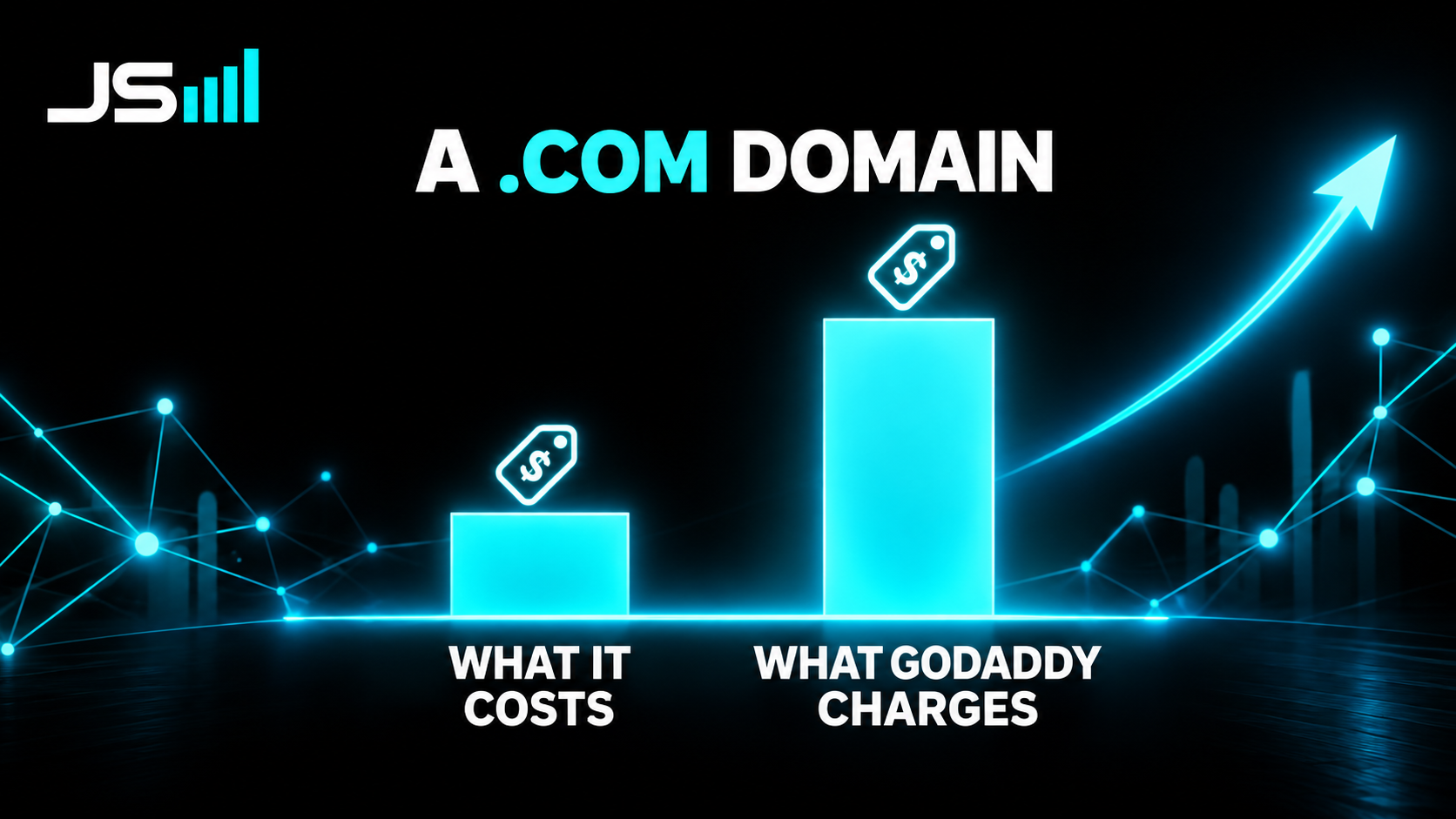
A domain name is a commodity. It is the exact same .com no matter who you buy it from. There is no premium version of a domain. And GoDaddy charges a serious markup on it anyway, especially after the first-year teaser rate rolls off and the renewal shows up. I literally just wrote this same complaint about Twilio. Same disease, different company: get there first, build the brand, then charge people for the privilege of not knowing better.
I've migrated domains out of GoDaddy onto our system more than once now. We charge a fair price because gouging on a commodity is silly, and I'd rather the domain be the easy yes that gets someone in the door. That's not charity. That's just not being greedy about the one thing that costs us almost nothing.
The three text messages
This is the one that actually made me angry.
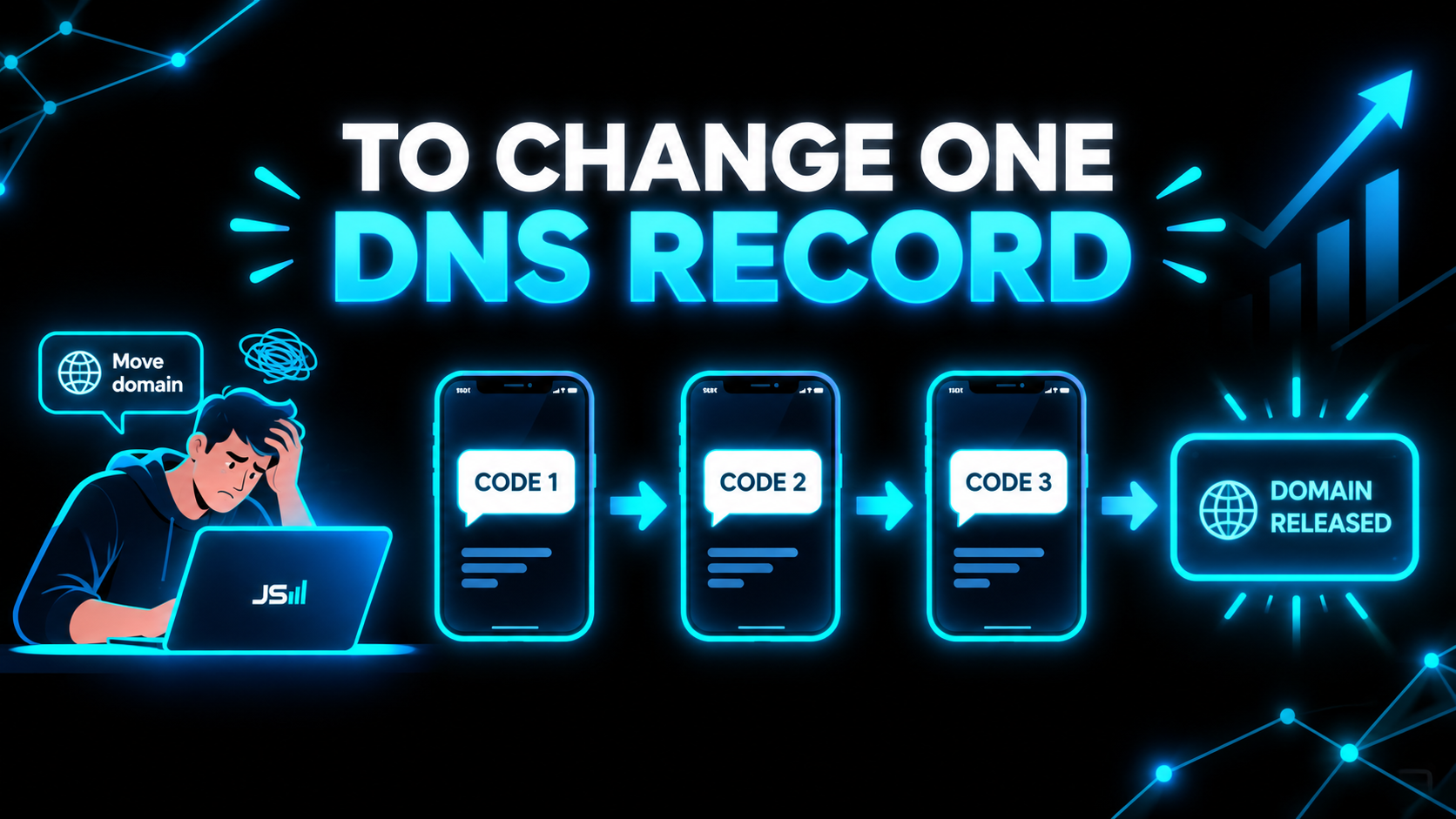
My client had her domains at GoDaddy for something like twenty years. Loyal customer. And to change a single DNS record, GoDaddy makes you confirm by text message. Fine, a little annoying, I'll live. To actually move a domain out? Three separate text message confirmations. Three. For one domain. With a client who's been paying them for two decades.
Let's be honest about what that is. I'm all for two-factor authentication on the stuff that matters. I've written about security and I take it seriously. But one text to confirm your identity is security. Three texts to leave is not security. It's friction, deliberately installed, to make leaving tedious enough that some percentage of people give up and stay. That's the whole design. It's bad design on purpose, which is worse than bad design by accident.
There's good sticky and there's bad sticky
I want to be clear that I'm not against stickiness. I'm against this kind.
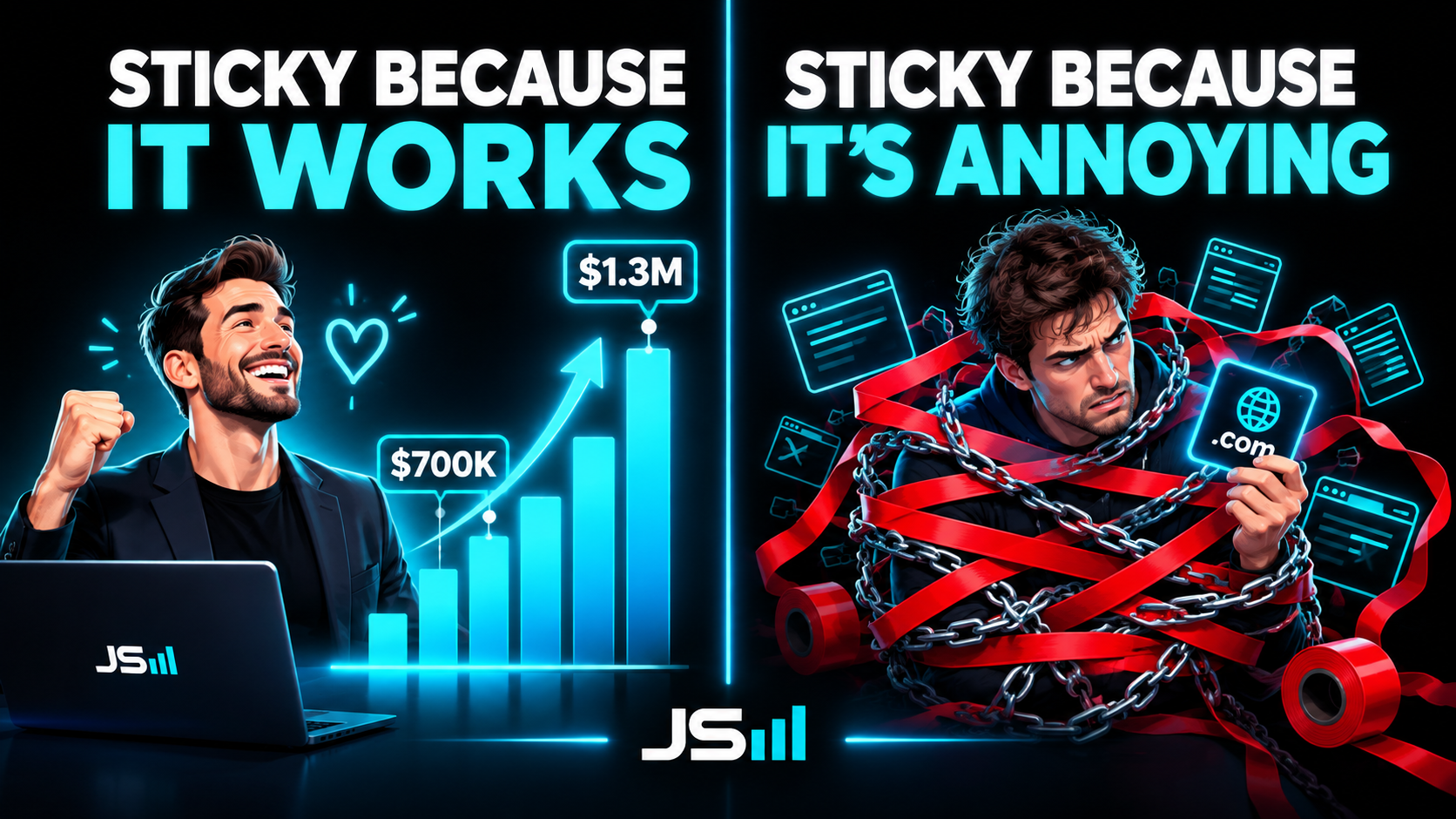
My client Shane runs a cabinet shop. Before we started working together he was doing around $700K a year. He's on pace for $1.3 million now. Is he going to leave? No. Should he? Also no. That's sticky because the value is there. He stays because leaving would cost him money. That's the right way to keep a customer, and it's the only way I'm interested in.
GoDaddy is sticky over a domain. A twelve-dollar commodity. They can't make you stay by being better, so they make you stay by making the door heavy. That's not a moat. That's a trap, and your customers can feel the difference even if they can't name it.
The score
Marketing and distribution: genuinely elite, and I mean that. Everything the customer actually touches after the sale: clunky builder, worse AI builder, hours of unhelpful support, a markup on a commodity, and a deliberately miserable exit.
3 out of 10. The three points are for the marketing team. They earned them. The rest of the company is spending them.
If you've got domains sitting there and you're tired of the text messages, you know where to find me. We'll move them, we'll charge you a fair price, and nobody will make you prove you're you three times to do it.
Want to talk about what you're building?
Get in touch