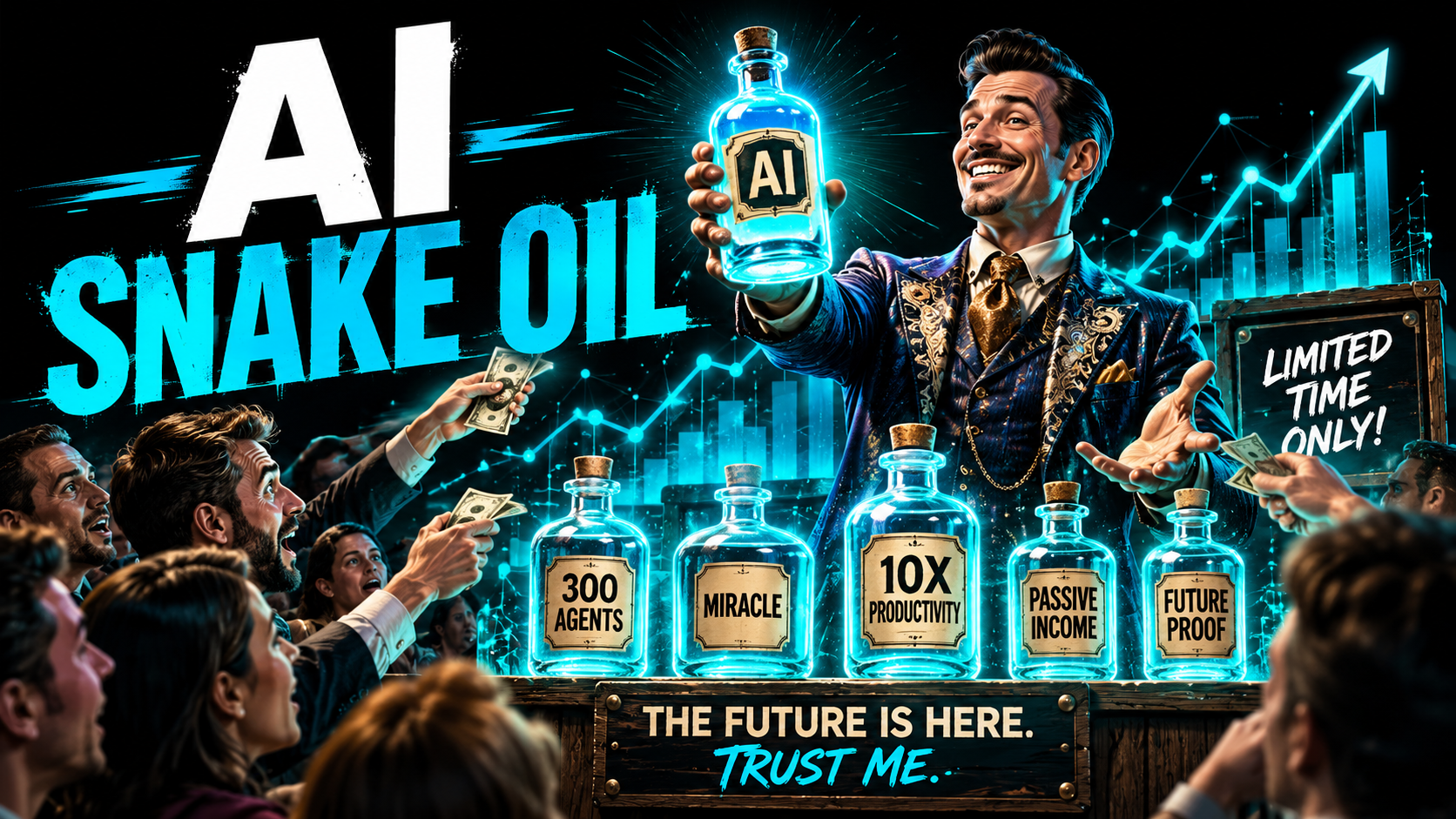
AI Is Just Autocomplete. The Harness Is the Magic.
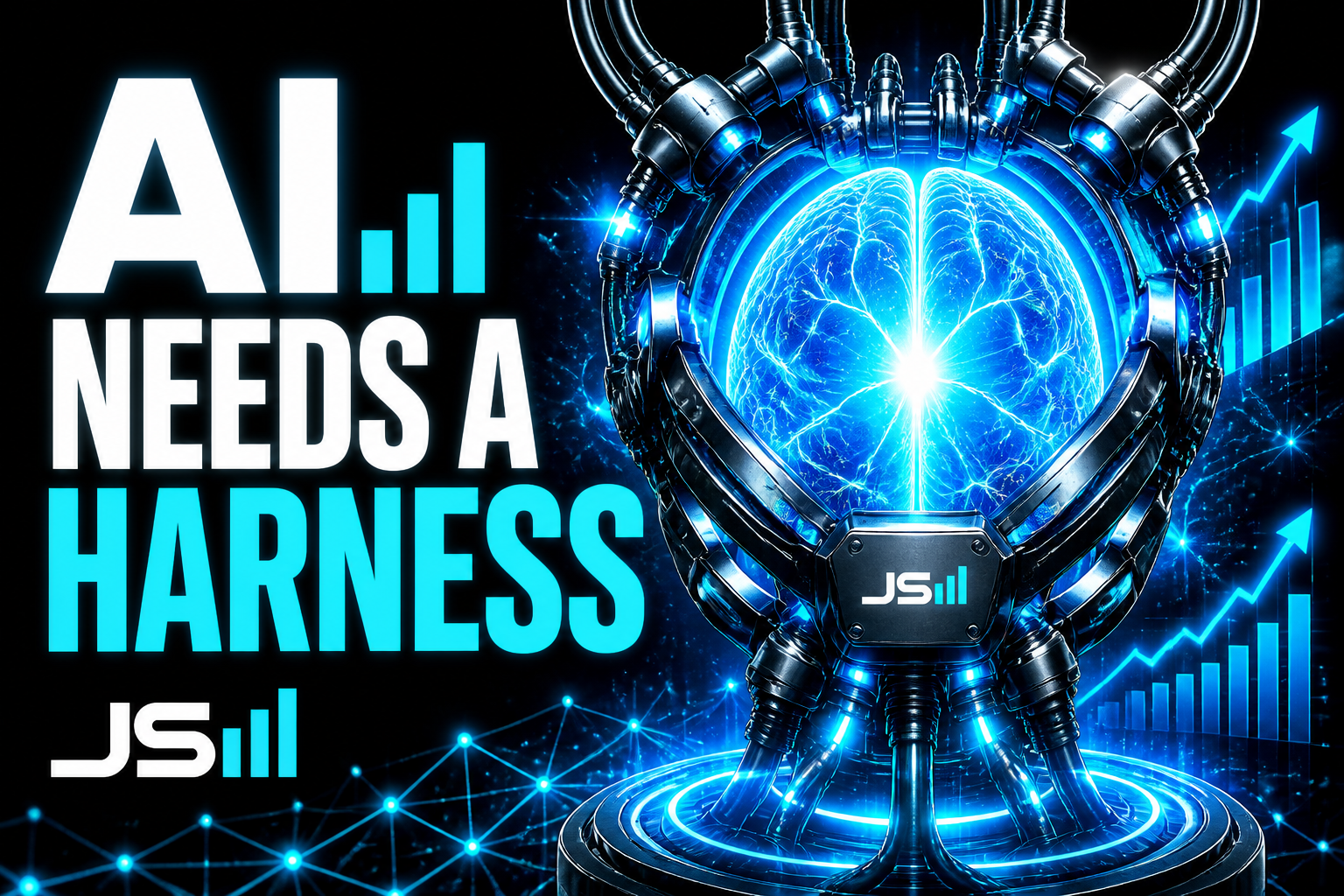
Strip AI down and it's just autocomplete, it predicts the next word. So why is it suddenly running businesses? The harness: the tools and guardrails you wrap around the model. Proof? Joe 3.5 published this post himself (a tool), but he can't delete it (a guardrail). The next trillion-dollar company won't just own the platform, it'll design harnessed agents that actually run on it. Skip the guardrails and you get OpenClaw.
Here's the thing almost nobody explains simply, so let me try.
At its core, an AI model does one unglamorous thing: it predicts the next word in a sentence. That's it. Impressive, sure, but on its own it's basically the world's smartest autocomplete.
So how is that same technology suddenly booking meetings, updating databases, and running real chunks of a business? One word. The harness.
So what is a harness?
A harness is the set of rules, tools, and guardrails you wrap around the model. The model is the raw brain. The harness is everything that turns that brain into something that can actually do a job, and do it safely.
Think of a horse. A powerful horse running loose is impressive and completely useless to you. Put a harness on it and suddenly it can pull a cart exactly where you need it to go. The horse didn't get smarter, you just gave it structure. Same idea here.
Part one: the tools
The first half of a harness is what the AI is allowed to do. Its hands.
Take my own AI executive assistant, Joe 3.5. On his own, he's just a language model. But I harnessed him. I gave him tools: he can check my CRM, pull up a contact's record, log a note, set a reminder to follow up with someone. Those aren't things the model magically knows how to do. Each tool is a specific, defined action with its own permissions, a doorway I chose to open, not a blank check. I wired each one in by hand and told him exactly when and how he's allowed to use it.
That's the difference between an AI that talks about your business and an AI that actually operates it.
Part two: the guardrails
The second half is just as important, and it's the part the hype crowd always skips: what the AI is not allowed to do.
Joe 3.5 has hard limits baked in. He can't delete anything. He can't touch payments or invoices. He can't message someone who hasn't opted in. No matter how I phrase a request, those walls don't move. That's not a weakness, that's the entire point. A powerful tool with no brakes isn't powerful, it's a liability.
Want proof, live? Joe 3.5 published this exact blog post himself. He has the tools for it: access to my CRM and edit permissions on my website. But here's the guardrail, he can't delete it. Same agent, one door wide open, one door bolted shut. That's a harness in a single example.
Good guardrails are exactly what let you trust an agent with real work. You want it capable and boxed in at the same time.
Where this is all heading
In my last post I made the case that the next trillion-dollar company won't be a fancy ChatGPT wrapper, it'll be a platform that AI can actually use. This is the other half of that story.
Because a platform is only worth as much as the agents you can safely turn loose inside it. The company that wins, and let's be honest, I'm building to be that company, won't just own the platform. It'll design agents that don't just look cute in a two-minute demo, but genuinely operate the thing, day in and day out, with real guardrails holding the entire time.
And those guardrails are non-negotiable. Skip them and you get OpenClaw: an agent with power and no brakes, where half the plugins, and I'm being generous with "half," would happily hack you the second you looked away. Capability without constraint isn't the future, it's a security incident waiting to happen. The future is capability on a leash.
Why this is the whole ballgame
Here's the takeaway. The model itself is becoming a commodity. Everyone can rent the same brain. What separates a cute demo from something a business actually runs on is the harness: the tools you give it, and the limits you put on it.
The model predicts the next word. The harness decides what that's actually worth. Build the harness well, and you don't have a chatbot anymore. You have an employee.
Want an AI that actually does the work?
Real tools, real guardrails, built to run on your business. That's what we do at HyppoAI.
Want to talk about what you're building?
Get in touch